
Written by: Annika Plunkett
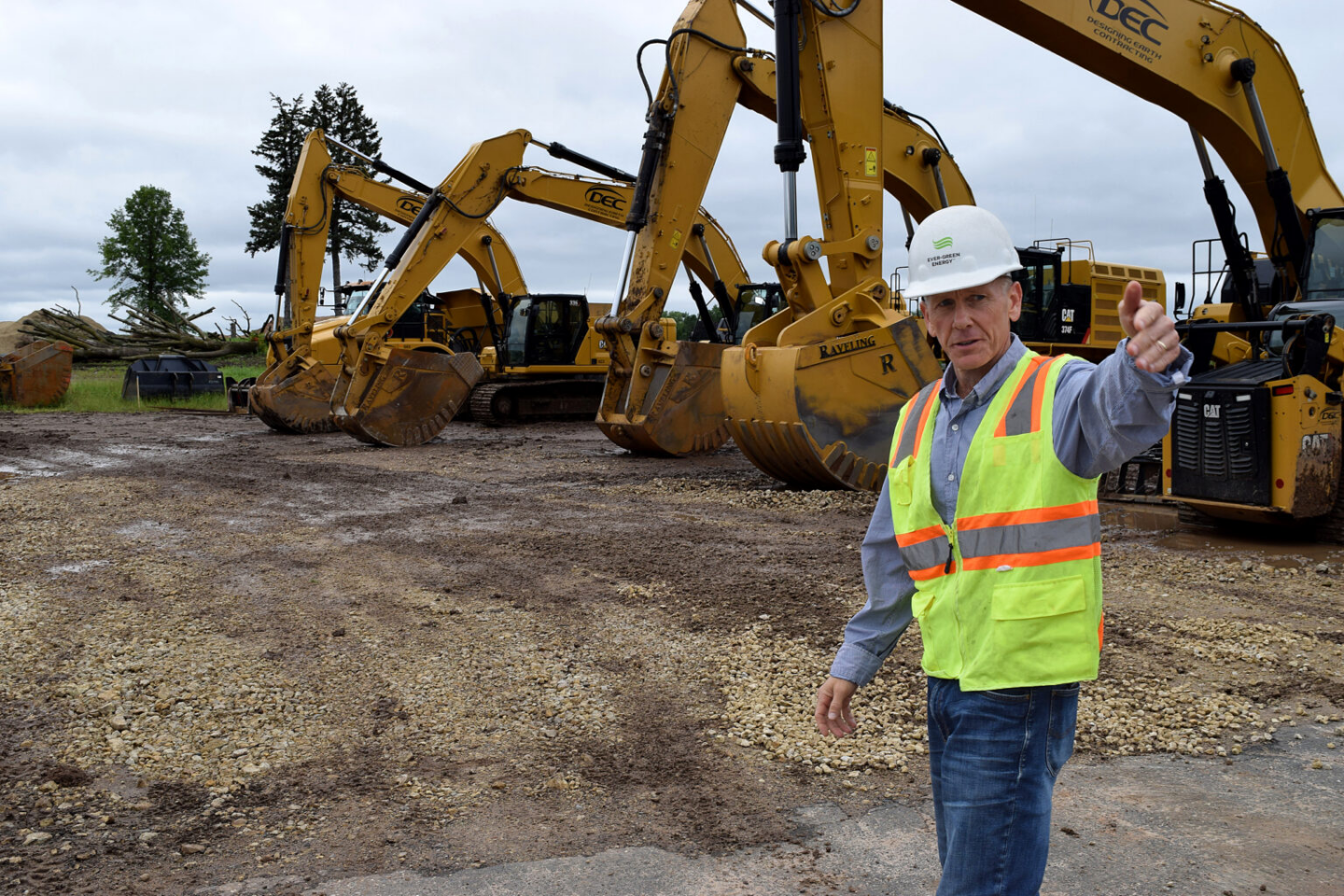
Image Source: https://insideclimatenews.org/news/15112025/st-paul-minnesota-geothermal-drilling/
Those who were on campus in the fall of ‘24 will remember the transformation of Poe Field from a giant mud pit into a beautiful, grassy study spot. For 15 months, Poe Field was closed for the installation of geo-exchange, a low-carbon heating and cooling system that stores warm water underground in the summer to be used to heat buildings in the winter, and vice versa. The project was a significant step towards Princeton’s goal of net-zero carbon emissions by 2046, as outlined in the Sustainability Action Plan. The heating/cooling system for all campus buildings will eventually be transferred to geo-exchange in time for 2046.
But Princeton is not the only place installing geo-exchange!
In the Greater East Side of St. Paul, Minnesota, plans are underway for the installation of aquifer geo-exchange for The Heights, a 112-acre mixed-use development built on a former golf course. Built by Ever-Green Energy, a St. Paul based nonprofit utility company that is increasingly turning to geothermal energy for its heating and cooling networks to eliminate greenhouse gas emissions, the geo-exchange will work similarly to the one currently being installed in Princeton, with a few key differences.
At Princeton, geo-exchange requires the drilling of over 2,000 boreholes on campus, each 600 to 850 feet deep. Each hole holds a pipe through which the water that heats and cools our buildings runs. The water never once comes in contact with dirt or rock, instead staying within the pipe system the whole time and transferring heat to and from the bedrock via conduction.
For The Heights project, Ever-Green Energy is tapping into an aquifer only 350 to 500 feet underground instead. Despite the wide yearly temperature changes above ground characteristic of Minnesota, the aquifer beneath The Heights remains approximately 50 degrees Fahrenheit the entire year. The system will use high-efficiency electric heat pumps powered partially by solar panels to draw groundwater from wells spread across the northern half of the development.
Aquifer geothermal requires less drilling than traditional geothermal heating/geo-exchange. While not feasible everywhere, aquifer geothermal is a great low-carbon alternative to traditional heating and cooling in Minnesota, where subsurface water is common.
Measures are being taken to minimize the impact of the development on the aquifer’s temperature and geochemistry. Regulations in the Netherlands, where thermal storage is most common, limit the aquifer temperature range to between 41 and 77 degrees Fahrenheit. Prior to the beginning of construction, the Minnesota Department of Health and the Department of Natural Resources will inspect the project to ensure that The Heights’ aquifer will remain in this range. Darcy Solutions, the St. Paul company overseeing the installation of the wells, will place their heat exchangers underground to ensure that the water never becomes oxygenated by exposure to air at the surface.
The project, which should cut the development’s emissions by up to 74%, has already been awarded a LEED Platinum award.
While the Trump administration has slashed many solar and wind tax credits, geothermal credits remain largely untouched. Federal tax credits should cover roughly $6 million of the $12 million geo-exchange project for The Heights.
The aquifer geo-exchange is projected to cut emissions by up to 74% and cut residents’ utility costs by up to $100 per month. For a community that often struggles to pay its utility bills on time, this comes as welcome news.
Like Princeton, St. Paul’s geo-exchange conversion is yet another inspiring example of a low-carbon heating and cooling system that works with the environment to lower costs for everyone.
To learn more about the St. Paul development, click here.
Sources
https://www.dailyprincetonian.com/article/2025/02/princeton-news-geo-exchange-heat-pumps
https://sustain.princeton.edu/sustainability-action-plan-full-pdf
https://inside.princeton.edu/community-news/2024/poe-and-pardee-fields-are-back