
Written by: Leila Eshaghpour-Silberman
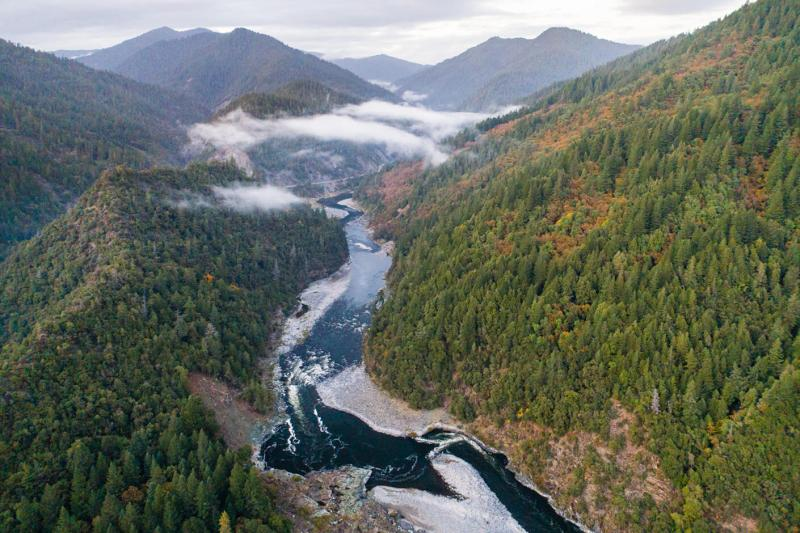
Photo: NOAA.gov // Jason Hartwick/Swiftwater Films
Following the removal of four dams from the Klamath River in California, the area has experienced a promising resurgence in Chinook Salmon populations. Once the third largest producer of salmon in the United States, the Klamath River experienced a significant decline in salmon and other fish populations after four dams restricted habitat access and damaged water quality. A little over a year after the removal of the final dam, the salmon have returned en masse, in numbers that have far exceeded the hopes of local tribesmen and experts.
The Klamath River Basin, which is located in Northern California and stretches up to Southern Oregon, is an important habitat for Chinook River Salmon. For that reason, the Yurok Indigenous people, who call the Klamath River area home and depend on the salmon for sustenance, are known as the “salmon people.” However, the creation of four hydroelectric dams restricted 400 miles of habitat for the salmon and impacted water quality, drastically decreasing the numbers of salmon found in the area each year.
In 2002, the Klamath River Basin’s salmon population experienced a drastic die-off event, with around 35,000 salmon found dead in just a few days in September of that year. This event was later traced directly to the impacts of the dams, which restricted water to dangerously low levels, leading to poor water quality, and increased water temperatures that ultimately threatened the lives of the salmon.
Advocacy against the dams, which had been initiated by the Yurok tribe in the 1990s, increased after this event, which signaled the urgency of dam removal. Despite knowing that it would be an uphill, impossible battle, the Yurok tribe fought for the removal of the four dams, which were all owned by the PacifiCorp company and used for electricity generation. The process was long, but a series of gains led to the ultimate removal of the dams from October 2023 to August 2024.
The Yurok tribe began with addressing the water quality and water level issues by working with local farmers and residents of the area to mitigate irrigation and minimize runoff. This was formalized in the Klamath Basin Restoration Agreement, which was signed in 2010, and set the stage for late dam removal. Following advocacy by the Yuroke tribe, authorities mandated that the new lease agreement for the dams, which was up for renewal in 2006, required fish ladders so that the Salmon could pass through. PacifiCorp could not handle the cost and agreed to remove the dams. The first of the four dams was removed in October 2023, with the final dam finally dismantled by August of 2024, a project that was supported by both California and Oregon.
Following dam removal, river conditions quickly improved. The river experienced more natural water temperatures and temperature fluctuations, as well as improved water quality. Hundreds of miles of habitat which were previously closed off to the salmon have now been opened. Yurok tribe members have also begun land restoration projects for areas damaged by the dams.
Since the removal of the dams, the Klamath River Basin has experienced a sharp spike in salmon. The salmon have returned in numbers, with estimates predicting an eighty-one percent return of salmon production to pre-dam levels by 2061. A year after the dams’ removal, salmon have fully reclaimed their habitat, spreading throughout more than 300 miles of previously restricted territory. Chinook Salmon have already been found as far up as Southern Oregon, to the surprise of many experts, and have also been discovered in creeks and streams where they had not been present for over a century, since before the creation of the first dam in 1922. Researchers have found that, since the removal of the dams, the fish have returned to the river earlier in the year than previously, and they have also measured a 30% increase from 2024 in the numbers of salmon passing through the site of a former dam.
The resurgence of salmon in the Klamath River Basin following the removal of the four PacifiCorp dams has been extremely promising so far. Monitoring of the area continues, with the California Department of Fish and Wildlife devoting $30 million to help with restoration efforts.
A little over a year and a half after the removal of the dams, researchers continue to track the triumphant return of Chinook Salmon to the Klamath River and projections for 2026 predict a sharp increase in Chinook Salmon in the fish run this Fall. The return of salmon to the Klamath River Basin marks a victory for the Yurok tribe, the Chinook Salmon, and the natural world, and demonstrates the power of conservation efforts to recuperate wildlife habitats.
Sources:
https://www.bbc.com/future/article/20251212-seven-quiet-wins-for-climate-and-nature-in-2025
https://www.opb.org/article/2025/10/17/salmon-clear-klamath-dams
https://wildlife.ca.gov/News/Archive/salmon-everywhere-one-year-after-klamath-dam-removal