Princeton Is Not the Only One with a Geo-Exchange Project

Written by: Annika Plunkett

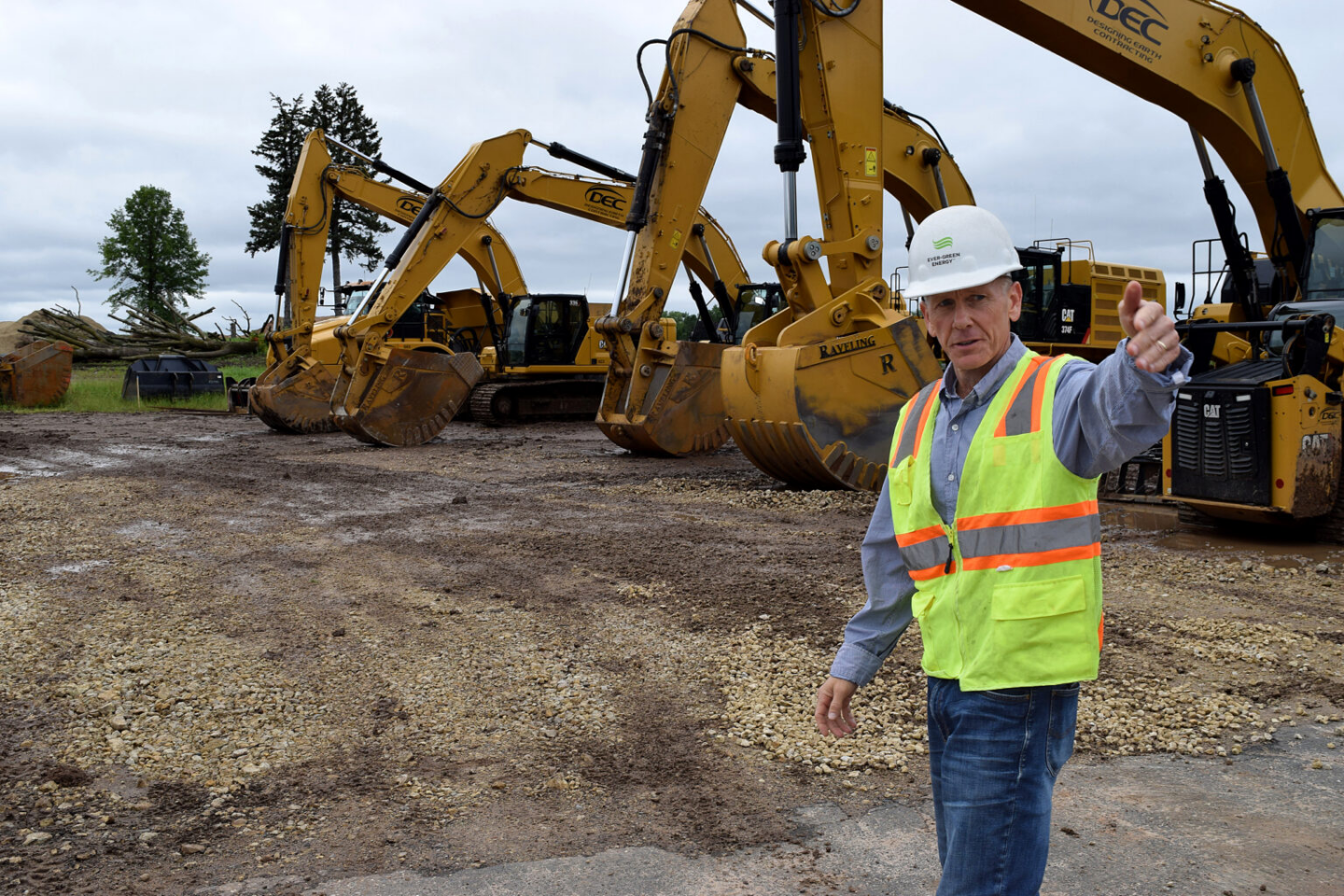
Image Source: https://insideclimatenews.org/news/15112025/st-paul-minnesota-geothermal-drilling/ 

Those who were on campus in the fall of ‘24 will remember the transformation of Poe Field from a giant mud pit into a beautiful, grassy study spot. For 15 months, Poe Field was closed for the installation of geo-exchange, a low-carbon heating and cooling system that stores warm water underground in the summer to be used to heat buildings in the winter, and vice versa. The project was a significant step towards Princeton’s goal of net-zero carbon emissions by 2046, as outlined in the Sustainability Action Plan. The heating/cooling system for all campus buildings will eventually be transferred to geo-exchange in time for 2046.

But Princeton is not the only place installing geo-exchange!

In the Greater East Side of St. Paul, Minnesota, plans are underway for the installation of aquifer geo-exchange for The Heights, a 112-acre mixed-use development built on a former golf course. Built by Ever-Green Energy, a St. Paul based nonprofit utility company that is increasingly turning to geothermal energy for its heating and cooling networks to eliminate greenhouse gas emissions, the geo-exchange will work similarly to the one currently being installed in Princeton, with a few key differences. 

At Princeton, geo-exchange requires the drilling of over 2,000 boreholes on campus, each 600 to 850 feet deep. Each hole holds a pipe through which the water that heats and cools our buildings runs. The water never once comes in contact with dirt or rock, instead staying within the pipe system the whole time and transferring heat to and from the bedrock via conduction.

For The Heights project, Ever-Green Energy is tapping into an aquifer only 350 to 500 feet underground instead. Despite the wide yearly temperature changes above ground characteristic of Minnesota, the aquifer beneath The Heights remains approximately 50 degrees Fahrenheit the entire year. The system will use high-efficiency electric heat pumps powered partially by solar panels to draw groundwater from wells spread across the northern half of the development. 

Aquifer geothermal requires less drilling than traditional geothermal heating/geo-exchange. While not feasible everywhere, aquifer geothermal is a great low-carbon alternative to traditional heating and cooling in Minnesota, where subsurface water is common. 

Measures are being taken to minimize the impact of the development on the aquifer’s temperature and geochemistry. Regulations in the Netherlands, where thermal storage is most common, limit the aquifer temperature range to between 41 and 77 degrees Fahrenheit. Prior to the beginning of construction, the Minnesota Department of Health and the Department of Natural Resources will inspect the project to ensure that The Heights’ aquifer will remain in this range. Darcy Solutions, the St. Paul company overseeing the installation of the wells, will place their heat exchangers underground to ensure that the water never becomes oxygenated by exposure to air at the surface. 

The project, which should cut the development’s emissions by up to 74%, has already been awarded a LEED Platinum award.

While the Trump administration has slashed many solar and wind tax credits, geothermal credits remain largely untouched. Federal tax credits should cover roughly $6 million of the $12 million geo-exchange project for The Heights.

The aquifer geo-exchange is projected to cut emissions by up to 74% and cut residents’ utility costs by up to $100 per month. For a community that often struggles to pay its utility bills on time, this comes as welcome news.

Like Princeton, St. Paul’s geo-exchange conversion is yet another inspiring example of a low-carbon heating and cooling system that works with the environment to lower costs for everyone. 

To learn more about the St. Paul development, click here.

Sources

https://www.dailyprincetonian.com/article/2025/02/princeton-news-geo-exchange-heat-pumps

https://sustain.princeton.edu/sustainability-action-plan-full-pdf

https://inside.princeton.edu/community-news/2024/poe-and-pardee-fields-are-back

Turtle Robots Engineered to Monitor Ecosystem Health

Written by: Jess Curran

Budz, 2025.

Each year, the European Union Contest for Young Scientists (EUCYS) pools together over a hundred of the brightest students across the globe, this year, spanning 37 different countries during this year’s competition to showcase their novel projects [1]. EUCYS 2025 just closed on its 36th annual competition, taking place in Riga, Latvia where first place was awarded to – a robot turtle[2]!

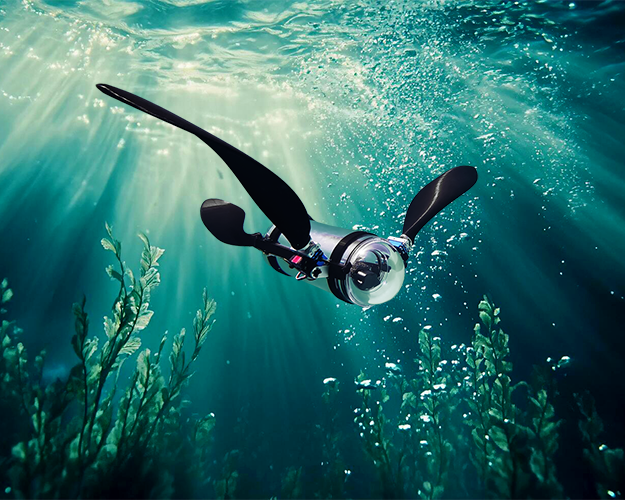
Evan Budz, a 15-year-old Canadian scientist was concerned with the sustainability of ocean monitoring systems and sought to identify a less intrusive solution. He took inspiration from the graceful movements he observed from snapping turtles, and modeled his bionic monitoring system to limit disturbance to other organisms in the aquatic ecosystems [3]. The agile movement of his turtle robot was achievable due its multi-axis propulsion system adapted for fluid dynamics [4]. Budz was able to experiment with this design in his grandparent’s pool until it was perfect. 

Not only is this a remarkable feat of mechanical engineering, its monitoring system is likewise as impressive. Budz trained the robot turtle on an AI-imaging model that enables the robot to identify coral bleaching with 96% accuracy [4]. Coral is a keystone species in ocean environments, and the mechanical and machine learning components work together to create an eco-friendly means to closely observe the species health, and subsequently the entire ecosystem. 

Evan Budz’s science fair project proves to be promising for the future of the young generations’ creativity and ingenuity as well as a genuine passion for promoting sustainable efforts, even if it requires out of the box thinking, such as robot turtles!

Sources:

[1] https://research-and-innovation.ec.europa.eu/funding/funding-opportunities/eucys_en

[2] https://projects.research-and-innovation.ec.europa.eu/en/horizon-magazine/turtle-robots-frontline-physics-prize-winning-young-scientists-shape-future

[3] CBC

https://www.cbc.ca/news/canada/hamilton/evan-budz-bionic-turtle-underwater-ecosystems-1.7645966

[4]

https://partner.projectboard.world/ysc/project/development-of-an-autonomous-bionic-sea-turtle-robot-for-ecological-monitoring-using-ai

 2 EU source

https://projects.research-and-innovation.ec.europa.eu/en/horizon-magazine/turtle-robots-frontline-physics-prize-winning-young-scientists-shape-future

Dominion Energy Moving Forward with Offshore Wind Farm Construction in Virginia

Written By: Annika Plunkett

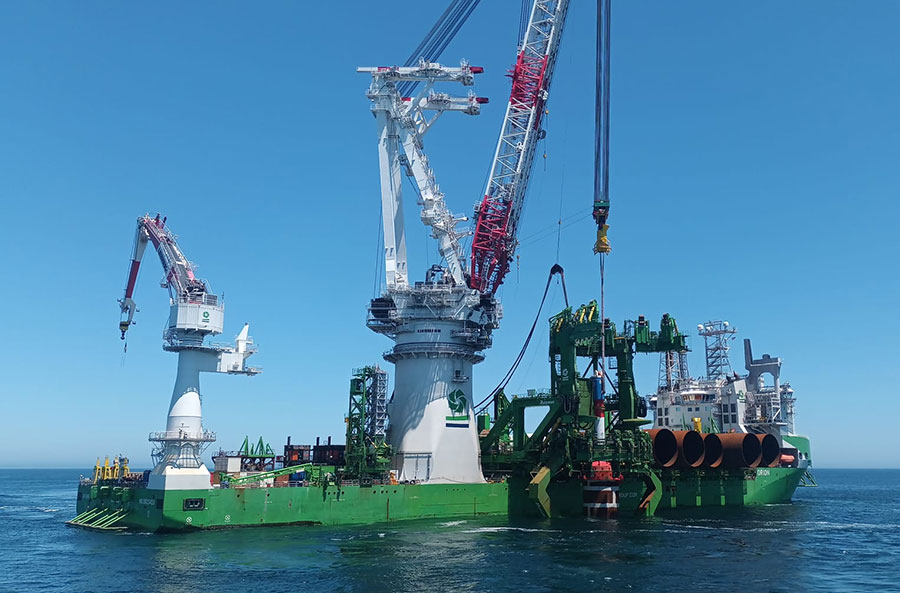
Amid a flurry of new restrictions on green energy, a wind farm is being constructed off the coast of Virginia. Since 2013, Dominion Energy, an electric company headquartered in Richmond, Virginia with service to Virginia and the Carolinas, has been hard at work planning and constructing the largest offshore wind project in the United States. The $9.8 billion project, called Construction on Coastal Virginia Offshore Wind (CVOW), is set to finish in 2026 and will have the capacity to power 660,000 homes and generate 2.6 GW of electricity.

The wind farm is part of Dominion Energy’s commitment to deliver 100% of electricity by renewable power sources by 2045, as required under the 2020 Virginia Clean Economy Act. Construction on the wind farm continues despite a recent executive order from President Trump temporarily ceasing all federal wind leases, with half the turbine monopile foundations installed as of November 2024. In addition to providing a source of clean energy, the wind farm will also benefit the local Hampton Roads economy, creating jobs and economic growth. 

Dominion Energy has been mindful in every step of the construction process to minimize environmental damage to the area. Prior to construction, DE conducted over two dozen studies to ensure protection of ocean life and avian species. During construction, they use a bubble curtain to reduce sound waves and monitor underwater sounds in real-time. To further protect marine species, certified Protected Species Observers are on duty during critical operations to watch for marine mammals and sea turtles; work stops whenever an animal is spotted within the area. They also use time-of-year restrictions in order to avoid interfering with marine and avian migrations.

All in all, the Coastal Virginia Offshore Wind Farm is an exciting project and a step in the right direction for the clean energy transition!

Sources:

https://coastalvawind.com

https://coastalvawind.com/about-offshore-wind/timeline.aspx

https://coastalvawind.com/partnerships/environmental-stewardship.aspx

https://virginiabusiness.com/dominion-says-offshore-wind-farm-moving-forward-despite-executive-order

Smart Charging: How AI Helps Charge Your Electric Vehicle

Written by: Joaquin Acuna

Image credit: smartDataTM Enterprises  https://dkk4qeqny48s0.cloudfront.net/wp-content/uploads/2023/05/EV.jpg 

In recent years, a significant contribution to reducing greenhouse gas emissions from the transport industry has been an uptrend in the use of electrical vehicles (EVs), which produce no tailpipe emissions and have a much higher energy efficiency than gas-powered alternatives. A significant concern in the widespread use of EVs, however, is the stress placed on the electrical grid when charging the vehicles, as well as the fact that often the electricity used to charge them is produced by burning fossil fuels. 

In the past few years, companies have found an unlikely ally to address these concerns: artificial intelligence. With smart charging, by utilizing AI-powered algorithms that optimize different aspects of charging EVs, stress on the grid is avoided by charging at low-demand times. Even more importantly, users can choose to charge their vehicles when intermittent renewable energies such as solar and wind power are abundant, therefore reducing their carbon footprint. At a large scale—for example companies charging a fleet of vehicles—and for consumers with time-of-use plans, which charge more for energy at peak demand times, utilizing this technology can also significantly reduce energy costs. 

The next time you hear someone ask, isn’t charging your electric vehicle burning fossil fuels anyway, so it’s the same as a gas-powered car? First, tell them it’s not (electric vehicles are more energy efficient), but then share with them the good news that by utilizing AI, you can now make sure your vehicle is charged when renewable energies are abundant—plus, you’re also helping not place stress on the energy grid at peak times!

Sources: https://www.epa.gov/greenvehicles/electric-vehicle-myths

https://www.iea.org/reports/global-ev-outlook-2024/trends-in-electric-cars

https://www.epa.gov/ghgemissions/sources-greenhouse-gas-emissions#:~:text=Transportation%20%E2%80%93%20Greenhouse%20gas%20emissions%20from,ships%2C%20trains%2C%20and%20planes.

https://www.epa.gov/ghgemissions/sources-greenhouse-gas-emissions#:~:text=Transportation%20%E2%80%93%20Greenhouse%20gas%20emissions%20from,ships%2C%20trains%2C%20and%20planes.

https://www.bluwave-ai.com/about

https://www.ampcontrol.io

https://www.gridx.ai/use-cases/smart-charging

Sustainable Farming, and Recent Developments in the Field!

Written by: Kiara Marie Wassoodew

Welcome to another edition of Good News Friday! Today I will cover sustainable farming, and recent developments in the field!

Negative Impact of Inorganic Fertilizer

Synthetic fertilizers can have beneficial effects on the soil quality and plant health. However, at the same time, the overuse of inorganic fertilizers can be very harmful to the environment. For one, overuse of synthetic fertilizers can alter the nutrient content and composition of soil, damaging its overall health. This can contribute to issues of soil infertility and soil erosion. Additionally, with high solubility levels, synthetic fertilizers are more likely to leak into the groundwater system, resulting in harmful chemicals being consumed by both livestock and people. Additionally, producing synthetic fertilizers frequently relies on fossil fuel combustion, which in turn contributes to the greenhouse effect and the use of nitrogen-containing fertilizers releases the greenhouse gas nitrous oxide, compounding this effect.

Plant Genetic Discovery

Given the dangers of overusing synthetic fertilizers, there is a growing need to research the potential for more viable and sustainable mechanisms of farming. In the U.K., a group of researchers discovered a biological phenomenon in plants that could be capitalized to achieve the goal of sustainable agriculture. The researchers describe the phenomenon “endosymbiosis” as a mechanism by which microorganisms inhabiting plant roots can facilitate nutrient uptake and absorption from the soil. Endosymbiosis is not a universal phenomenon, but certain plants have relied on this symbiotic relationship in order to meet nutrient absorption needs. In a Medicago truncatula, the researchers discovered a mutation that allowed this legume to better absorb and uptake nutrients. By introducing this mutation into other grasses like wheat, they were able to confirm that this mutation specifically conferred improved nutritional uptake.

Potential Impacts

The identification of this gene has yielded a lot of discussion regarding the future of farming. For one, this gene could be introduced on a large scale into plants that do not have this mutation to encourage the development of symbiotic relationships between plants and microbes, and effective interactions between microbes and the soil. By capitalizing on these interactions which help meet the nutritional needs of plants in an organic and sustainable way, we can move away from depending on inorganic, nitrogen-based fertilizers, and encourage healthier soil, cleaner water, and improved plant growth.

Before deciding whether or not this is a viable option for improving sustainable farming practices, it is important to carefully consider the potential risks of introducing this mutation into other plant populations. If these genetically mutated plants with improved nutrient absorption are growing in close proximity to other plants lacking this capacity, there are two threats that can unfold. For one, the gene can cross the plant species barrier and enter a new plant population which could have unintended consequences. Second, the endosymbiotic, mutated plant may be more capable of nutrient absorption and uptake, which could result in resource scarcity for other “weaker” plants, and a subsequent loss in plant diversity. Finally, there is also an equal risk that introducing a mutation which heightens the plant’s ability to absorb nutrients could cause over-absorption of nutrients. This might render the plant toxic for consumption by both livestock and humans. Therefore, by carefully analyzing, planning, and monitoring the introduction of a genetic mutation into a plant population to encourage endosymbiosis, one can guarantee the growth and evolution of sustainable farming.

That’s all for this week! Check back next week for more positive environmental news. In the meantime, if you’d like to share some Good News with us, please feel free to get in touch!

Sources:

https://sustainability-news.net/sustainability/uk-scientists-explore-natural-soil-micr

obe-interactions-for-sustainable-farming/#:~:text=The%20team%2C%20led%20by

%20Dr,similar%20results%20under%20field%20conditions.

https://www.feedipedia.org/node/274

https://farmerline.co/the-impact-of-fertilizers-on-the-environment-inorganic-vs-org

anic/#:~:text=Over%2Dreliance%20on%20inorganic%20fertilizers,and%20increas

ed%20susceptibility%20to%20erosion.

New Zealand Sets an Ambitious New Climate Goal

Witten by: Liliana Sofia

Glacier Country | West Coast NZ

Kiaora! This Friday, I bring you good news from New Zealand! This past January, Aotearoa New Zealand announced its second international climate target under the Paris Agreement! In other words, NZ is committing to cutting emissions by 51 to 55 percent (compared to 2005 levels) by 2035. This is a big step for the country’s efforts to tackle climate change, as a real and serious concern for NZ is rising water levels. With rising water levels, parts of the country are at great risk of being washed away in the decades to come. 

The Paris Agreement is a global effort to keep temperature rise below 2°C (and ideally under 1.5°C), that has been signed by nearly 200 countries. Each country sets its own emissions reduction goals, and New Zealand’s updated target builds on its Emissions Reduction Plan, which largely focuses on renewable energy. It also points to sustainable agriculture and cleaner transport. Additionally, this doesn’t just help the environment—it also creates jobs in the green industry of NZ. 

So, what does this mean? Big changes are coming! Kiwis can expect to see more investment in clean energy— like wind or solar power— and a push for greener transport options, like electric buses. Agriculture, arguably NZ’s largest industry (we have about 7 sheep for every person), will also continue evolving toward more sustainable practices. And for “everyday people”? There will be more opportunities to make eco-friendly choices through public transport, government support, or clean energy. The urgency is very real—New Zealand’s glaciers have shrunk by 29% since 2000, and that’s a serious problem as a good amount of the country’s drinking water comes from glaciers. The glaciers melting is something that affects our water supply, ecosystems, and general way of life. This new target is a crucial step toward protecting our natural resources and ensuring a livable future.

Granted, there’s still a lot of work ahead but this commitment is a testament to how serious New Zealand is about climate action.  By investing in these solutions, us kiwis are moving toward a healthier, more sustainable future. Today, I am so proud of my home country! 

Sources:

https://www.aspeninstitute.org.nz/news/in-depth-new-zealand-faces-major-sea-rise-much-sooner-than-we-thought

https://unfccc.int/process-and-meetings/the-paris-agreement 
https://climateactiontracker.org/countries/new-zealand/#:~:text=New%20Zealand%20submitted%20an%20updated%20NDC%20in,gross%202005%20levels%20by%202030%2C%20including%20LULUCF.

Tokyo Utilizes Rooftop Gardens To Combat Heat Effects

Written by: Corey Segal

Tokyo utilizes rooftop gardens to combat urban heat island effects! Introduced in 2001, the Nature Conservation Ordinance has prompted certain buildings to allocate rooftop space for plant growth: since 2009, private buildings over 1,000 square meters and public buildings over 250 square meters must meet at least 20% coverage; buildings over 5,000 square meters must exceed 25% green rooftop coverage. Today, over 1.8 million square meters are covered by rooftop foliage from over 5,700 buildings. 

Rooftop foliage reduces rooftop and interior ceiling temperatures, in turn lowering energy costs during warmer months. Additionally, it also absorbs rainwater and reduces stormwater runoff, limiting strain on the city’s wastewater treatment facilities. 

While Tokyo may have the most extensive law for implementing green rooftops, New York City similarly has implemented local laws to mandate the inclusion of rooftop plants into a building’s design. Local laws 92/94 state that new buildings or new roofs resulting from expansions of existing buildings must incorporate a green roof or solar photovoltaic cells that produce electricity. The city also requires all roofs to be cool roofs, meaning roofs that actively avoid materials which are more susceptible to absorbing solar radiation, for example, by being dark in hue.

The following other cities besides Tokyo and New York City have enacted green roof laws: Basel, Switzerland; Copenhagen, Denmark; Munich, Germany; Portland, Oregon; San Francisco, California; Toronto, Canada; and all of France. Hopefully we continue to see more cities across the world adopt green roofs into their building standards to not only create more energy efficient cities, but also more beautiful ones!

Sources:

https://www.kankyo.metro.tokyo.lg.jp/english/greenery

https://www.kankyo.metro.tokyo.lg.jp/english/greenery

https://happyeconews.com/tokyo-green-roof-law/

https://www.nyc.gov/site/buildings/codes/ll92-solar-green-roofs.page

https://guarinicenter.org/wp-content/uploads/2019/03/A-Review-of-Green-Roof-Laws-Policies.pdf

California’s Strides in Gray Wolf Conservation

Written by: Caroline Brown

Three cheers to another edition of Good News Friday! Today we’ll be taking a look at California’s strides in gray wolf conservation!

Gray wolves were extirpated from California nearly a century ago, with the last state-documented gray wolf being killed in 1924. However, ever since 2011, when a gray wolf traipsed from Oregon to California in search of a mate, their presence in the state has made a comeback. The first stable pack was recorded in 2015 and their numbers have increased since. This past January the California Department of Fish and Wildlife (CDFW) collared 12 wild gray wolves in Northern California. In total there are 16 satellite-collared wolves in California, which is more than there ever has been before. This gives wolf conservationists hope and excitement. “The captures exceeded our expectations and will enhance our ability to monitor our wolf population both for conservation and recovery and also to help mitigate conflict with livestock,” says Axel Hunnicutt, CDFW’s statewide gray wolf coordinator. 

Ground teams and contracted helicopters were used to track down previously collared wolves, resulting in capture of wolves from the Whaleback, Harvey, and Beyem Seyo packs. Wolves were either darted or netted, and flown to a CDFW basecamp where, in addition to being collared, their blood and DNA were drawn. These collected samples are crucial for biologists to monitor the wolves’ health and to learn how to mitigate the spread of disease amongst the packs.

Out of the 12 new wolves collared, five are male, seven are female, and 8 have been born within the past two years. “The fact that we were able to get so many collars on younger animals means that we’ll be able to learn more about where they disperse to,” says Hunnicutt. As wolves grow out of their infancies, they tend to leave their parental pack to start their own, and by having younger wolves collared the CDFW will already be able to monitor those new packs.

These newly collared wolves can also help reduce conflicts with Californian livestock owners. With more wolves being tracked by satellites, the CDFW can give ranchers accurate data on wolf movement, letting them know when to deploy non-lethal deterrents such as radio broadcasting, fladry flags, and fox lights. This will put less financial strain on ranchers whose livestock are attacked by wolves, and in turn reduce the amount of illegal wolf kills.

Although wolves just started their comeback in the Golden State barely 10 years ago, things are starting to look up for these furry friends! 

Sources:

https://wildlife.ca.gov/Conservation/Mammals/Gray-Wolf#560052458-do-wolves-pose-a-threat-to-pets-or-livestock

https://wildlife.ca.gov/News/Archive/cdfw-captures-and-collars-12-gray-wolves-in-northern-california

https://www.latimes.com/environment/story/2025-02-19/twelve-gray-wolves-collared-in-california

Further Natural Gas Development in Alaska’s Arctic National Wildlife Refuge Halted

Written by: Dane Lester

The Arctic National Wildlife Refuge's fate could be decided this election -  Washington Post

In Alaska, conservation is a critical form of sustainability, particularly as the state faces greater and greater challenges to its continued existence. Climate change continues to warm the Arctic and expose indigenous populations in the state to the disastrous effects of permafrost melting, habitat loss, and the destruction of natural ecologies their ways of life depend on. Despite the critical concern climate stability poses to Alaska, the state’s economy is chiefly reliant on its production and sale of natural gas and oil resources found on its North Slope—development which contributed $4.1 billion to Alaska’s economy in 2022. The mining of this oil typically occurs in Alaska’s Prudhoe Bay oil region, which is located on Alaska’s North Slope, or northern border with the Arctic Ocean. These regions were historically and continue to be inhabited by the Inupiat peoples, who’s lives and livelihoods are uniquely affected by drilling and the effects of climate change and the ever-higher Arctic temperatures that threaten to melt permafrost, destroy native ecologies, rise sea levels, and disrupt Indigenous communities.

In recent years, Alaska’s oil economy has been greatly diminished due to the extraction of resources from the Prudhoe region. Since the oil economy’s peak in 1988, Alaska’s fossil fuel production has dropped by around 75%. Though production in the state is expected to make another upswing in the next two decades, these development plans neglect the fact that oil reserves are becoming more and more costly to extract and will eventually run out, putting the state into financial limbo. According to a National Energy Laboratory Report, instead of expanding Alaska’s existing oil reserves, the state’s economy would be better prioritized by preemptively limiting Alaska’s natural resource extraction and pivoting 76% of their energy production towards renewable resources which could continue to serve the state’s economic needs effectively indeterminately. In spite of this need, however, oil corporations and Alaska lawmakers alike have repeatedly turned to expanding Alaska’s northern oil extraction opportunities in recent years, and have paid particular attention to Alaska’s Arctic National Wildlife Refuge, or ANWR. 

ANWR is a 19 million-acre refuge on Alaska’s northeast, bordering both the Arctic Ocean and Alaska’s Canadian border—about the size of South Carolina. ANWR was established in 1980 by President Jimmy Carter as part of the Alaska National Interest Lands Conservation Act, and was designed to protect the Arctic’s incredible wildlife diversity—“at least 42 fish species, 37 land mammal species including the endangered polar bear, eight species of marine mammals, innumerable numbers of insects, and more than 200 species of migratory and stationary birds” according to the US Fish and Wildlife Service. Despite ANWR’s express purpose to protect natural Arctic habitats, the region’s coastal plain, or “1002 Area,” has drawn significant attention due to its potential for oil reserves. This area constitutes around 1.56 million acres of the preserve initially set aside upon ANWR’s creation for future oil drilling. Despite its non wilderness designation within ANWR, Section 1002 is still integral to natural habitats: the land serves as the central calving grounds for the Porcupine Caribou herd, which the Gwich’in people indigenous to Alaska rely upon for their subsistence lifestyle. Since 1988, the Gwich’in people have protested drilling in the region due to the significant ecological harm it would bring to their way of life, disrupting the caribou mating patterns that are responsible for their continued existence. 

Luckily, though, despite increasing calls for the region to open up to drilling, the calls of their protests are beginning to be heeded. In 2020, every major US bank including Goldman Sachs, Morgan Stanley, Chase, Wells Fargo, and Citibank stated that they would not finance any future drilling in the ANWR region due to the disastrous environmental consequences such drilling would have. When President Donald Trump pushed forward the sale of ANWR leases in his first term, the sale generated just over $14 million in bids in 2021 with the majority of sales going to the Alaska Industrial Development and Export Authority, who made an agreement with the subsequent Biden administration to not sell any of their tracts to large oil companies. In January of this year, further land leases on 400,000 acres of ANWR’s coastal plain were auctioned, but this time zero bids were received. Though there is still uncertainty as to the future of ANWR, this series of recent successes are clear sustainability wins for Alaska’s ecology, global climate stability, and—most importantly—for the Gwich’in people who have fought continually for their voice to be heard by fossil fuel corporations and national leadership alike. The current lack of ANWR leases going forward towards oil extraction not only means that the ways of life of Alaska’s Gwich’in people will be secured, it also means the billions of barrels of oil projected to be located in the 1002 area will remain unintroduced to the carbon cycle, preventing catastrophic levels of warming that would only further damage Alaska’s ecology.

Sources and further exploration:

https://www.aoga.org/wp-content/uploads/2024/04/MRG-Economic-Impacts-of-Oil-and-Gas-Report-Final-3.7.24.pdf

https://www.akrdc.org/oil-and-gas#:~:text=Oil%20production%20in%20Alaska%20has,486%2C500%20bpd%20in%20FY%202021.

https://earthjustice.org/experts/hannah-payne-foster/as-alaska-runs-out-of-gas-its-time-to-conserve-energy-and-invest-in-renewables

https://thehill.com/changing-america/sustainability/environment/528255-every-major-us-bank-has-now-come-out-against

https://alaskapublic.org/news/economy/energy/2025-01-08/oil-and-gas-lease-sale-in-alaskas-arctic-national-wildlife-refuge-draws-no-bids

https://www.reuters.com/world/us/alaska-wildlife-refuge-drilling-auction-yields-no-bids-us-says-2025-01-08

UN Guyana Launches Just Energy Transition (JET) Initiative

Written by: Anaya Willabus ’28

Welcome to our weekly edition of Good News Friday! Today, we’re covering the Just Energy Transition (JET) Seed Funding Initiative launched by the United Nations in Guyana.

The program, which officially began on Feb. 17, 2025, indicates crucial progress toward the nation’s Low Carbon Development Strategy (LCDS) for 2030. JET will support efforts to expand the nation’s renewable energy capacity and promote sustainable economic mobility.

Financial backing for the initiative is being provided by the Joint Sustainable Development Goals (SDGs) Fund, which enables countries to accelerate their progress towards the 17 Sustainable Development Goals (SDGs) of the 2030 Agenda. According to UN Resident Coordinator Jean Kamau, JET targets SDGs 7 (Affordable and Clean Energy), 11 (Sustainable Cities and Communities), and 13 (Climate Action).

Dr. Mahender Sharma, CEO of the Guyana Energy Agency, stated that more than 220 electric vehicles (EVs) have been imported into the country over the past five years. To further incentivize Guyanese EV purchases, the initiative stipulates that three solar-powered EV charging stations will be installed in regions 5, 6, and 10, which constitute Berbice in the eastern part of the country. This will extend vehicle charging access beyond Georgetown, the nation’s capital.

Additionally, a technical training program will be launched to equip local professionals with the skills needed to maintain and expand Guyana’s renewable energy infrastructure. The program, led by the International Organisation for Migration in collaboration with Guyana’s Board of Industrial Training, aims to empower youth, women, and marginalized groups. By providing training on EV maintenance and repairs, charging station installation and maintenance, and solar photovoltaic system installation, the program will ensure equitable access to the opportunities created by the shift to sustainable energy.

The training provided will not only to educate new employees on how to prepare for the energy transition but will also train them on how to teach others. This will create more green jobs and exponentially extend Guyana’s energy preparation and impact.

JET will support the integration of clean energy solutions into the Guyanese economy. This will play an important role in attaining 80 percent renewable energy in Guyana’s electricity grid by 2040. As the nation continues to experience rapid economic growth, programs like JET are key to ensuring that development remains sustainable, inclusive, and climate-resilient.

That’s all for this week! Check back next week for more positive environmental news. In the meantime, if you’d like to share some Good News with us, please feel free to get in touch!

Sources:

https://www.undp.org/guyana/press-releases/united-nations-guyana-launches-just-energy-transition-seed-funding-initiative-advance-low-carbon-development

https://guyanatimesgy.com/over-220-electric-vehicles-imported-within-last-5-years-gea-ceo/


https://factpage.glsc.gov.gy/home/admin-regions-detailed/