Explore

It’s Hard to Be Green Right Now

Author: Wesley Wiggins ’21

This year has been collectively deemed the worst by most people around the world. With the coronavirus limiting our mobility, racial justice at the front of our minds, a foreboding presidential election around the corner, and the effects of climate change ramping up it is hard to not feel like there is too much to deal with this year. For me, this has manifested itself as a severe lack of motivation in my daily life and has crippled many habits that I have tried to form this year. This lack of motivation has also come with the feeling that I have to do more than ever because it looks like I have more free time than ever. This has caused increased feelings of disappointment in myself because I always think I can and should be doing more while ignoring the fact that I’m dealing with a tremendous amount of loss. This all results in a feedback loop that makes trying new things really difficult and at points demoralizing. 

Example of my vegetarian lunches. This one is roasted vegetables mixed with scrambled eggs. Photo Credit: Wesley Wiggins

Earlier this year, I attempted to reduce my meat consumption for both ethical and sustainability reasons, and for the first few weeks, it was going well. I started limiting my meat consumption to once a week for a month in May and continued through the month of June. But at some point, I slipped up and started having meat multiple times a week. By the end of August, it was as if I had never tried to change my diet at all which led to the unforgiving cycle of beating myself up about it. But the truth is while we all have a personal responsibility to take care of the Earth that does not mean it is going to be easy or that you will get it right on the first try.

Recently, I’ve tried to take things slower by sticking to non-meat lunches and breakfast while being more conscious about what I eat for dinner. The biggest change I’ve made is not setting myself an all-or-nothing rule about what to eat and starting to look at sustainability less as a lifestyle and more as a series of choices that I can make to heal the Earth and ensure a better life for future generations.

There are a lot of systems set in place in our society that make it hard to be sustainable. Pandemic or not, we can’t beat ourselves up for slipping up. Being sustainable in our daily lives is a choice we have to make every day. Even though we slip up and make mistakes we can still look at our lives today and make a new choice to be more sustainable.
Bringing Together Algae, Food, and Compost

Author: Wesley Wiggins ’21

In the Fall 2019 semester, I worked on a project which incorporated the S.C.R.A.P. Lab (our campus composter, fondly known as Scrappy) for my class ENE321: Resource Recovery for a Circular Economy taught by Civil and Environmental Engineering Professor Z. Jason Ren. This class discussed the topic of a circular economy which is the idea that resources should be reused and repurposed instead of how our linear economy simply puts items into waste. Our final project for this course was to create a business idea and pitch for a company that incorporates elements of the circular economy, and when I first heard of this idea my mind immediately turned to compost. 

Composting takes food scraps and uses it to create a soil additive that enriches the earth which can assist in growing new food and/or keeping the environment healthy. My team also wanted to incorporate a new element and produce something from compost. Through our research, we learned that the process of composting emits biogenic CO2 and we wanted to repurpose that gas and produce something new. Our minds turned to the process of photosynthesis in which water and carbon dioxide contribute to building organic matter so we wanted to find a product that we could grow easily and then sell to consumers. This is when we came across the algae species, Arthrospira maxima and Arthrospira platensis more commonly known as Spirulina.

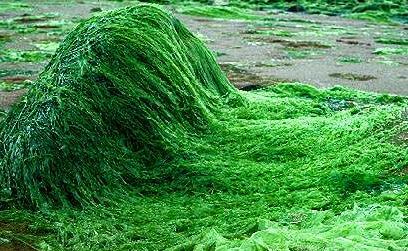
Spirulina (Arthrospira platensis and Arthrospira maxima) contains 55-70% protein by dry weight, as well as high amino acid content and nutrients. It grows best in environments with high CO2 concentrations, a high pH, and high temperatures.

Spirulina are a globally cultivated algae species for food production because of their high protein content and nutritional value. We decided that the nutritious algae would be an excellent food product to sell as our business product and the only thing left to decide was how to grow the spirulina. We decided that the best way to grow them and incorporate the compost would be to use a photobioreactor which is a closed system that would allow us to control the inputs and outputs of the spirulina growth mixture. We could also take the CO2 from an industrial composter like Scrappy and feed it into our photobioreactor to cultivate the spirulina.

After settling on an idea, my team had to settle on a company name and company roles. The members of my team were myself as the Chief Technological Officer, Jivahn Moradian ‘20 as the Chief Financial Officer, and Gabby D’Arcangelo ‘21 as the Chief Executive Officer. When deciding on a name we wanted something that represented both the algae and the use of carbon dioxide from the composter. So the name we settled on was AlgaeHG or AlGHG. The GHG in the title is short for Greenhouse gases which we are using to create our product in the form of CO2.

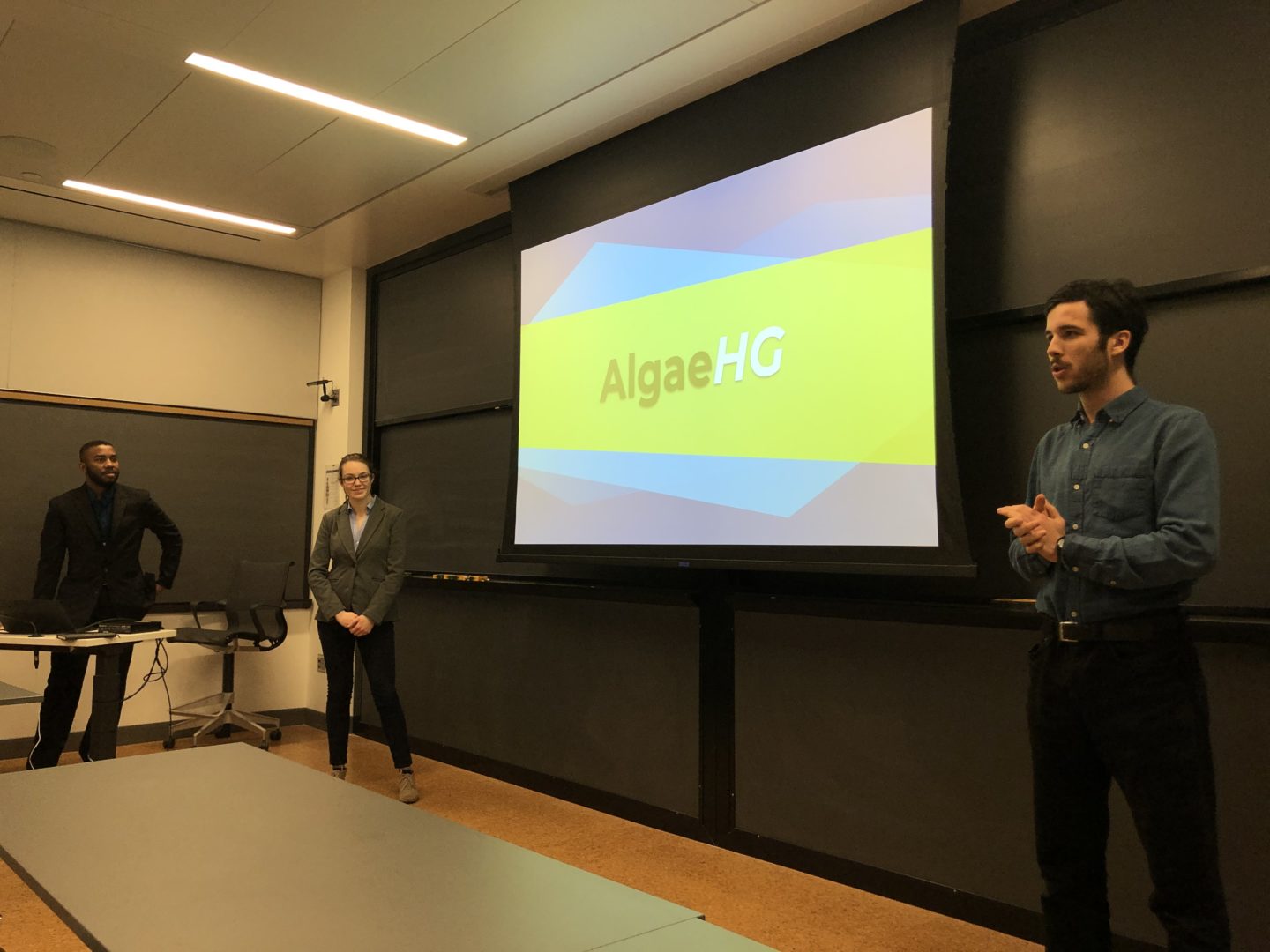
Gabby D’Arcangelo ‘21, Wesley Wiggins ’21, and Jivahn Moradian ‘20 (from left to right) presenting the AlgaeHG business pitch and presentation in ENE321: Resource Recovery for a Circular Economy.
Photo Credits: Professor Z. Jason Ren

Though the company was created for a class project, the three of us had quite a fun time brainstorming the science, engineering, finances, and algae puns for our little class project. And we were thankful to Gina Talt and the S.C.R.A.P. Lab for letting Gabby and Jivahn visit the Lab during my shift, and for all of the other assistance, we were able to receive. 

Sustainable Meals for Busy Students: BBQ Portobello Burger

Author: Julia Harisay ’21

Are you cooking for yourself this semester? Are you trying to figure out how to balance all your school work and find time to cook healthy and delicious meals? Are you interested in how to do this while reducing your carbon footprint and doing something good for the planet? If you’ve answered yes to any of these questions, then you’ve come to the right place.

Try out this quick Southwest BBQ Portobello Burger recipe!

Why in the world should you ditch your juicy, delicious beef burger for a mushroom you might ask? Producing meat, especially beef, has a huge impact on the planet. From the feedstock grown to feed livestock to the methane emissions from cow farts and burps (yup, that’s the proper terminology), livestock production produces far more greenhouse gas emissions than does plant and crop production. Producing a pound of beef can produce an equivalent of 14.8 pounds of carbon dioxide, a greenhouse gas that when in excess contributes to global warming. Mushrooms? Producing a pound of mushrooms only produces an equivalent of .7 pounds of carbon dioxide. Not only are mushrooms better for the planet, they are also really good for you! Mushrooms contain a high daily percentage of key vitamins and minerals.

Still hesitant? Wondering how a mushroom can come anywhere near rivaling a burger? I promise you, you will be surprised. Follow this recipe to cook your mushrooms in a delicious barbecue marinade that is going to pack your mushroom with flavor. Not into barbecue? Swamp it out for a flavor of your choice! This recipe is easy and quick–exactly what a busy college student like you needs to satisfy your taste buds and do good for the planet and yourself.

Step 1: Preheat your oven to 475 °F. Wipe the portobello mushrooms with a damp cloth and remove the stems.

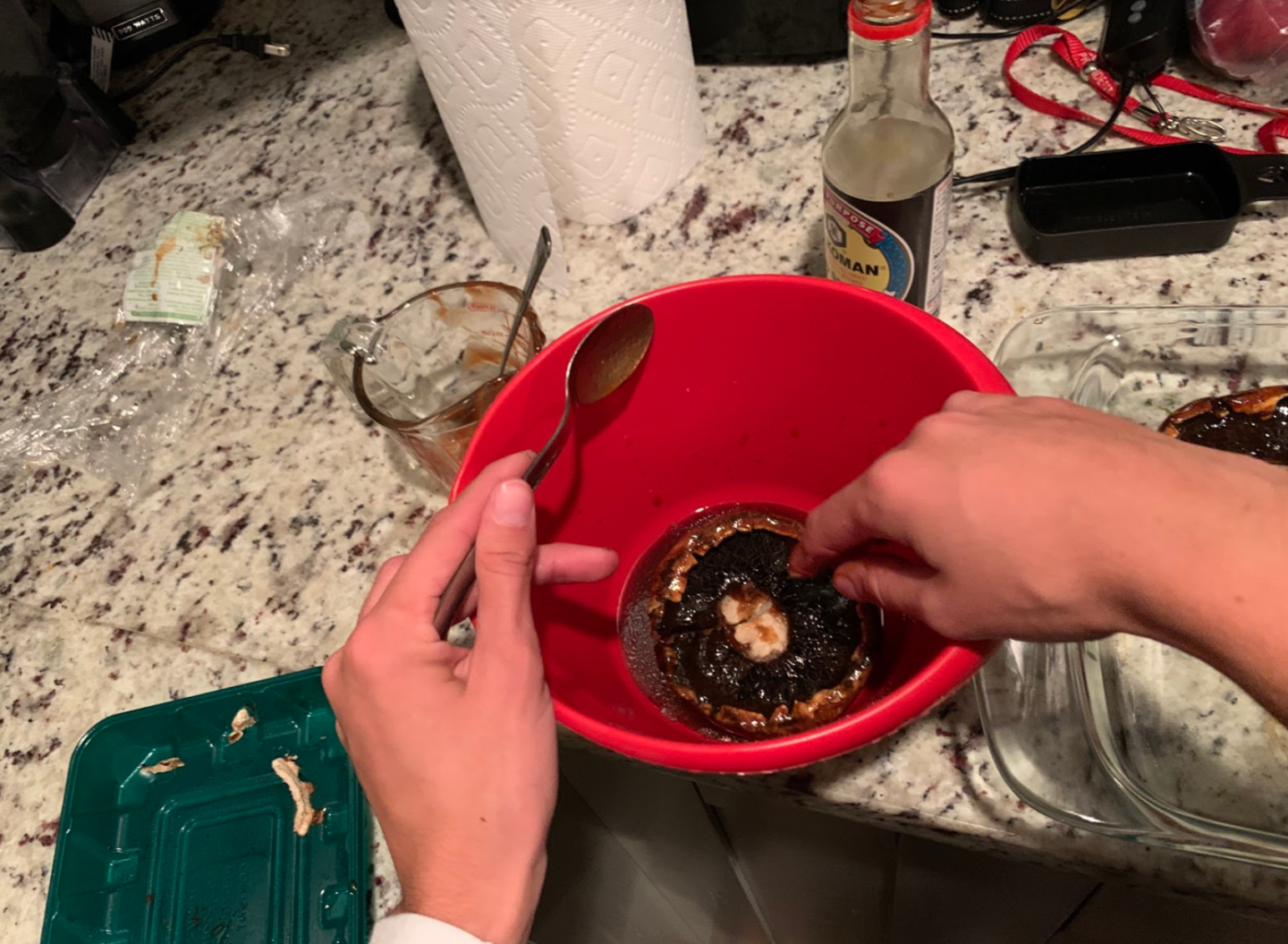
Step 2: Combine and mix the ingredients for the marinade in a bowl: ¼ cup of BBQ sauce, 2 tbsp of soy sauce, 2 tbsp of olive oil, 1 tbsp of apple cider vinegar, 1 tbsp of liquid smoke

Image 1: Photo of marinade ingredients.

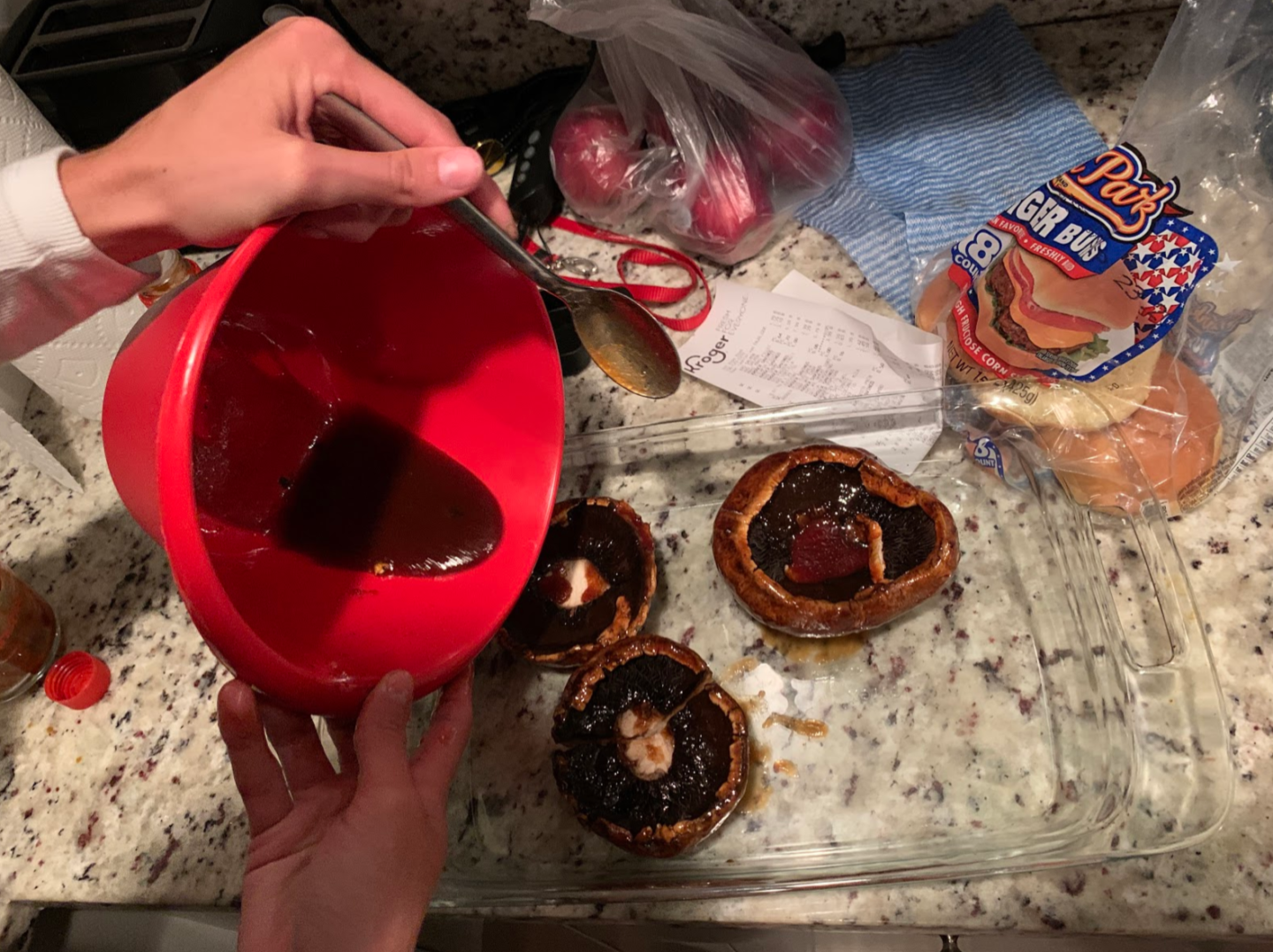
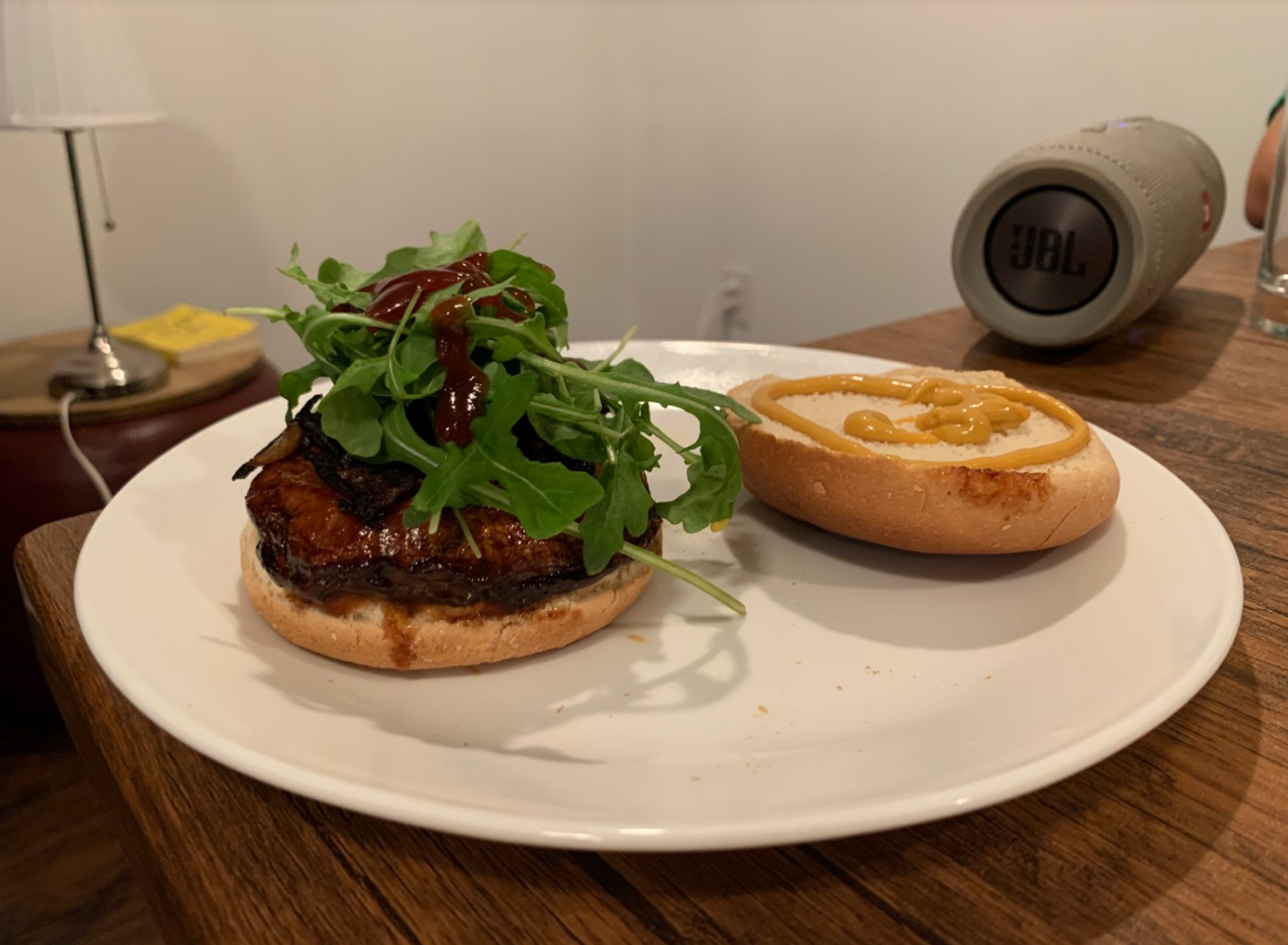
Step 3: Dip and submerge each mushroom in the marinade and then place them gill side up on a glass baking pan. Pour the remainder of the marinade over the mushrooms and then put them in the oven to cook for 22-25 minutes.

Image 2: Photo of portobello mushroom being dipped in marinade.
Image 3: Photo of portobello mushrooms in glass dish.

Step 4: Prepare any other toppings you normally like on a burger: pickles, tomatoes, lettuce, onions, etc.

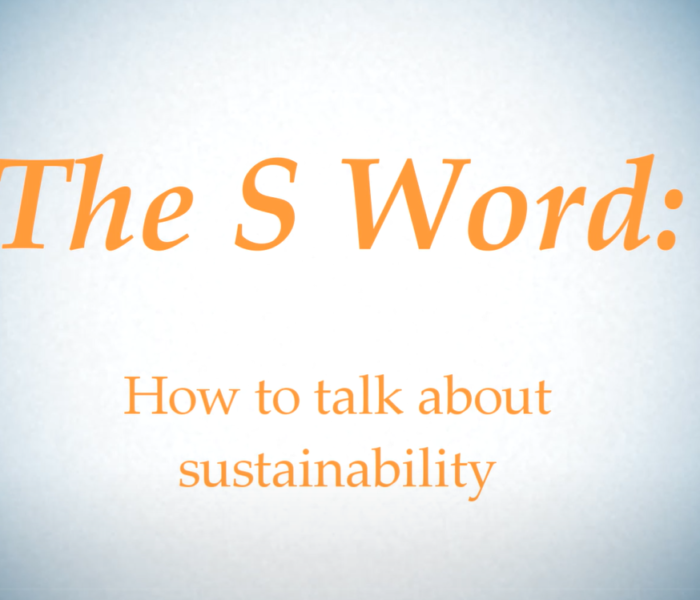
Step 5: Toast your buns, assemble your burger, and pair with your side of choice, such as fries. Enjoy!

Image 4: Assembled portobello mushroom burger.

Recipe from: 30-Minute Vegan Dinners by Megan Sadd

This series is brought to you by student group, Greening Dining

Welcome to the Tigers Go Green Blog!

Brought to you by Princeton EcoReps and the Office of Sustainability, this blog discusses all things at the intersection of sustainability and campus life. Even though we are scattered throughout the world, we hope that this blog will foster a sense of community amongst Princeton students, furthering an ethos of sustainability. The remote semester certainly poses challenges with regard to outreach, activism, and conscious decision-making, but we all have the chance to make the most out of our situation. 

Expect to see blog posts about sustainable living, environmental research, EcoReps activities, current events, ways to get involved, and more! While the creation of this blog was definitely brought on in part due to going remote, we also plan to continue blogging even after we return to campus. We hope that this platform will bring a sense of unity to individuals and sustainability groups on campus, provide opportunities for reflection and assessment, and leave a legacy of environmental stewardship beyond quarantine. 
We would love to hear your thoughts! If you have questions, concerns, or something to contribute to the blog, please get in touch with us! We will be accepting contributions for blog posts from the wider Princeton community.

Why I Vote

Why do you vote? What sustainable policies do you want to see implemented? Which environmental issues do you care the most about? Fill out this brief form to share your reasons for voting!

If you are not eligible to vote in the United States or in your home country, feel free to share reasons for why others should vote!

The Office of Sustainability will select responses to share on InstagramFacebook and the new Tigers Go Green Blog (launching on October 1)! If you choose to submit a written response (as opposed to a video), you will be asked to submit a picture of yourself.

This initiative is in support of Vote100. Please take 2 minutes to make sure you are registered to vote: https://vote100.princeton.edu/registration

Meet the EcoReps – Grace Liu ’23

Hometown – Daytona Beach, FL

How do you engage with sustainability?

I enjoy making plant-based recipes, thrifting clothes, and finding ways to reduce waste.

What do you study and why?

I’m studying Computer Science because I hope to eventually use it as a tool for environmental research. The emerging field of computational sustainability fascinates me and gives me hope for the future.

What other campus groups are you involved with?

ACM, Princeton Presbyterians 

What do you like to do in your free time?

I like visiting the geese on Lake Carnegie or playing anime covers on the piano. 

Share a fun fact about yourself!

I have watched all 9 seasons of How I Met Your Mother 6 times.

Meet the EcoReps – Marissa Mejia ’23

Hometown – Chesapeake, VA

Spring Location – Princeton!

What is your favorite EcoRep project that you’ve done?

I absolutely loved collaborating with CAF to create a series highlighting environmental (in)justice on the scales of New Jersey, the US, and the globe!

How do you engage with sustainability?

Sustainability is something that I incorporate into my day-to-day life through using reusables, composting at home, wearing thrifted or second-hand clothes, and encouraging my friends and family to adopt similarly sustainable lifestyles! I also believe in using my platform as well as my right to vote in order to push sustainability forward on a broader scale.

What do you study and why?

I plan to concentrate in Psychology because I am fascinated by the human brain and why we act the way that we do! I also plan to pursue a certificate in Environmental Studies because I want to help fight the climate crisis and believe that educating myself on this topic would help me do so more effectively.

What other campus groups are you involved with?

Princeton Conservation Society, Más Flow Dance Company, BodyHype Dance Company, Service Focus, Mathey College Council

What do you like to do in your free time?

I love to dance!! I also enjoy relaxing at the beach, surfing, thrifting, and hanging out with my friends, family, and goldendoodle named Ellie.

Share a fun fact about yourself!

I have taken dance classes since I was three years old!

Meet the EcoReps – Maddy Chong ’23

outside_headshot_-_Madeleine_Chong_d28arj

Hometown – Fort Collins, CO; Ewing, NJ

How do you engage with sustainability?

In my personal life, I strive to make everyday changes to shift towards more sustainable alternatives, such as having reusables on hand, educating myself on current events, and having conversations about the environment with my friends. I strongly believe that individual changes are what contribute to an ethos of sustainability and building macro-level changes. However, because climate change is driven, in large part, by corporations and large-scale capitalism, I am also very interested in helping affect change there via my work with the EcoReps and participating in elections and protests.  

What do you study and why?

I am majoring in Molecular Biology and plan to go to grad school to do research and someday become a professor. I love learning how our bodies work on a cellular level, and I think it is especially cool how many complex mechanisms are going on just so we can exist!

What other campus groups are you involved with?

Outside of EcoReps, I’m heavily involved in Triple 8 Dance Company and love spending time in Frist with my T8 family. I also work with the Pace Center as a Senior Fellow for the Service Focus Education Cohort and dance with BodyHype Dance Co.  

What do you like to do in your free time?

In my free time, I enjoy trying new restaurants, spending time outdoors with my dog, and doing arts and crafts! My latest work in progress is a temperature blanket.

Share a fun fact about yourself!

My favorite word is bucket!