Explore

Level Up Your Leftovers #2: Creamy Israeli Salad and Garlic Bread

By: Naomi Frim-Abrams ’23

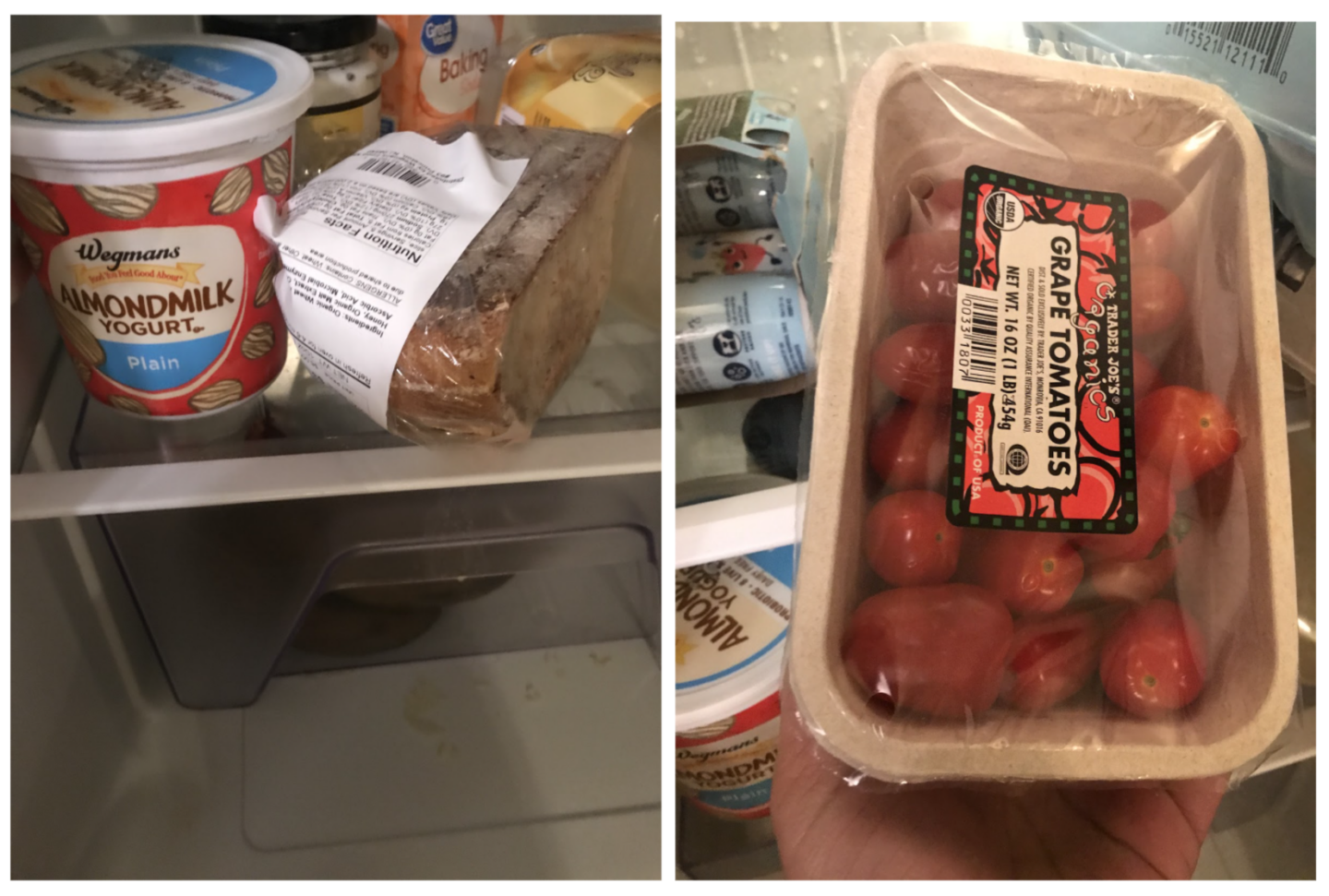
Hello everyone, welcome back to the second installment of Level Up Your Leftovers, a series where I (Naomi) take your leftovers and turn them into a refreshed recipe! For this post, we have an anonymous submission: “I have tomatoes, bread, and yogurt, [and] I am looking for a savory snack/meal.” The post also graciously included some photos to show us what we’re working with:

The supplies include: almond milk yogurt, bread, and grape tomatoes.

This one was a bit of a challenge for me, as I don’t often work with almond milk yogurt, nor do I combine tomatoes and yogurt all that often. But after a bit of research, I think I’ve found a great and healthy meal that you can make with just a few extra ingredients! You can turn the tomatoes and yogurt into a creamy Israeli salad, and that bread looks perfect for a quick toasted garlic bread to eat on the side.

This recipe was adapted from Tori Avey and Food52.

Ingredients

Israeli Salad

Image Credit: https://toriavey.com/toris-kitchen/israeli-salad-week/
  • 1 package of grape tomatoes, diced
  • 1 large cucumber, diced
  • 1 bell pepper and/or 1 small onion, diced (optional)

Yogurt Dressing

  • ½ cup yogurt (regular or non-dairy)
  • ¼ cup lemon juice
  • ¼ cup olive oil
  • 2 cloves garlic, very finely minced or crushed
  • ¼ cup fresh parsley, minced
  • 1 tsp black pepper
  • Salt, to taste

Garlic Bread

Image credit: https://www.simplyrecipes.com/recipes/garlic_bread/
  • 1 loaf of bread, sliced
  • 3 cloves of garlic, finely minced
  • ⅓ cup olive oil or melted butter
  • Salt and pepper, to taste
  • Fresh parsley or other herbs, to taste (optional)
  • Red pepper flakes, to taste (optional)

Preparation

For the salad and dressing: 

  1. Combine all diced vegetables in a bowl. 
  2. Whisk together all of the dressing ingredients before pouring over the vegetables. Stir to coat. Serve at room temperature or chilled.

For the garlic bread:

  1. Preheat the oven to 400 degrees Fahrenheit.
  1. In a small bowl, combine the olive oil or melted butter with the garlic, herbs, and spices. Stir to incorporate.
  2. Lay out slices of bread on a baking sheet. Using a spoon or pastry brush, generously coat the tops of each slice with the garlic oil/butter mixture.
  3. Place in the oven until the edges of the bread turn a deep golden brown, for around 5 minutes.
  4. Take out of the oven and let cool for 5-10 minutes, then enjoy with the Israeli salad!

Fun Facts

This recipe is incredibly simple, and quite delicious! A few fun facts about our star ingredients:

Yogurt is a great protein option for those trying out vegetarianism – it is very nutrient-dense in relation to the amount of energy used to produce it and has a much lower impact compared to meat. Making a small swap like this is a great way to lower your carbon impact in the long term, and it’s healthy as well!

If you try this recipe, let us know over on Instagram or Facebook. If you want to try and stump me with your own batch of leftovers, send in a submission here! Your recipe could be the next one featured on the Tigers Go Green Blog.

Happy Cooking!

Naomi

Good News Friday 11/5/21

Author: Camellia Moors ’22

Hello and welcome to another edition of Good News Friday! In the midst of ongoing COP26 talks, we’re discussing some recent major climate announcements, including a fund for renewable energy projects in developing economies, financing for a clean energy transition in South Africa, and an international pledge to phase out coal-fired power plants.

Image Credit: Pixabay via Pexels.com
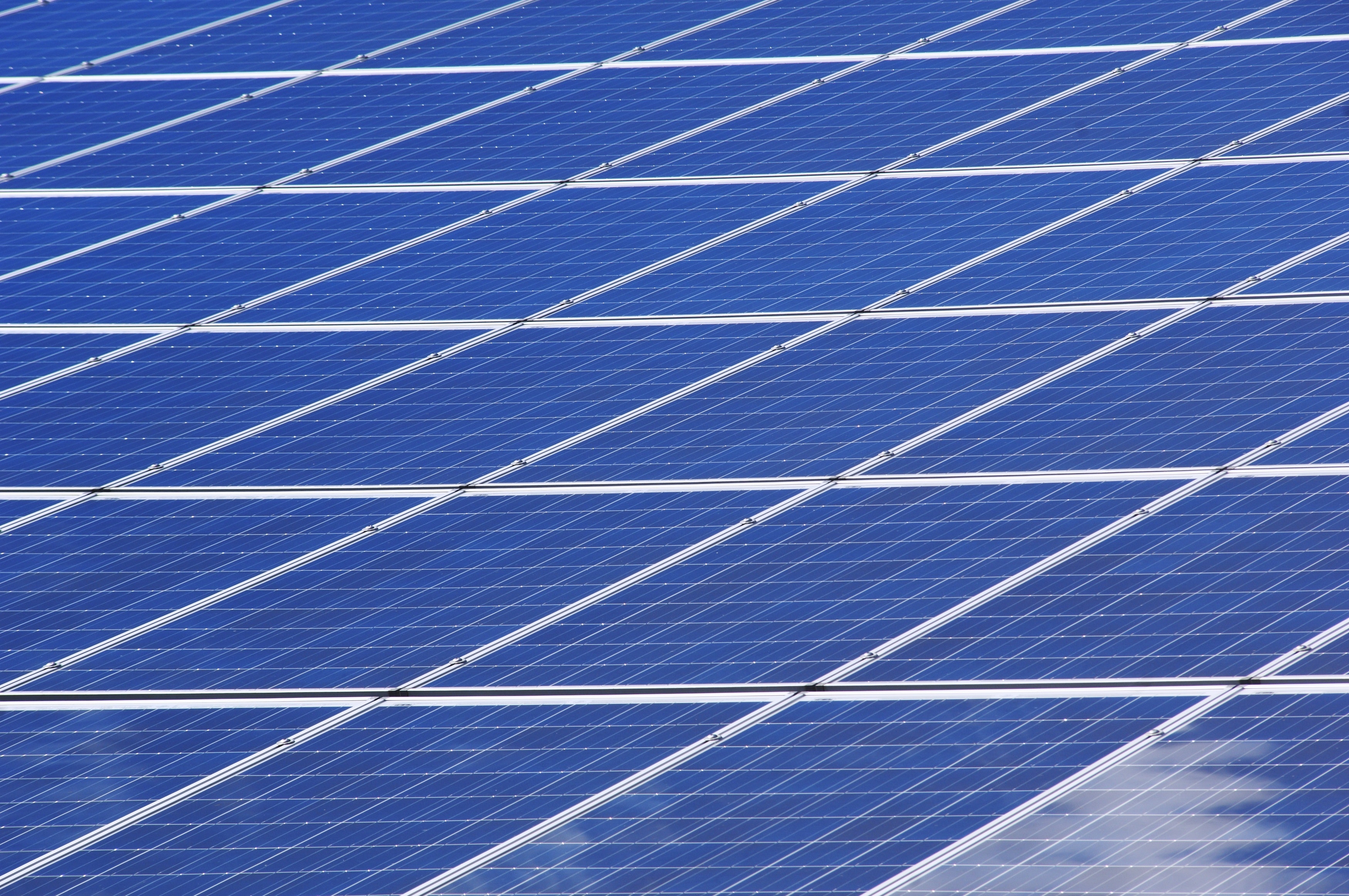
  1. A new fund for clean energy investments is formed: Several philanthropic organizations and international development banks joined forces this week to announce the formation of a $10.5 billion fund intended to “help emerging economies with growing energy needs make the switch from fossil fuels to renewable sources.” Known as the Global Energy Alliance, the group’s commitment comes because several large and/or developing nations recently called for the investment of $100 billion annually by developed countries for the purpose of furthering international climate goals.
Image Credit: Pixabay via Pexels.com

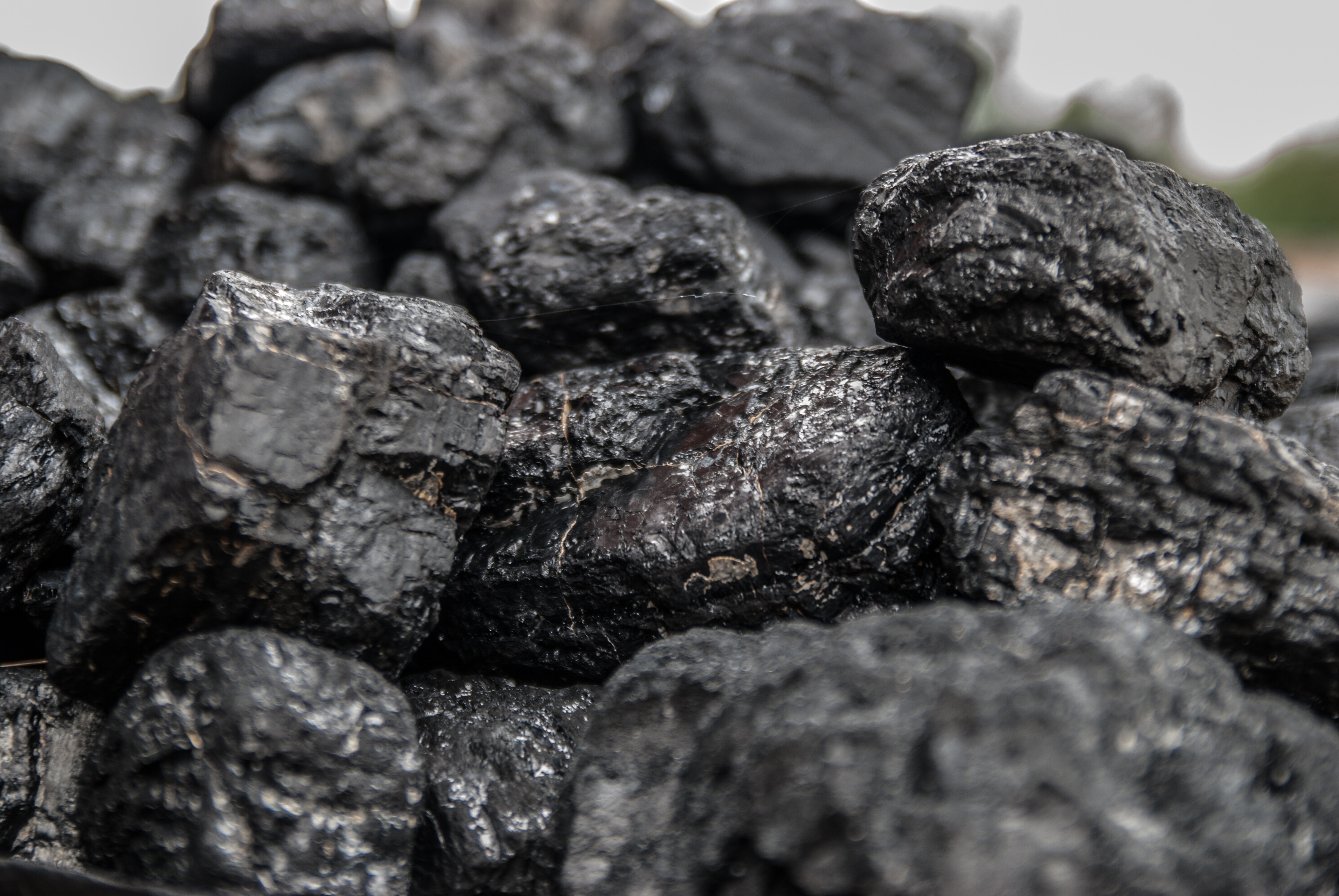
2. South Africa to receive financing to phase out nonrenewable energy: In the wake of requests for international financial aid to achieve climate goals mentioned above, this week South Africa announced Britain, France, Germany, the U.S., and the EU will dedicate $8.5 billion towards South Africa’s efforts to “install more clean energy, accelerate the country’s transition away from coal power and cushion the blow for workers who may be affected by the shift.” Currently, South Africa accounts for approximately 17.8% of the world’s coal consumption, meaning this decision could have a significant impact on global carbon emissions.

Image Credit: Markus Spiske via Pexels.com

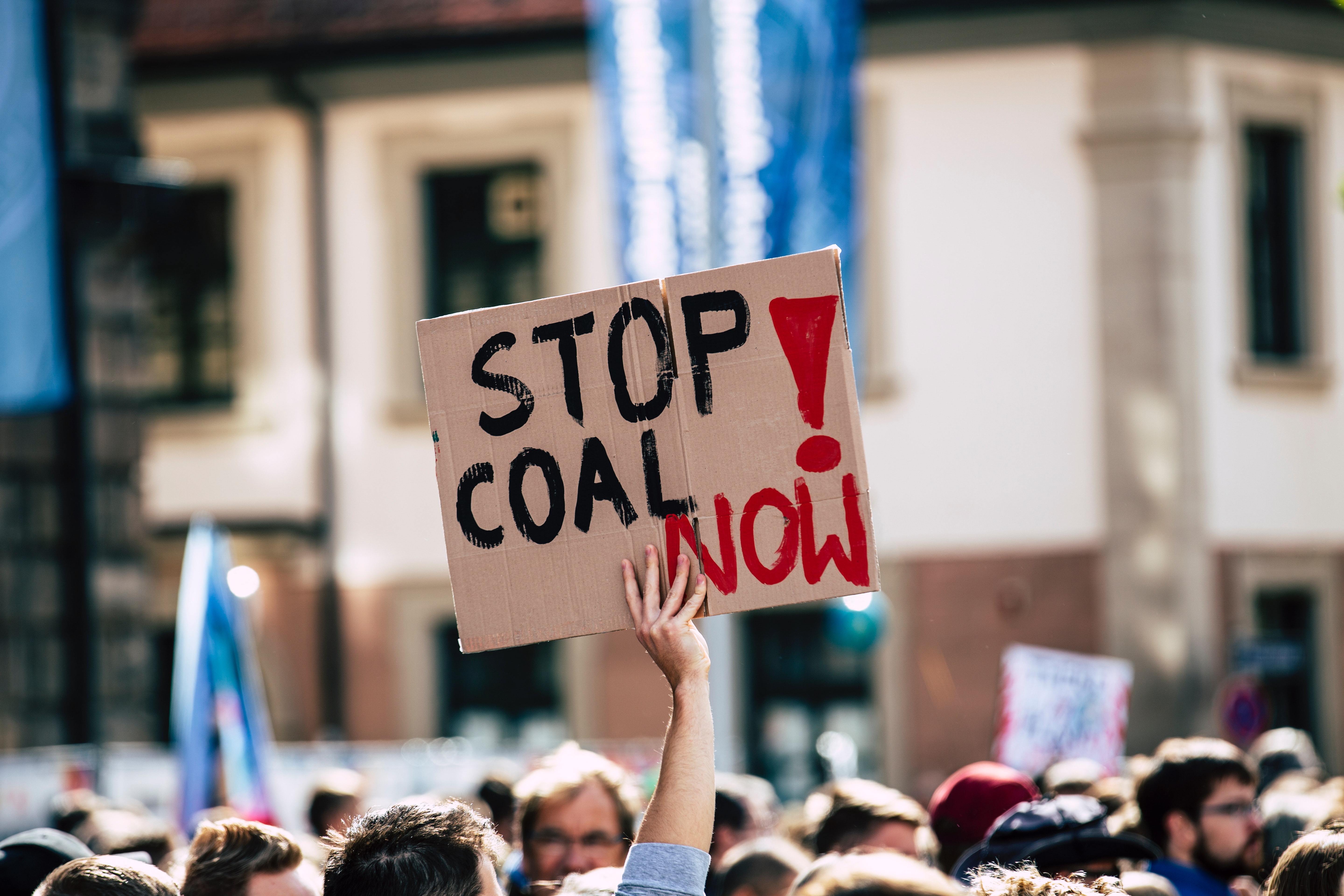
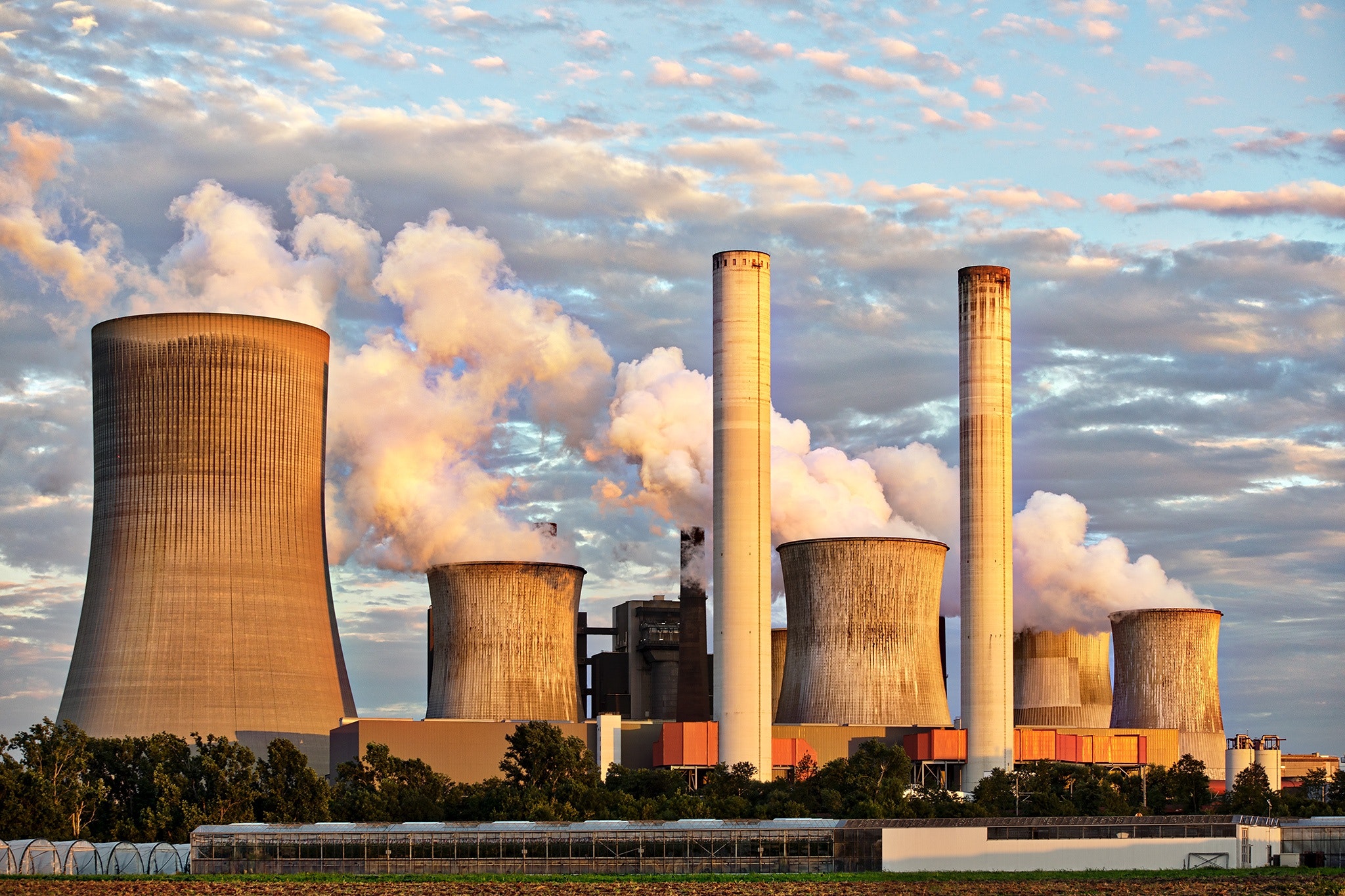
3. International coalition to pledge to phase out coal: The British government announced that it has brokered a deal between 18 unnamed countries at COP26 to phase out the use of domestic coal-fired power plants and eliminate funding for international coal projects. Coal as a fuel source emits a relatively large amount of carbon dioxide per kWh of electricity generated, making this commitment an important first step in the energy transition.

That’s all for this week! Tune in next time for more positive environmental news. In the meantime, if you have any good news you would like to share, please contact us!

Good News Friday 10/29/21

Author: Grace Liu ‘23

Welcome again to another Good News Friday! We hope that your fall break was restful and that your first week back went relatively smoothly. For this edition, we will hear about the return of blue whales to the coast of Spain, large companies committing to zero-emission shipping, and the trend of “rewilding” in urban spaces. 

mage credit: Three-shots via pexels.com
  1. Blue Whales Return to Spain: In 2017, a blue whale was spotted off the coast of Spain for the first time since the 1980s. More blue whales have been spotted in the years following. These sightings suggest that the moratorium on whaling has allowed the nearly extinct whale population to recover in the past 40 years. However, climate change still threatens the sea giant’s habitat and migration patterns.
Image credit: Tumisu via pexels.com
  1. Retail Corporations Commit to Zero-emissions: A coalition of companies, including Amazon, Ikea, and Patagonia have pledged to use only ocean shipping vessels that are zero-emissions by 2040. The coalition also urged government officials to implement market based strategies that support the development of zero-carbon shipping fuels, making them competitive with fossil fuels. Given that cargo ships emit up to 3% of the world’s carbon dioxide, this initiative has significant implications for the shift to a carbon neutral economy.
Image credit: PublicDomainPictures via pexels.com
  1. Rewilding Revitalizes Urban Spaces: According to architect Stefano Boeri, vertical forests (Bosco Verticale) are “a home for trees that also houses humans and birds.” Covered in trees, shrubbery, and perennial plants, these residential spaces are an example of “rewilding,” a growing global trend that introduces greenery and nature into urban environments. Architect and Professor Steffen Lehmann states that the rewilding movement helps solve contemporary challenges of biodiversity loss, urban overheating, and climate resiliency.

We hope you’ve enjoyed the stories this week, and wish you the best getting back into the swing of things. Check back next week for more encouraging environmental news. If you’d like to share some Good News with us, please feel free to get in touch!

Good News Friday 10/15/21

Author: Camellia Moors ’22

Welcome to a post-midterm edition of Good News Friday! We hope some happy environmental news can help you destress after a hectic week. With the 2021 United Nations Climate Change Conference (COP26) coming up later this month in Glasgow, we’re covering some recent big commitments by nations towards fighting climate change.

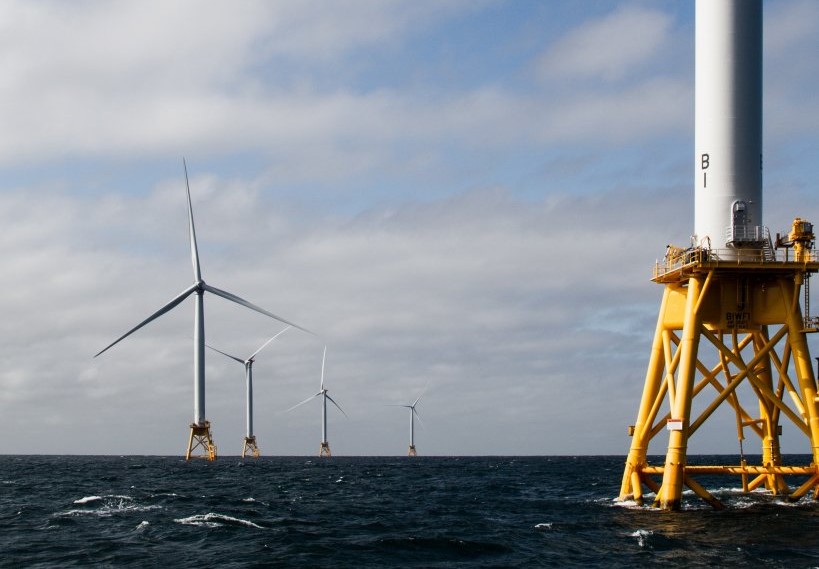
Image Credit: Gary Norton via U.S. Department of Energy
  1. U.S. to expand offshore wind: Department of the Interior Secretary Deb Haaland announced that her agency will “begin to identify, demarcate and hope to eventually lease federal waters… to wind power developers” in the Gulf of Mexico and along both coasts by 2025. This came several months after the Biden administration approved the nation’s first large-scale offshore wind farm in May. This development is particularly promising due to the massive potential of American offshore wind: according to the Department of Energy, “U.S. offshore wind has a technical resource potential of more than 2,000 GW of capacity, or 7,200 TWh of generation per year… nearly double the nation’s current electricity use.”
Image Credit: Pixabay via pexels.com

2. France invests in decarbonization: French President Emmanuel Macron announced his country will invest approximately $34.6 billion over the next five years into nuclear reactors and other decarbonizing technologies. French law currently aims for a 40% reduction in carbon emissions by 2030 and carbon neutrality by 2050.

Image Credit: Pixabay via pexels.com

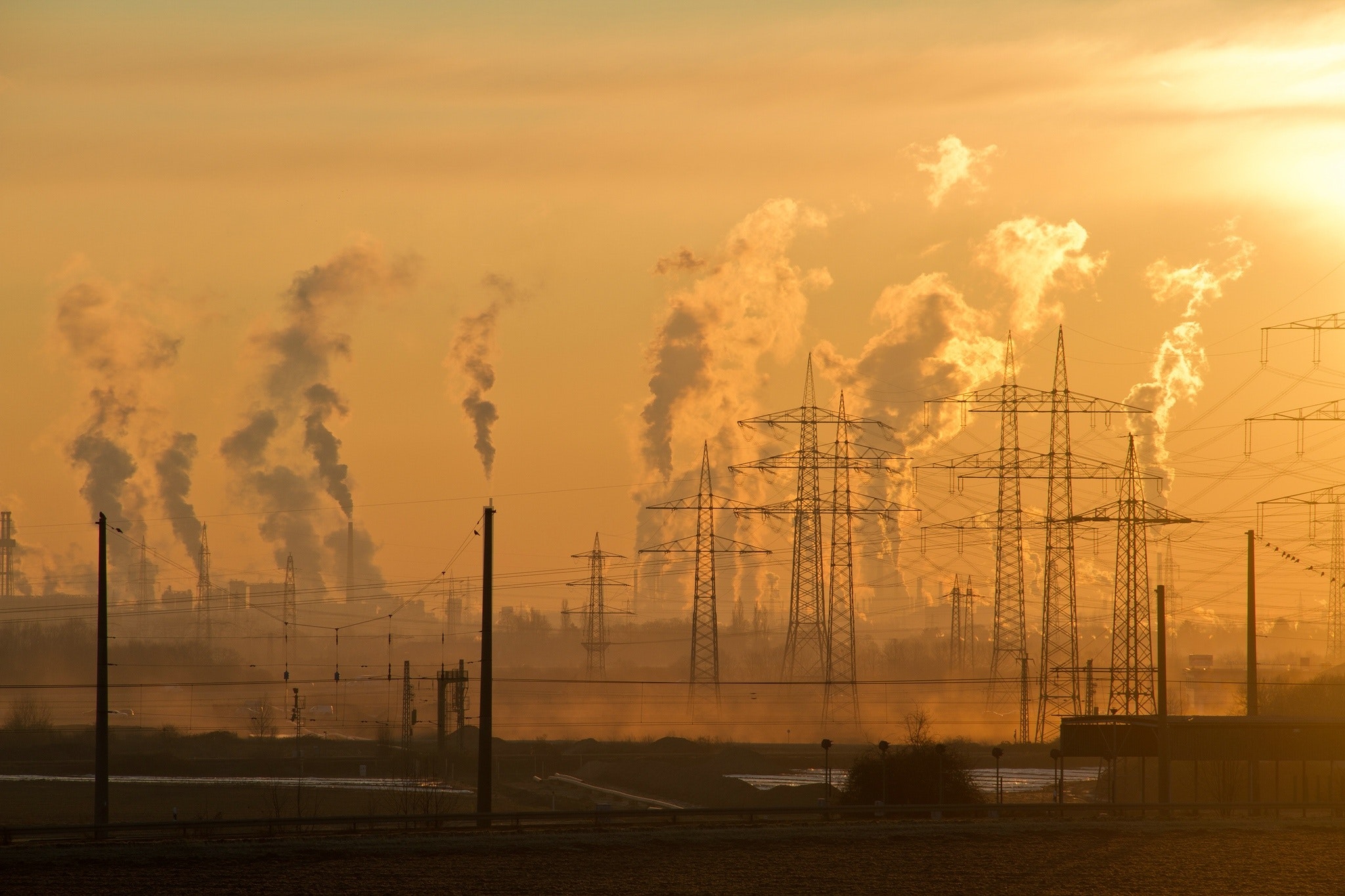
3. Global commitments to reducing methane emissions: In a sign that political leaders around the globe are increasingly targeting the nuances of climate change, 33 countries (including the U.S.) pledged to cut their methane emissions by 30% by 2030. The move constitutes an acknowledgement of a United Nations report on how cutting methane emissions–in addition to carbon emissions–is critical to climate change mitigation efforts.

That’s all for this week! Enjoy your fall break, and as always, we welcome you to check out our previous editions of Good News Friday and to contact us if you have any positive environmental news to share!

Good News Friday 10/8/21

Author: Grace Liu ‘23

It’s that time of the semester again: midterms week. If you’re feeling overwhelmed by exams, essays, and/or p-sets, we hope that a bit of happy environmental news will help lift your spirits. 

Image Credit: champsmart via pixabay.com
  1. Jane Goodall has hope for the future: Primatologist Jane Goodall, best known as the world expert on chimpanzees, recently released a book with Douglas Abrams titled “The Book of Hope: A Survival Guide for Trying Times.” In it, she argues why hope is a “crucial survival trait,” and offers inspiring stories of human intellect and environmental resilience. Since it’s so easy to become jaded or apathetic around environmental issues, Goodall shares an important message to reignite hope and foster an ethos of sustainability.
Image Credit: StockSnap via pixabay.com

2. Protected Peruvian crops potentially facilitate climate adaptation: The Marcapata Ccollana preserve in the Andes is the home of a Quechua-speaking Indigenous community that has preserved ancient ways of farming over 100 varieties of root vegetables. The government of Peru has recently declared this region a protected agrobiodiversity zone. This status protects food security because agricultural biodiversity is necessary for climate change adaptation.

Image Credit: congerdesign via pixabay.com

3. Startup makes edible protein flour using bacteria: A Finnish Startup named Solar Foods has developed a process for growing protein in a bioreactor using only water, carbon dioxide, nutrients, and bacteria for fermentation. The resulting product is a white, tasteless flour that can be flavored or added to many different foods to increase the nutritional value. If production scales up to economically practical quantities, we could experience a reinvention of protein for mass consumption.

Thanks for reading and best of luck during midterms, everyone! Please tune in next week for more positive environmental news and in the meantime, feel free to take a look at previous posts or share some good news with us!

Good News Friday 10/1/21

Author: Camellia Moors ’22

Happy October everyone, and welcome to another edition of Good News Friday! Today, we’re covering the decline of the Scottish oil industry, international climate change litigation, and greener building codes in California.

Image Credit: Koji Francisco via pexels.com
  1. Scotland reassesses its oil industry: After pressure was successfully placed on the British government this year to revisit offshore oil field licenses, Scotland has faced a reckoning over the future of its oil industry. Previously a booming business, North Sea oil outputs have been on the decline for the last several years and stand in opposition to British climate goals. As a result, attention has increasingly been paid to offshore wind, which is well-suited to the region and could replace the economic loss caused by the decline of oil.
Image Credit: Jan-Rune Smenes Reite via pexels.com

2. Wave of climate litigation expected: After a Dutch court ruled in May that Royal Dutch Shell must cut its emissions in line with the Paris Agreement, activists are hopeful that further litigation against pollution corporations can help pick up the slack left by weak environmental regulations. With that in mind, the International Federation for Human Rights (FIDH) recently launched its #SeeYouInCourt campaign. To date, the campaign has seen multiple NGOs and human rights organizations file lawsuits against major polluting companies, which often bear the biggest responsibility for climate change.

Image Credit: Pixabay via pexels.com

3. California announces greener building codes: After California made headlines in 2018 by establishing a mandate for rooftop solar on all new residential construction, the state is back at it again with new laws to reduce energy consumption. The California Energy Commission recently approved new codes that encourage electrification, the use of more efficient appliances, and less energy-intensive heating and cooling systems in new homes and some businesses. Given that “fossil-fuel combustion attributed to residential and commercial buildings accounts for roughly 29 percent of total U.S. greenhouse gas emissions” (C2ES) and approximately 12% of the U.S. population lives in California, these new regulations could have a serious impact on carbon emissions.

That’s all for this week! Until next time, and feel free to contact us if you have any positive environmental news you would like to contribute!

The Science of Sustainability: Geopolitics and Dust Storms in China

By: Ethan Sontarp ’24

Trained as a sociocultural anthropologist, Jerry Zee, Assistant Professor of Anthropology and the High Meadows Environmental Institute, just about does it all. His research looks through the lenses of geophysics, literature, feminist studies, ethnography, aerosol science, and more, to fill gaps in our current knowledge of Chinese geopolitics in relation to changing weather patterns. Read this interview to dive into his complex and interdisciplinary world!

Image Credit: Jerry Zee via https://environment.princeton.edu/people/jerry-zee

What does sustainability mean to you? How do you engage with sustainability outside of your work?

Sustainability is an idea that […] there is an ethical, technical, political demand for us to think about what would be necessary that the planet outlasts us. It’s a concept that has roots in the fantasy of the sustainability of the planet for capitalism, but I think that we can tinker it, or tweak it, or undo it, so that it can orient us more broadly toward a relationship with things we can’t possibly imagine yet. I would like to think about it as an open ethical and political injunction, you know, our responsibility to both the past and the future. As an anthropologist, one cannot draw a clear distinction between work and not work.

Could you give a brief overview of your current research? What makes it interesting to you?

I write about what I call modern weather, or a meteorological contemporary in China. What I mean by this is that accounts of modern China are given in political and geopolitical terms, and parallel to this, I try to make sense of how the period that we understand as China’s modernity (its different adventures with socialism, late socialism, experiments with markets, and different kinds of political reform) has also been a time in which the weather across China has been changing in ways that are deeply linked to political transition. The things I think most specifically about are dust and aerosol events, so I’m interested in how in the last several decades, a crisis of large-scale land degradation across China’s interior, most conventionally known as desertification, has deep-rooted relations with the changing nature of Chinese institutions, politics, and society. There’s a tremendous number of strange things happening which confounds conventional ways of understanding what we think the Chinese state is and does, and what we think about the horizons of liberal environmental politics.


A sweeper walks with a broom along a road during morning rush hour as Beijing, China is hit by a sandstorm.

Image and Caption Credit: https://www.reuters.com/article/us-china-weather-sandstorm/beijing-choked-in-duststorm-stirred-by-heavy-northwest-winds-idUSKBN2B703

How do you approach your research problems? What resources do you use to navigate a research journey?

I’m trained as an anthropologist, but I think across a couple of different fields that inform the way I do research. I really like engaging with the humanities, especially in literature, and then I think across feminist traditions and science studies. Ethnographic research in the way I understand is based both on long term fieldwork and what we call participant observation, which means going and living in the rhythms of a certain kind of community or place for a long time – thinking from within the logics and tensions and textures of lives in these places. To think concretely my research involves working with state bureaucrats, scientists, and everyday people in China. That means everything from working with ecologists and geophysicists at state environmental research stations to forestry officials and planting teams from China and Korea to aerosol scientists in the US, to living with herders and pastoralists as they figure out how to manage the degradation of their pastures.

How do you avoid observer bias?

You can’t. We are all people who have backgrounds and who come from places and who are trained in certain ways. One of the questions that, as an ethnographer, I think about all the time is, “How is it that the specificity of who I am shapes the kinds of claims and arguments I make?” One of the things you learn to do is undercut your own arguments and think about the ways that you may be deeply committed to them. I fully believe that if another person did exactly the same project it would be a different question, but at the same time, I’m committed to an empirical truth as it appears through the encounters I’ve had.

What are some issues with our current understanding of Chinese geopolitics?

I think we need better accounts of China as an environmental agent and state. Many of the accounts that we get in the US either oppose China as an environmental hellscape in which the environment is collapsing in freefall, when in fact there are many kinds of political experiments that are emerging in tandem with the ecological catastrophe that is modern China. On the other side, there are sort of very hopeful and messianic accounts of Chinese environmental politics that pose it as a viable alternative to what people see as impasses in either the American or the international systems. Often people will point to China’s energy sector and its investment in clean energy transition as proof that the Chinese system is somehow better, and I wanted a way of doing research that doesn’t fall either into one of these pools, so that’s what moves me.

Are there any sustainability or climate science resources you know of that you would suggest for readers?

I would check out an organization called APEN, which is the Asian Pacific Environmental Network. They are at the very cutting edge of doing environmental justice work and research in communities that are affected, and they are good at thinking about the inter-relationship of environmental and social processes.

Check out my syllabi – I’m learning new things all the time. One of the more compelling things over the last couple of years since I’ve started teaching is that I learn a lot from the passion and energy and creativity and resolve of students. Learn from yourself.

Good News Friday 9/24/21

Author: Grace Liu ‘23

Thank you again for tuning into Good News Friday this week! We’re definitely getting into the swing of the semester, so a few positive reminders are always helpful. Today we’ll learn about urban agriculture in Paris, a plan to protect against heatwaves and the end of outsourced coal-fired power in China. 

Image credit: Max Vakhtbovych via pexels.com
  1. Futuristic Urban Greenhouses: The Garden City Project of the Crescent Moon in Paris stunningly showcases how sustainability can be incorporated into urban design. Located in the city’s largest park, the project includes rooftop gardens, small greenhouses, and even a cattle farm. Urban agriculture has a variety of social and environmental benefits, including recreation, improved air quality, and food production.
Image credit: Pixabay via pexels.com
  1. Biden’s Extreme Heat Protection Plan: The climate change-exacerbated heat waves of this past summer have had a devastating toll throughout the US. In response, the Biden administration has launched a plan to protect against extreme heat, which disproportionately affects the elderly and marginalized populations. The initiatives include, but are not limited to, increased workplace inspections and an expanded Low Income Home Energy Assistance Program. However, we hope that the administration can tackle the root of the problem in addition to mitigating the consequences.
Image credit: Gelgas Airlangga via pexels.com
  1. China Exits Overseas Coal: Nearing the November climate summit, Chinese President Xi Jinping announced that the heavily fossil-fuel dependent country would stop investing in coal-fired power plants abroad. This is part of his commitment to carbon neutrality by 2060. This decision is given in the wake of Japan and Korea’s termination of overseas coal power last year. 

Thank you for reading this week’s summary of positive environmental updates. If you’d like to share some Good News with us, please feel free to get in touch!

Good News Friday 9/17/21

Author: Camellia Moors ’22

Welcome to another edition of our Good News Fridays series! Today we are looking at environmental aspects of the upcoming federal budget reconciliation bill, a new way to store electricity generated by solar power, and a study on mitigating the impact of oil palm forests.

Image Credit: Aaron Kittredge via pexels.com
  1. House committee approves environmental provisions: The federal House Committee on Energy and Commerce on Monday voted to advance several aspects of the upcoming reconciliation bill, including provisions related to air pollutionhazardous materials, and water. These provisions contain a fee on methane emissions and funding for lead pipe replacement, a green bank, Superfund cleanup and environmental justice grants.
Image Credit: Pixabay via pexels.com

2. Companies to test electric vehicle batteries for solar storage: OCI Solar Power, CPS Energy, and Hyundai Motor Group signed an agreement to test recycled electric vehicle (EV) batteries for solar energy storage. The goal is to have a trial energy storage system installed by September 2022. EV sales and solar power installations have steadily grown over the last decade, priming this initiative to help combat the future problem of what to do with increasing numbers of EV batteries as they reach the end of their lifecycle.

Image Credit: Ihsan Aditya via pexels.com

3. Making oil palm plantations more sustainable: A new study targeting the environmental impact of palm oil plantations found that intercropping—growing two or more crops in close proximity—can reduce the environmental degradation caused by oil palm farming without impacting palm oil yield. This study is impactful because it confronts the common belief among some palm oil farmers that monocultures are essential to maximize crop output, paving the way for a new, more sustainable way of doing business.

That’s all for this week! We hope to see you again next Friday, and feel free to contact us if you have any positive environmental news to share in the meantime!

Good News Friday 9/10/21

Author: Grace Liu ‘23

Welcome back to another semester of Good News Fridays! We thought that this would be a great way to kick off the blog again, and we are so excited to share positive environmental news with you each week. In this post, we’ll cover the recovery of panda populations in China, a carbon-sinking cement, and a drought-resistant seed coating. 

Image credit: Diana Silaraja via pexels.com
  1. Giant Pandas Rebound: Wild giant pandas in China have reached a population of approximately 1,800, and the Chinese government has officially designated them as no longer an endangered species. They are still classified as vulnerable, but this is a promising result of conservation efforts. Additionally, there have been increases in the number of other threatened species such as snow leopards, crested ibis, and Tibetan antelope.
Image credit: Ksenia Chernaya via pexels.com
  1. Carbon-Sequestering Paint: A graduate from the Royal College of Art, Kukbong Kim, has developed a paint made from concrete residue which can sequester 20% of its weight in carbon dioxide. Approximately 8% of global carbon emissions are due to the cement in concrete. Thus, Kim hopes that this carbon sinking paint, deemed Celour paint, will eventually offset the emissions from the cement it is manufactured from. The product has the dual benefits of reducing greenhouse gas emissions and diverting concrete waste from landfills where it can have detrimental effects on the surrounding environment.
Image credit: Gelgas Airlangga via pexels.com
  1. Drought Resistant Seed Coating: Scientists have developed a seed coating made of biodegradable waste products which can allow seeds to survive and germinate in water scarce conditions. The coating consists of an outer layer of pectin derived from orange peels and an inner layer of beneficial bacteria and material from silkworm cocoons. The hope is that this will reduce the need for fertilizer and increase crop yields.

Thank you for reading our first Good News Friday of the semester! We wish you a great start to your new schedules, and hope that you will stick around for the weeks to come.