Welcome to our final edition of Good News Friday for the 2020-2021 school year! This series has been fun and insightful to make, and we hope to continue it in the fall. Today we are covering renewed American efforts to reduce methane emissions, an innovative way to limit excess nitrogen pollution in water, and Belgium’s recent commitment to confronting global deforestation.
U.S. Senate reinstates methane leak rules: On Wednesday, the Senate voted to effectively reinstate (by rolling back a Trump administration rule) an Obama-era regulation designed to regulate methane emissions from oil and gas well leaks. Passage of the rule in the House and approval by President Biden are expected next month. The move comes as new National Oceanic and Atmospheric Administration (NOAA) atmospheric data recently revealed that 2020 saw the largest annual increase in atmospheric methane since measurements began. The United Nations is also expected to release a report next week declaring that targeting methane emissions reductions is essential to mitigating climate change. (As a greenhouse gas, methane has a global warming potential 28 times greater than that of carbon dioxide).
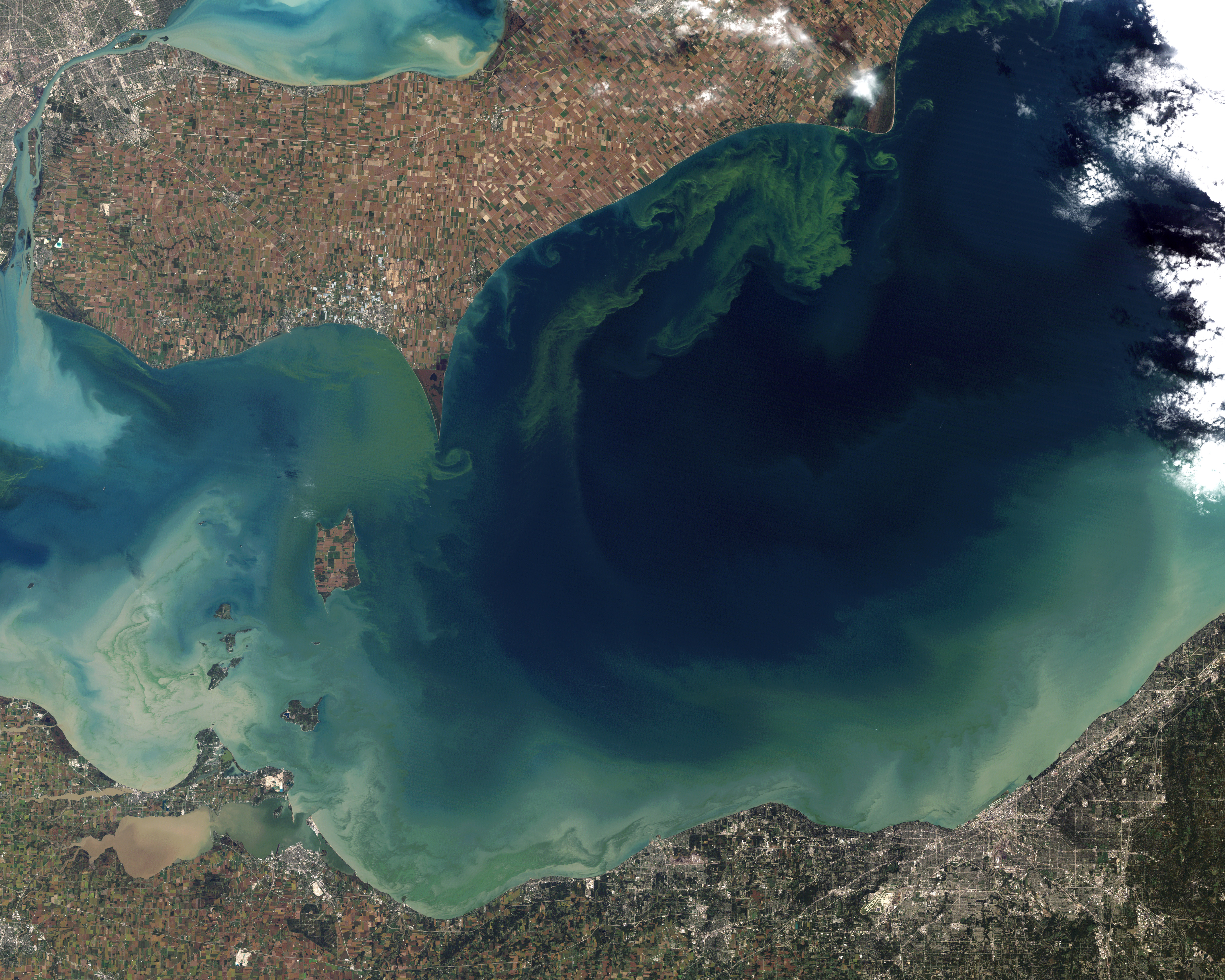
A new way to reduce algal blooms: Harmful algal blooms–overgrowths of toxic algae in water frequently in response to an excess of nutrients like nitrogen and phosphorus–can cause illness in humans and aquatic animals alike. Nutrients commonly end up in bodies of water via agricultural runoff, because farmers use nutrient-based fertilizers to grow crops. There are a variety of ways to try and filter out these nutrients from runoff, but a growing field relates to denitrifying bioreactors: namely, bacteria capable of processing nitrogen to remove it from water. A new study has found that filtering runoff through wood chips, which contain nitrogen-processing bacteria, can lead to a 20-40% reduction in the amount of nitrogen in the runoff. The study is promising because accessing wood chips is relatively easy and sustainable, making this a convenient way for farmers to process their runoff and prevent potentially harmful algal blooms.
Belgium bans palm- and soy oil-based biofuels: Belgium’s Minister of Environment and Climate, Zakia Khattabi, recently announced that the country would ban biofuels within its borders made from palm and/or soybean oil by 2022. Denmark, France, and the Netherlands have all made similar announcements. The move signifies Belgium’s first step as part of its membership in the Amsterdam Declaration Partnership, a group of nine European countries which aims for “deforestation-free, sustainable commodities.”
We hope you’ve enjoyed this series! If you have any questions or things you would like to see as part of Good News Friday in the future, please feel free to contact us.
Environmentalist Rachel Carson’s famous book Silent Spring (1962) first brought public attention to organic contaminants such as DDT, a common insecticide that caused detrimental impacts to numerous ecosystems until its EPA cancellation order in 1972. Organic contaminants are a wide class of carbon-containing chemicals, encompassing familiar names such as glyphosate (RoundUp) and BPAs. They are created and discarded by human industry and are often transported into ecosystems through runoff water. To get a better understanding of modern research involving these contaminants, I interviewed Ian Bourg, Assistant Professor of Civil and Environmental Engineering and the High Meadows Environmental Institute. Professor Bourg leads the Interfacial Water Group at Princeton, which focuses on understanding the microscopic processes which occur when water is in contact with air, clay, and organic contaminants.
Image Credit: Ian Bourg via https://cee.princeton.edu/people/ian-bourg
Why do you study processes at the microscopic scale?
Mostly what we’re doing is trying to understand the fundamental properties of matter, focusing on systems that are relevant to the environment – either in the natural environment or in engineered systems that are being used for protecting the environment. When a typical engineering group is doing work, they’re trying to design ways to manipulate the world and on the human scale to reach certain desired outcomes. Because many engineers work on the macroscopic scale, they use equations that represent the world at the macroscopic scale. In a lot of cases, we think that we can improve these equations if we gain more fundamental insight into how matter behaves at smaller scales.
Could you give a brief overview of your current research? What makes it interesting to you?
I’m interested in water in general because water is cool and water is important. Most water on the surface of the earth, or model that people are familiar with, is […] bulk liquid water, so like water in the ocean or in a glass. The properties of bulk liquid water are pretty well understood by now. Water near a surface remains kind of not that well understood, right? [For example] if I look at water near the water-air interface or near a solid surface or something like that, it changes its properties in various interesting ways depending on what’s on the other side of the interface.
The reason why we study clay is coming from our interest in water at interfaces, in that […] if you look at the average chemistry of the Earth’s crust, it’s mostly oxygen, silicon, and aluminum. There’s one way of packing together oxygen, silicon, and aluminum inside a crystalline structure that is apparently extremely stable and pretty close to the composition of the crust. That clay structure is a kind of structural motif that makes up half of the sedimentary rock mass, half of the mineral mass in soils, and about a third of the rock mass of the surface. If we’re interested in the interfaces between water and a mineral, most of it near the surface of the Earth would be water in contact with those specific minerals. So just kind of like by sheer abundance, if we’re interested in mineral-water interfaces, [clay] is the most logical one to be looking at.
Simulated clay-water interface with organic contaminant PFBS and calcium chloride ions.
What are some common obstacles in removing or remediating contaminants in our natural systems?
My Ph.D. advisor always used to say that science doesn’t solve problems, it just replaces one problem with a different problem. It kind of seems a little bit bleak, […] but then, on the other hand, you’re just basically hoping that you’re replacing a big problem with a smaller problem, right? Organic contaminants that are present in natural systems tend to decay naturally with some kind of exponential decay, both through interaction with sunlight, like if they’re in a river or lake and also by being accidentally broken down by microorganisms. There’s some trickiness with that in that it often generates collections of byproducts or degradation products, that in some cases can actually be more toxic than the initial contaminant. A lot of engineered processes for removing contaminants from a system basically just remove them by transferring them to a different system. It doesn’t take [the contaminant] out of the system completely, so it’s always going to be there. Historically a lot of environmental engineering has kind of focused on protecting humans, basically preventing contaminants from coming into contact with humans, whereas a more sustainable approach would be actually removing contamination from the Earth.
What does sustainability mean to you?
I think sustainability to me means thinking about the entire lifecycle of some kind of environmental issue, I guess it’s easier for me to think of in terms of contaminants or carbon. I feel like sustainability kind of in a way also forces you to think more about natural processes. We try to focus on what we think are the most pressing kind of environmental concerns that humanity is facing, and often those happen to be concerns where [the] most pressing environmental issues are the ones where humans are clearly behaving in a very unsustainable way.
Are there any sustainability or climate science resources you know of that you would suggest for readers?
I did read Silent Spring six months ago and I was like this book is amazing! I don’t know why I didn’t read it before, you know. It’s also scary, but interesting.
Image Credit: National Museum of American History via https://americanhistory.si.edu/collections/search/object/nmah_1453548
One thing that I try to do in in CEE 207, the Intro to Environmental Engineering course, is to take a 10-minute break and talk about environmental news in like the major news outlets that that came out since the previous lecture. The Guardian has had a ton of really nice kind of environmental coverage for the last several years.
The time has come; It is the final stop on the Plant Based Food Tour of Princeton. This week we’ll be hitting up a variety of restaurants. We’ll give you our take on ice cream, pizza, and fully plant-based restaurants. Have you been curious about dairy free options at local ice cream shops, but still too nervous to take the leap? We will convince you! Wondering how pizza can be vegan? You’ll be surprised. Overwhelmed by all the different options at the local juiceries and plant-based restaurants? We’ll help you figure out what’s best for you. While this may be the final stop, we hope that we’ve encouraged you to continue to pick plant-based options when dining out in Princeton and wherever else you go. You can do something good for both your body and the planet!
Sweets
Thomas Sweet – Most Likely to Make You Feel Like a Kid Again
Price: $
Bang for Your Buck: ★★
Creativity: ★★★
Plant Forward: ★★
Taste: ★★★
Ease of Access: ★★★
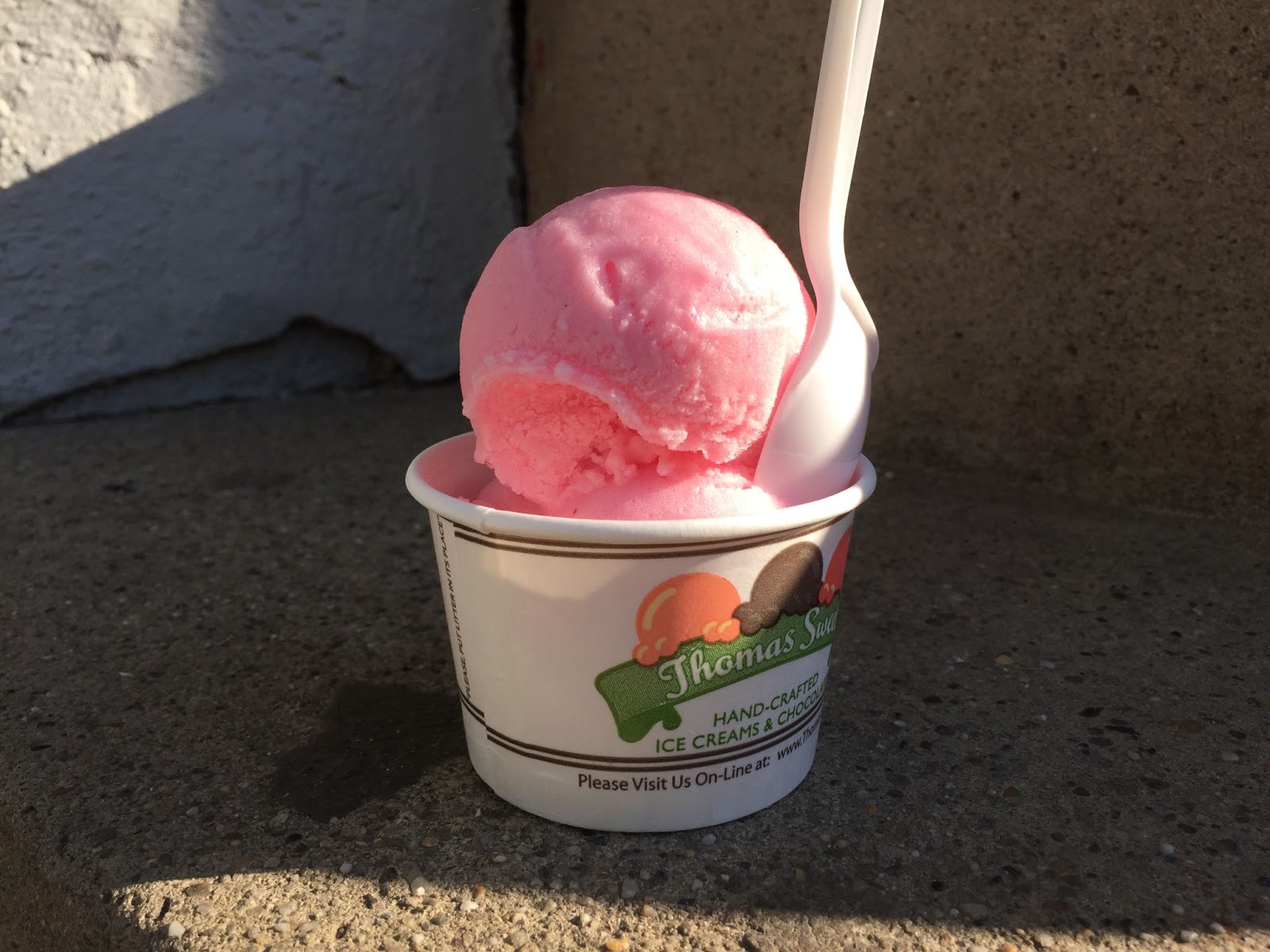
Thomas Sweet is most well-known for its blend-ins, which are a variety of toppings that you can get mixed with ice cream in a special machine to create a soft serve-like consistency. Because I wanted to sample the shop’s vegan options, however, I wasn’t able to get any of the flavors that were available for blend-ins. Their only vegan offerings were two flavors of sorbet: watermelon and pineapple. I ordered a single scoop of the watermelon, which I thought had a bit of an artificial candy-like flavor. The texture of the sorbet was quite enjoyable, though; I was expecting something like Italian ice and so was pleasantly surprised by how smooth it was. While Thomas Sweet may not be the best place to go if you’re looking for vegan frozen desserts, the blend-ins looked super fun, and I would definitely recommend giving them a try if you eat dairy. The store is not too far from campus and there are some outdoor tables right outside, perfect for a sunny outing with a few friends. I also loved how charming it was inside, with bright colors, whimsical decor, and even a funhouse mirror. Overall, Thomas Sweet is my ideal childhood ice cream shop with some creative twists!
Bent Spoon – Most Vegan-Friendly Ice Cream in Princeton
Price: $
Bang for Your Buck: ★★★
Creativity: ★★★★★
Plant Forward: ★★★★★
Taste: ★★★★★
Ease of Access: ★★★★
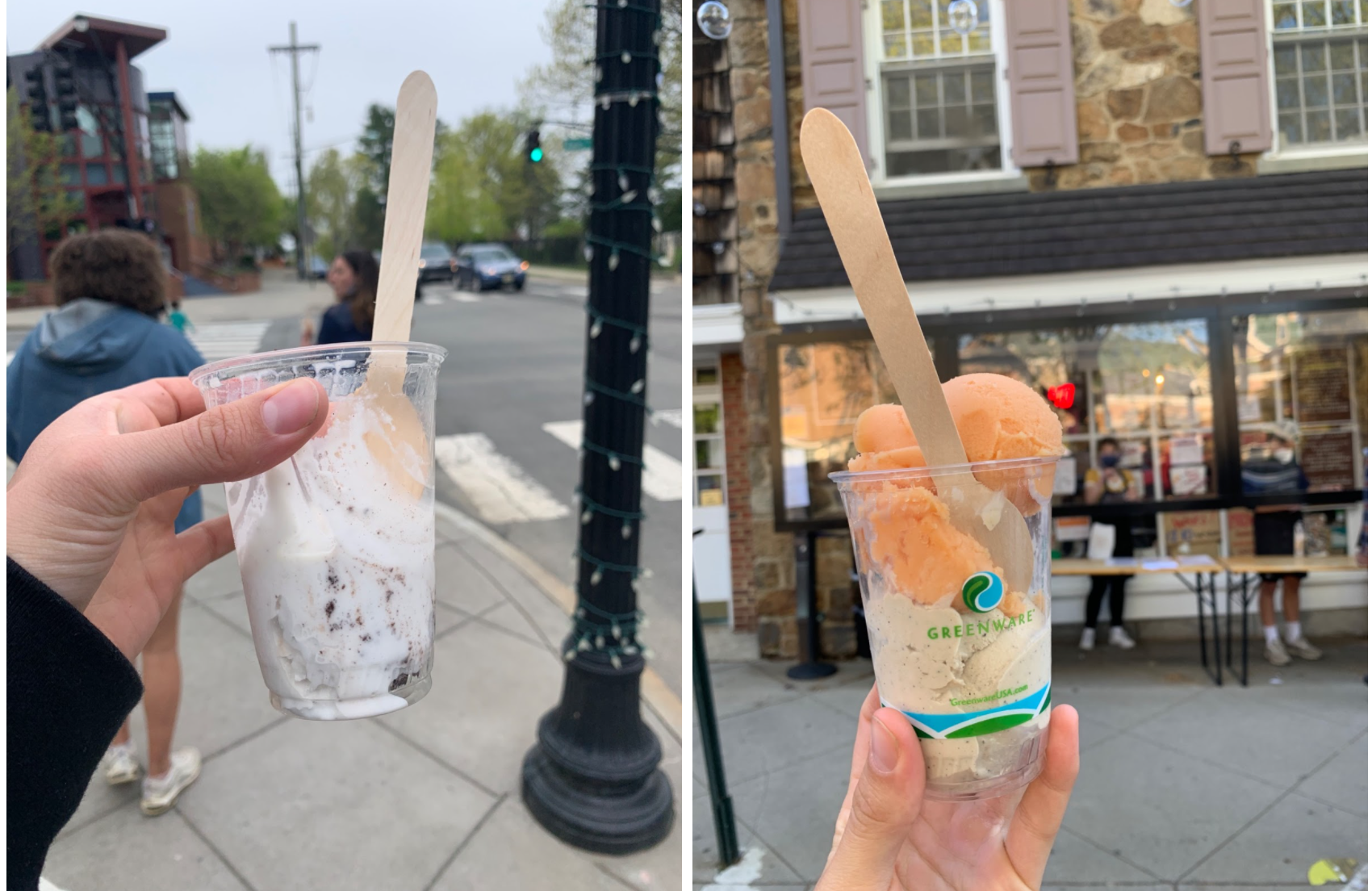
Bent Spoon will never fail to surprise you with their creative flavors. This holds true when it comes to their plant-based options. Their vegan flavors currently entail dark chocolate, raspberry, mango, organic coconut, cookies and cream, blood orange, and coffee coconut. I tried the organic coconut, cookies and cream, blood orange, and coffee coconut.I was thoroughly impressed with them all, but I think my favorite was the coffee coconut. Most ice cream shops typically only offer sorbets as their dairy-free options, so I love that Bent Spoon offers some more traditional, creamy/milky dairy-free options such as cookies and cream. Their creamier, more traditional ice creams seam to be coconut-based, so if you like coconut, this is perfect! They also hit it out of the park with sorbets if you are looking for a fruity, summer vibe. Regardless of what you’re in the mood for, if you are looking for plant-based ice cream, Bent Spoon has you covered.
Halo Pub – Creamiest Ice Cream in Princeton
Price: $
Bang for Your Buck: ★★★★
Creativity: ★★★★
Plant Forward: ★★
Taste: ★★★★★
Ease of Access: ★★★★
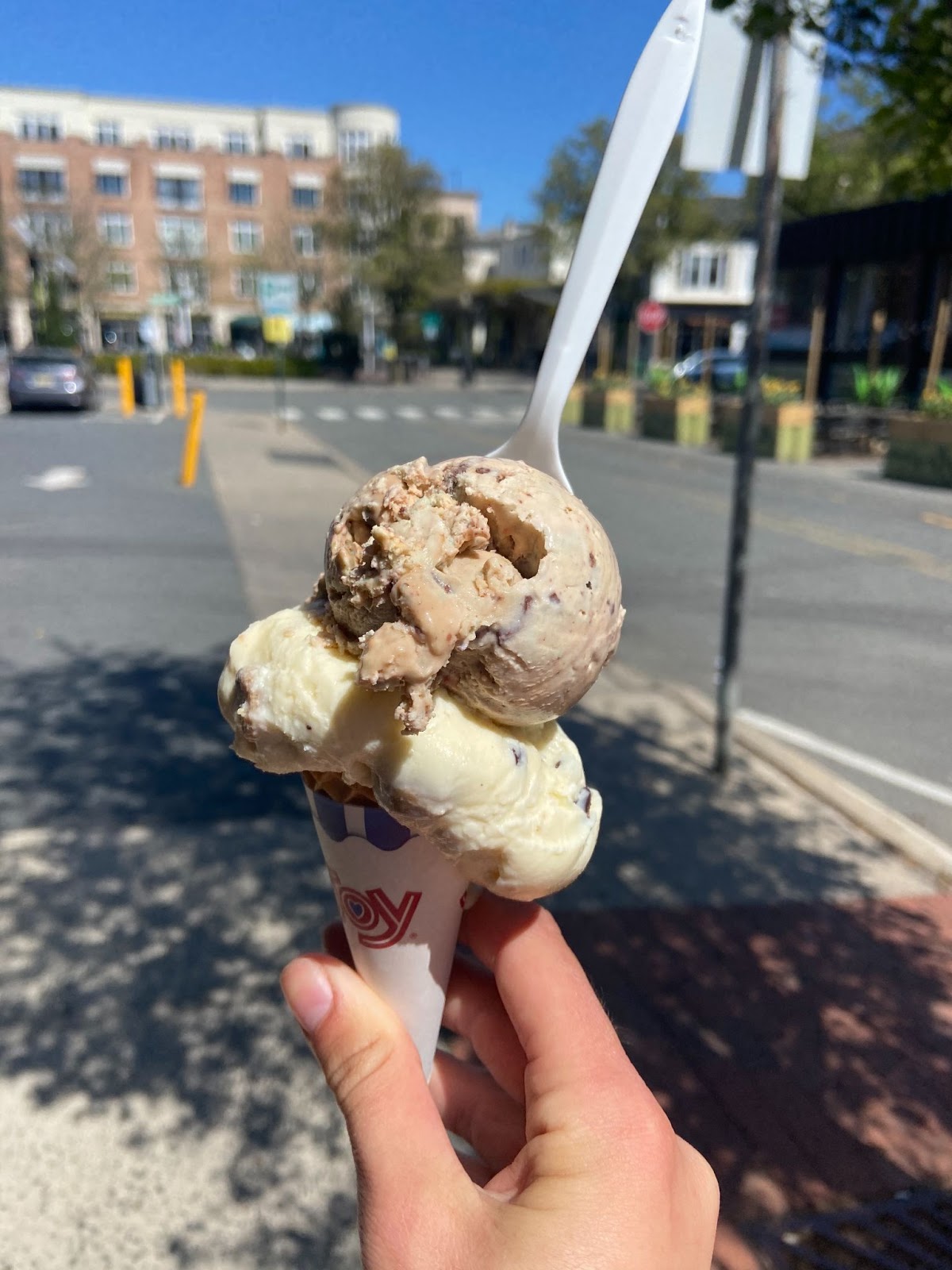
Overall, I had a really great experience at Halo Pub, but it did come with some disappointments for the vegan in me. I was disappointed to discover that their sorbets still had dairy in them and they were all out of their dairy-free flavors (but I will definitely return to try the dairy-free when they are back!). Because of this, I ended up ordering cookie dough and M&M ice cream which were both absolutely delicious! That said, as I’m writing this a couple hours later, I’m definitely having stomach pains. I would say the deliciousness was definitely worth it for me, but if you are more strict with your plant-based diet, be sure to go when their dairy free flavors are available!
Pizza
Jules Thin Crust – Most Likely to Challenge Your Notion of Pizza
Price: $
Bang for Your Buck: ★★★★
Creativity: ★★★
Plant Forward: ★★★★
Taste: ★★★★★
Ease of Access: ★★★★★
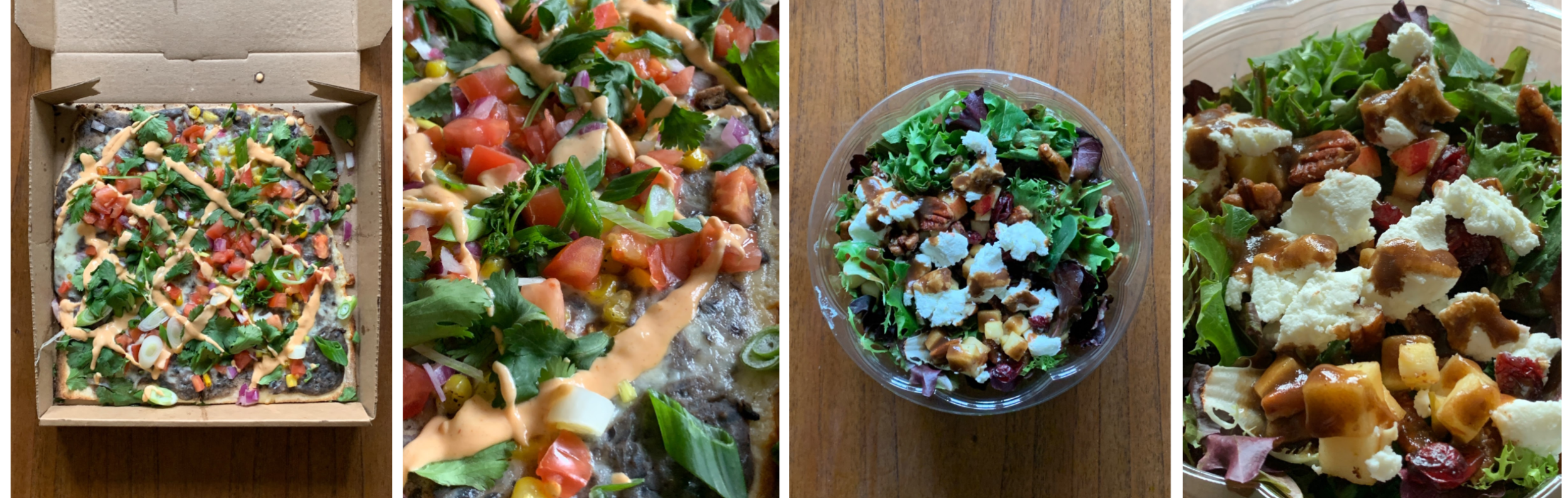
Jules Thin Crust doesn’t just provide your simple cheese pizza — indeed, they offer an impressive number of coded options and toppings from which you can choose! While many of their options are cheese-based or include meat, they also present several vegetarian and vegan-friendly options, including many no-meat pizzas, one vegan option, custom pizzas, and vegan cheese substitutes. After perusing their menu online, I ordered a mini Mexican pizza and a field salad with balsamic dressing. It took me just a minute to walk from the gates to pick up my food! The mini pizza was equivalent to about 2 slices of a large pizza, and at $8.25, was pretty good value for all the toppings you get: tomatoes, corn, scallions, cilantro, mozzarella, and chipotle sour cream, all on top of a delicious black bean spread on a crispy thin crust! Although the cilantro was a bit overpowering, the fresh tomatoes and sour cream really complemented the black beans well. The organic salad, albeit a bit pricey at $9.25, was well-sized and flavorful. The dried cranberries, apples, goat cheese, and balsamic were pretty standard additions but nonetheless delicious! Overall, I was pleasantly surprised by Jules’ Mexican pizza, and would definitely try their other special, non-cheese pizzas again.
Pizza Den – Most Plant-Friendly Pizza Place
Price: $
Bang for Your Buck: ★★★★
Creativity: ★★★
Plant Forward: ★★★
Taste: ★★★★
Ease of Access: ★★★
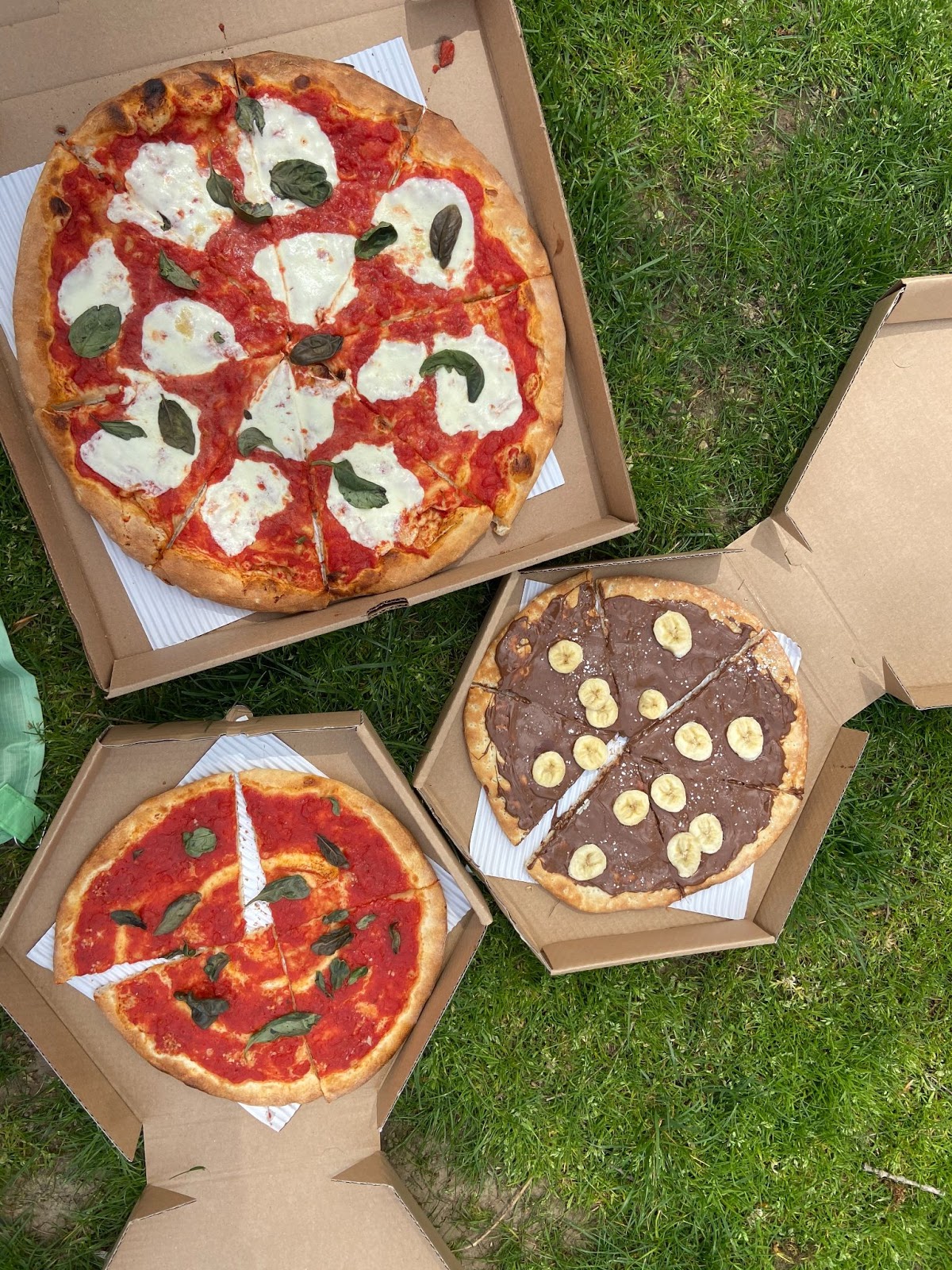
Overall, my experience at Pizza Den was really great. I ordered a Tomato Pie, which had no cheese, making it vegan and absolutely delicious! I also ordered the Brooklyn Pie which was even more delicious with a fluffy crust, a lot of sauce, and only small pieces of whole mozzarella (which is great for the plant-based eater like me who will eat cheese sometimes but doesn’t want so much that it will make her stomach hurt!). They also have the option to use daiya cheese (vegan cheese) which I love for the dairy-free and pure vegans out there! Last, I ordered the Nutella and banana dessert pizza. I’ve never had a dessert pizza before and I really enjoyed the sweet treat! I also ordered it all through Snackpass and was able to get a discount code so the ordering process was seamless and the price was right!
Fully Plant-Based
Fresca Bowl
Price: $
Bang for Your Buck: ★★★★
Creativity: ★★★
Plant Forward: ★★★★★
Taste: ★★★★
Ease of Access: ★★★★★
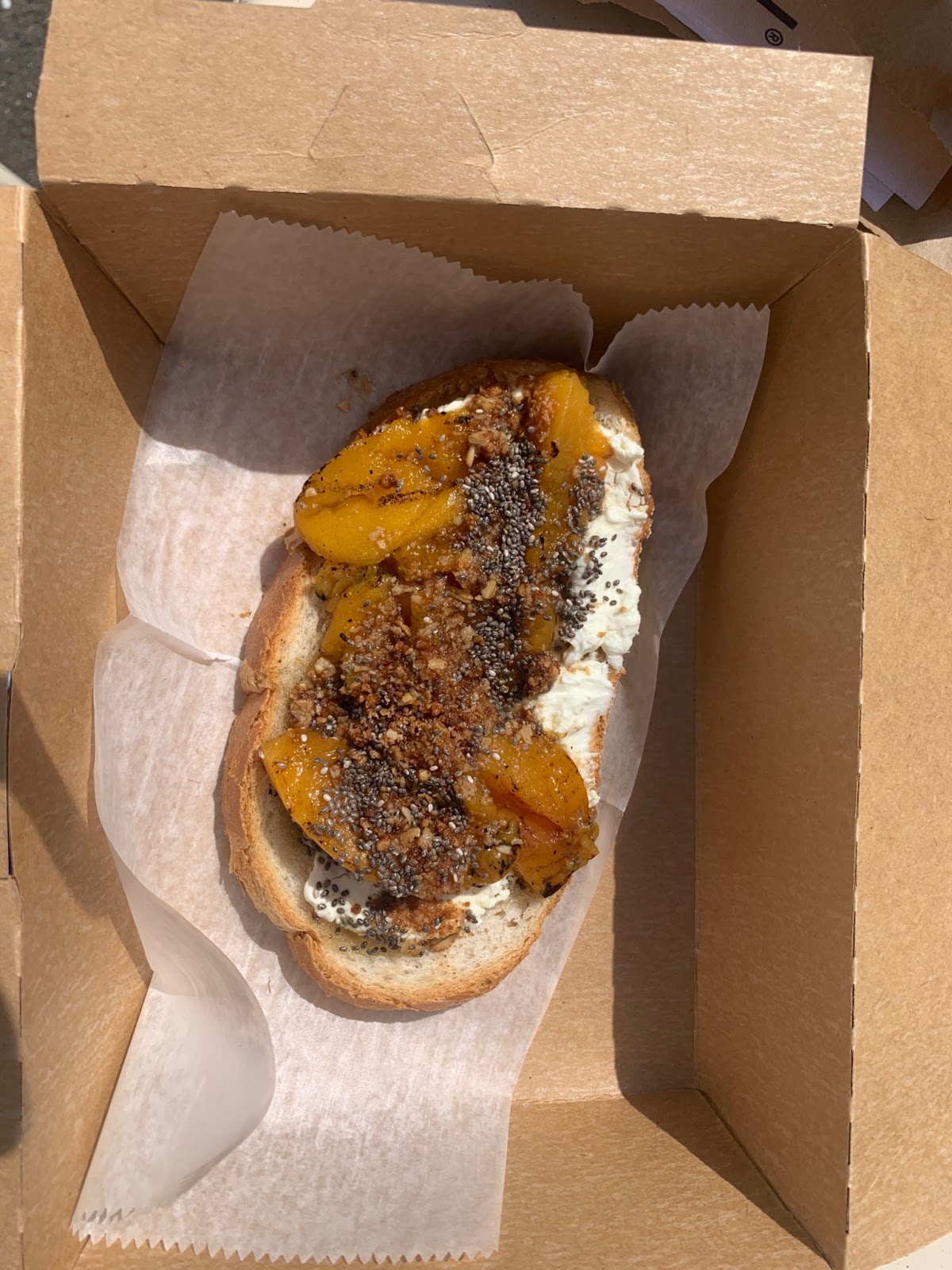
Fresca Bowl offers almost an overwhelming variety of options. Not only do they offer a variety of plant-based bowls (acai, pitaya, kale, chia, and oatmeal), but they also have smoothies, toast, salads, soups, coffee, and poke bowls. I tried the Fresca Acai bowl, the Pesca Noce toast, and Green Machine smoothie. The Fresca Acai bowl was not only delicious, but I was very satisfied with how large the bowl was. It was densely packed with fruits, granola, nutella, and acai, leaving me feeling very full. I feel that sometimes restaurants skimp out on the acai bowl, but Fresca Bowl certainly does not! They have a variety of toasts, both savory and sweet, but the Pesca Noce is a sweet toast with peaches, cream cheese, granola, honey, chia seeds, and cinnamon. It was also really filling and delicious. I highly recommend treating yourself for breakfast or even dessert with the Pesca Noce toast. Last but not least, I tried the Green Machine smoothie. Don’t be afraid to get your daily greens in; this smoothie was delicious and still pretty sweet, despite the main ingredients featuring both kale and spinach. Fresca Bowl is a great and convenient stop to get you plant-based fixings in and they have lots to offer. Maybe too much if you’re the indecisive type!
Playa Bowls – Most Colorful Smoothie and My Favorite Acai Bowl
Price: $
Bang for Your Buck: ★★★
Creativity: ★★★
Plant Forward: ★★★★★
Taste: ★★★★
Ease of Access: ★★★★
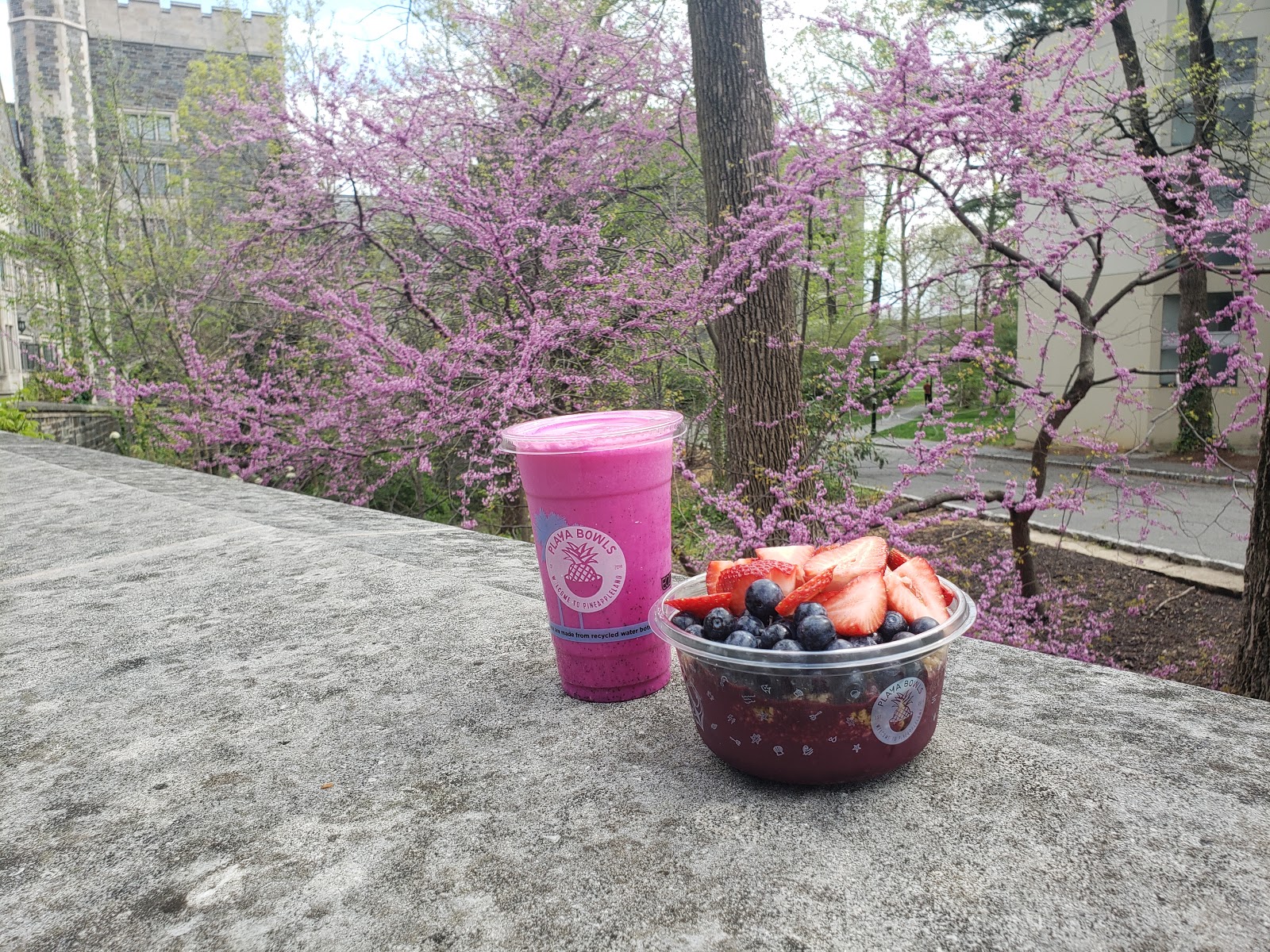
For the last stop on my plant-based food tour, I went to Playa Bowls. There I got a Pura Vida açai bowl and a pitaya smoothie. The açai bowl surpassed my expectations. It had the sweetness of honey, fruitiness of açai, blueberries, and strawberries, and the crunch of delicious granola. It was nicely cold and I recommend it. The smoothie didn’t quite meet how delicious it looked. Being a bright pink pitaya mixture, I expected lots of fruity flavor. What I got was nicely creamy, but not very flavorful. It was very far from the sweetness, acidity, or kick usually present in a good fruit smoothie.
I love the inside of Playa Bowls. It is located on Hullfish Road next to Lan Ramen and down the street from the public library. I was asked whether or not I wanted a bag and I did not receive any unnecessary plastic or waste. The plastic smoothie cup claims to be made of recycled plastic and the shop advertises their commitment to reducing waste. I recommend ordering the Pura Vida or another açai bowl the next time you go to Playa Bowls.
Tico’s – Most Fantastically Fruity Flavours
Price: $
Bang for Your Buck: ★★★★
Creativity: ★★★★
Plant Based: ★★★
Taste: ★★★★★
Ease of Access: ★★★★
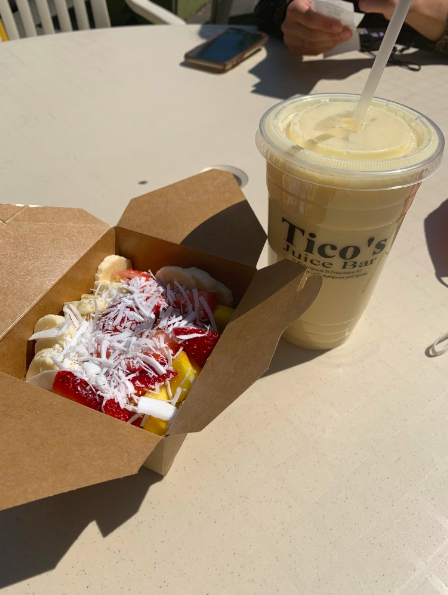
Got a sweet tooth? Love you some fruit? Want to combine the two? Look no further than the astounding establishment that is Ticos! Located on Spring Street, Ticos is a Princeton town stalwart that is totally worth your time. For this review I ordered their Pina Colada smoothie and the Sweet Thing organic bowl, both of which were packed with fruity goodness and left me very satisfied long after the food had disappeared. I have never tried a smoothie bowl with a guava base before and the Sweet Thing bowl really impressed me. The Pina Colada smoothie is my go-to when ordering at Tico’s and I cannot rave about it enough. The menu at Tico’s is mostly fruit items, but you can order quesadillas as well. There is a large range of plant-based options, but keep in mind that all of their smoothies contain yoghurt, so if you are searching for a wholly vegan option you will have to ask them to substitute the yoghurt for ice. I have never had a bad experience at Ticos and I doubt you will either; go on… Check it out!
Planted Plate – Most Plant-Based Plate in Princeton
Price: $$
Bang for Your Buck: ★★★★
Creativity: ★★★★★
Plant Forward: ★★★★★
Taste: ★★★★
Ease of Access: ★★★★★
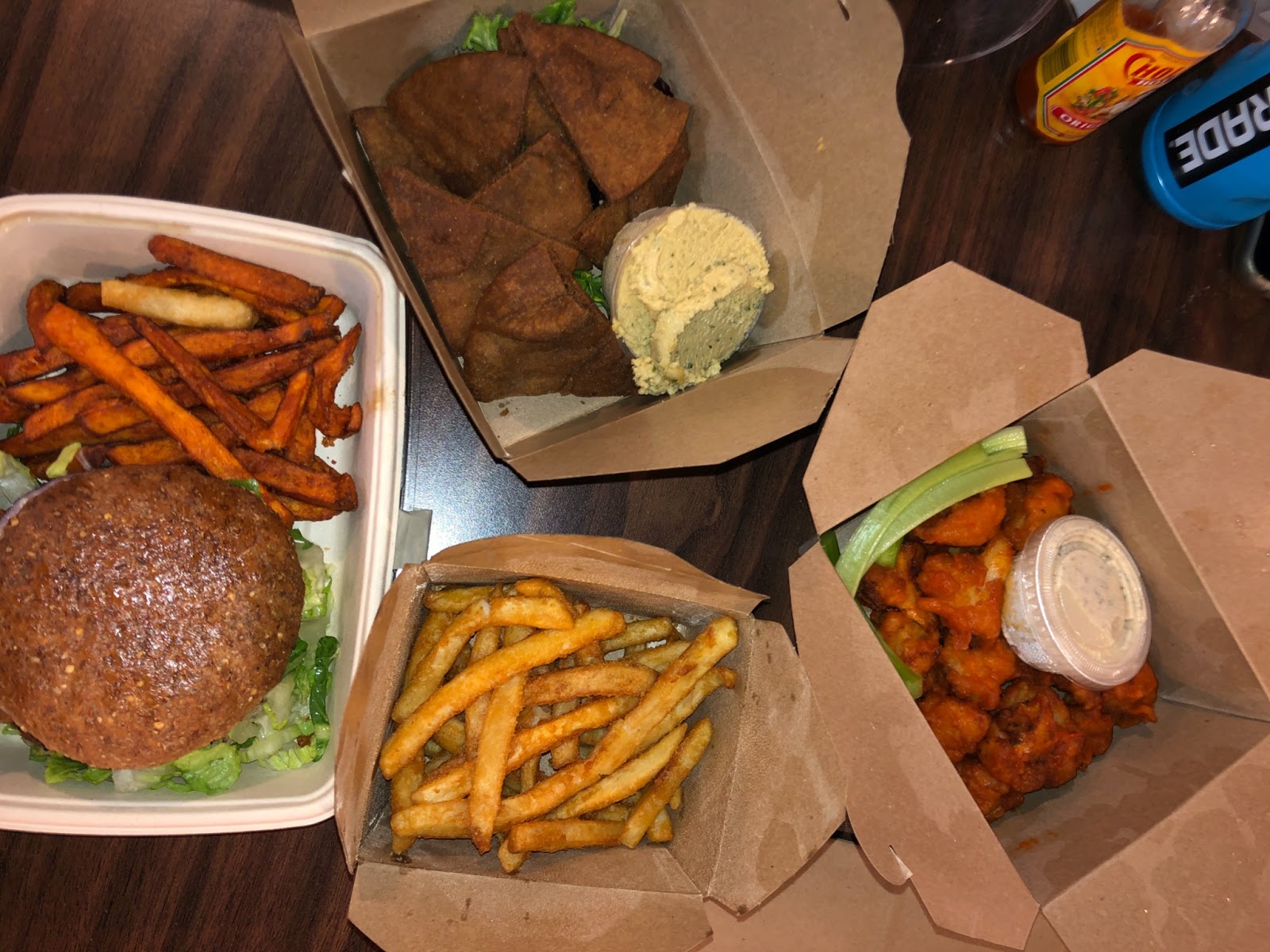
Wow. So many plant-based options to choose from. My personal favorite was the cauliflower bites. They would certainly satisfy a buffalo wing craving anyday. The vegan ranch was also a wonderful dipping sauce. I was surprised by the pitas served with the hummus; they were warm and both crispy and soft. 10/10 would recommend. The main dish I had was the cali burger, which was good, but a little dry. The bread and toppings were, however, very fresh and I felt like I was eating good, quality ingredients. Hot take: Planted Plate has the best french fries in Princeton. I also learned that if you’re on snack pass you can get 25% your first order at Planted Plate and if you’re a student you can get 10% off anytime!
Arlee’s Raw Blends – Best at Making the Ingredients Shine
Price: $$
Bang for Your Buck: ★★
Creativity: ★★★★★
Plant Forward: ★★★★★
Taste: ★★★★
Ease of Access: ★★
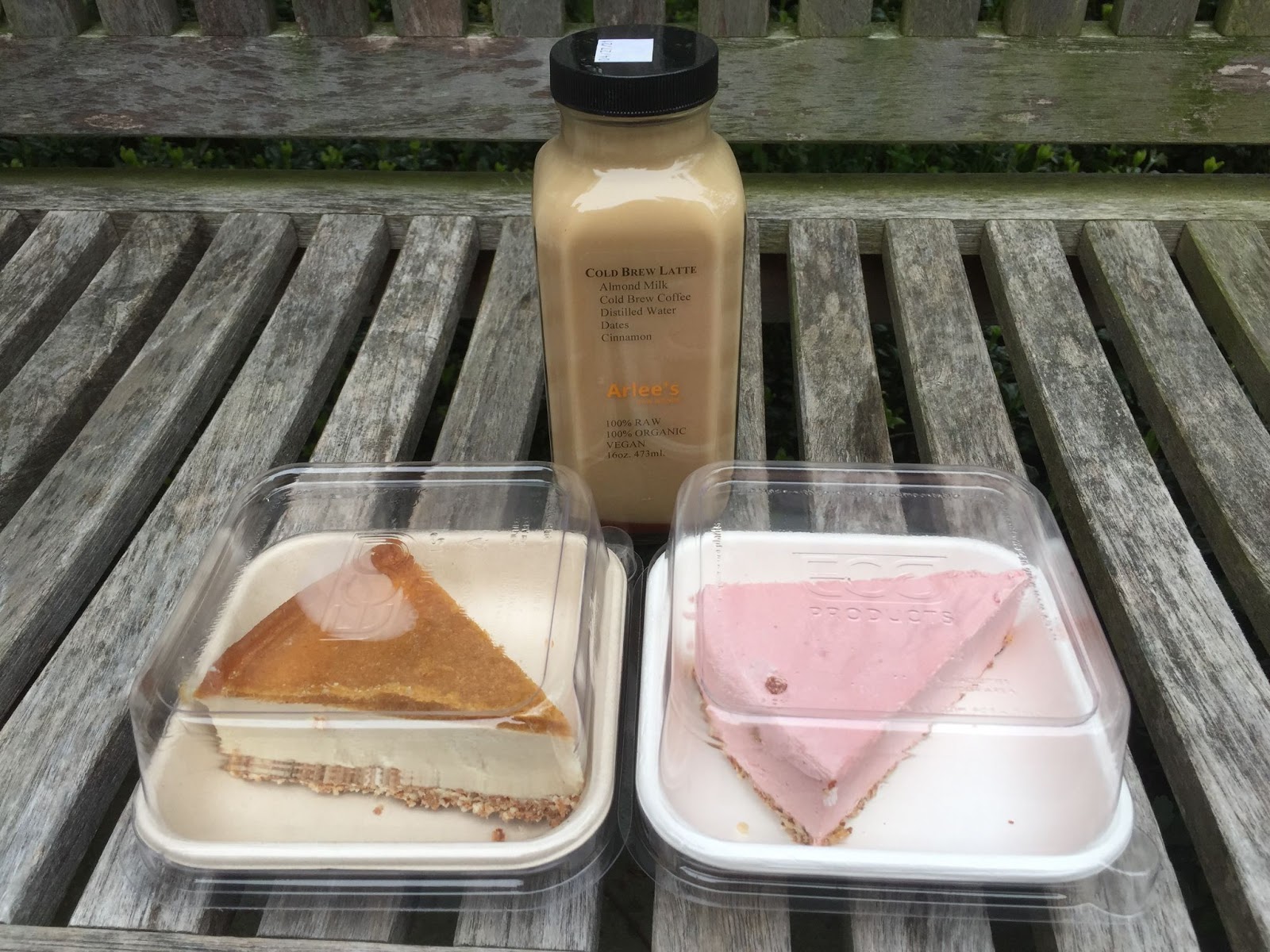
While the focus at Arlee’s might be on juices, don’t be deceived—they have a surprising amount of variety in their menu items, including breakfast items, wraps, salads, snacks, desserts, and even pizza. Furthermore, everything is completely plant-based! My sweet tooth was calling and I was especially enticed by their plant-based cheesecake, so I ordered two slices, one strawberry and one mango. For my daily caffeine fix, I also got a cold brew latte made with almond milk. As a big fan of fruity desserts, the cheesecake was right up my alley. It was lighter than traditional cheesecakes but still had a nice tang, and the crust made from raw almonds actually resembled a graham cracker crust more than I expected. I personally liked the strawberry better than the mango, but would happily take another slice of either! One note is that you should avoid letting the cheesecake sit for too long—I left it at room temperature for a few hours before finishing it, and the texture softened a lot once it was no longer chilled. The cold brew latte was sweet but refreshingly so, with a pronounced cinnamon taste. It did seem a little watery to me, especially because I tend to like strong coffee drinks. That being said I finished it easily (and also loved the glass bottle it came in!). One drawback is that the items at Arlee’s can be quite pricey ($8.99 for each slice of cheesecake and $10.99 for a 16oz. latte). While perhaps not affordable on a regular basis, and also a little far from campus (near Hoagie Haven), the quality of the ingredients at Arlee’s and its exciting plant-based menu make it a great place for a special treat.
This series is a collaboration between student group, Greening Dining and the Princeton EcoReps
*** We are not food critics, but food enthusiasts. This is in no way intended to be a formal critique or review of any restaurant in Princeton, merely a way to encourage students to try more plant-based options when dining out.
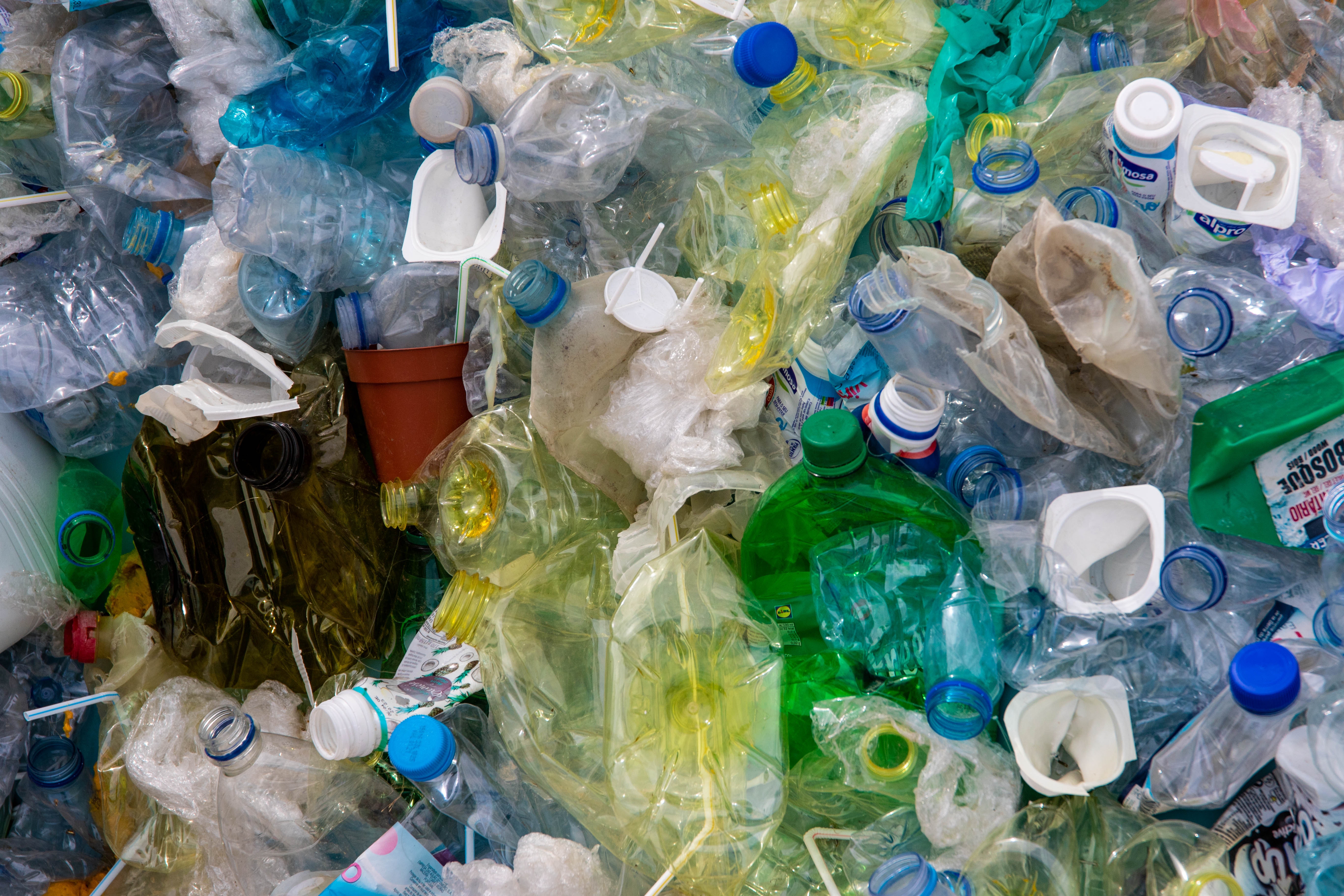
Recycling is often hailed as “the consumer’s solution to climate change,” and companies tout their sustainability focuses, emphasizing “recyclability” and “going green.” In truth, however, recycling is a deeply flawed system, and we are quickly seeing the consequences of its limitations.
Plastics are particularly difficult to recycle and can cause confusion when we ask ourselves “Which bin does this go in?” One especially confusing aspect is the (in)famous recycling sign. Found on nearly every plastic item, one of the most common sustainability myths is that anything with the recycling sign can be recycled. In this article, we’ll dive into the history of the symbol, what it really means, and why we have to watch out for greenwashing.
The History
In 1970, in response to a design contest for the first Earth Day, college student Gary Anderson designed the Universal Recycling Symbol (URS).
The issue, however, is that in 1988, the US Society of the Plastics Industry developed something called the Resin Identification Code (RIC) system. The purpose of this system was to simplify recycling of plastics for programs across the US by differentiating the different types; each type has to be recycled separately from the others to ensure success. The way they chose to portray this information is by placing a number, 1-7, within a simplified version of the URS, and each number corresponds to a different type of plastic.
Immediately, we see a problem emerging; a system used to identify plastics (which aren’t all recyclable) uses a sign that signifies that something is recyclable.
Meanwhile different variants of the symbol were also developed, with some indicating that something is recyclable, others that the item is made of recycled materials, and still others emerging.
The invention of the RIC system, combined with the development of different variations of the symbol, has today created a complex, confusing knowledge system. What started off as a seemingly simple idea has now been co-opted and actually makes recycling more difficult for American consumers.
So why is this a problem?
The biggest problem is contamination. This occurs when recycling is done incorrectly and can arise from trying to recycle things that are dirty, made from an non recyclable material, or otherwise not sorting things correctly. Contamination is a huge problem in the recycling industry, and it is time consuming and inefficient to sort contaminated bins, so they are often just sent to the landfill as trash.
In addition, even when done correctly, plastic is always downcycled. What this means is that it loses value every time that it is recycled. So, after only 1 or 2 goes, even the most recyclable plastics have to be turned into a final, nonrecyclable product. Thus, the need for virgin plastic isn’t stopped by recycling and is slowed at best.
There is also very little demand for post-consumer materials. Transporting and recycling materials (even when they are not contaminated) is inefficient and costly, so it is often cheaper to just use virgin materials. This is why many types of plastic (think 3-7) are rarely accepted – there is just no monetary incentive to do so. This problem is further emphasized by the fact that the US can no longer ignore our problem and sell waste to other countries.
On an individual level, recycling is also difficult. Companies have caught on that more and more people are looking for sustainable options. However, instead of opting for sustainable practices, many have just turned to greenwashing. This is the concept of using symbols like the color green, plants, or the words “environmentally friendly” on marketing. Now, to determine if something is actually sustainable, consumers have to research and invest time into their purchasing choices. Not everyone is willing to do this, and corporations get away with branding their products as something they aren’t.
Recycling standards also change by location and time, so people must stay up to date and informed to recycle properly. Changes often aren’t communicated broadly or clearly, and this leads to further contamination in our recycling streams.
So what now?
The state of affairs seems gloomy, certainly. But, recycling isn’t a completely moot point. By improving the system we currently have while also developing and working towards something better, we can collectively work towards brighter futures.
The first step is moving away from plastics in general. Decreasing our use will not only reduce how much is sent to be recycled (and later landfilled), but also lower demand. Plastic is made from oil, after all, so it is in our favor to produce as little as possible. Finding alternatives is a big part of this.
On a personal level, find reusable versions of the most common single-use items. Things like utensils, dishware, and cups are some of the most common products made from plastic (and usually aren’t recyclable due to food contamination). On a larger scale, encourage research into alternatives and support legislation that focuses on plastics/recycling to help shift our society away from our plastic reliance.
Once we’ve started to eliminate unnecessary use, paying attention to what we do have to use can help reduce contamination. This requires learning about whether products are actually recyclable and/or sustainable and not falling prey to companies looking to make money. One resource that makes this especially easy as a Princeton student is the Recycling App. Supported by the Office of Sustainability, students can look up most items to determine if and where they can dispose of specific items. Many cities have similar guidelines online, available to residents looking to be informed about the practices in their hometowns.
As consumers, we have a responsibility to learn about what happens to the products we use and to play an active role in improving the system we live in.
Welcome again to another Good News Friday! The semester is coming to a close, and we hope that we’ve been able to brighten your weeks in a small way. For this edition, we will read about an Indigenous victory relating to protecting salmon populations, the new EPA stance against environmental racism, and Elon Musk’s latest and greatest battery farm.
Gitanyow people protect sockeye salmon: While sockeye salmon populations have experienced a dramatic decline in British Columbia (B.C.), populations are still thriving in Gitanyow territory around Meziadin Lake. Unfortunately, B.C.’s free-entry mining system allows any individual or company to stake a claim and mine on any unprotected territory in the province, including private land and Indigenous territory. Thus, The Gitanyow Nation is now taking matters into their own hands and developing protection schemes, following examples set by other First Nations across Canada.
EPA takes stance against environmental racism: While governmental enforcement of pollution violations has dropped drastically in the wake of the pandemic, new EPA head Michael Regan is taking steps to reverse this trend. Regan issued a directive to “infuse equity and environmental justice principles and priorities into all EPA practices, policies, and programs,” calling the EPA to “strengthen enforcement of violations of cornerstone environmental statutes and civil rights laws in communities overburdened by pollution”. This directive is a promising guideline for the EPA to shift away from a legacy of environmental racism to one of environmental justice.
New battery for renewable energy: In 2016, a crazy lightning storm caused power outages in South Australia. In response, Elon Musk and Tesla built an enormous 100 MW battery that powered the entire area. Taking this one step further, Musk and the government of Victoria, Australia are planning to build an even larger 300 MW battery farm. The Victorian Big Battery Megapack will be the largest facility of its kind in the world and will help make renewable energy more accessible and competitive.
We hope you’ve enjoyed the stories this week. Check back next time for more encouraging environmental news. If you’d like to share some Good News with us, please feel free to get in touch!
Welcome to the fifth stop on our Plant-Based Food Tour of Princeton, and definitely the one a lot of us were most excited for! This post will be your ultimate guide to deciding where to beg your parents or significant other to take you out to dinner, while also keeping the plant-based diet in mind! We’ve discovered that even at a steakhouse, you can still eat plant-based. We hope this post inspires you to both treat yourself and the planet with these high-end plant-based options.
Agricola Eatery – Most Plant Forward
Price: $$$
Bang for Your Buck: ★★★
Creativity: ★★★★★
Plant Forward: ★★★★★
Taste: ★★★★★
Ease of Access: ★★★★★
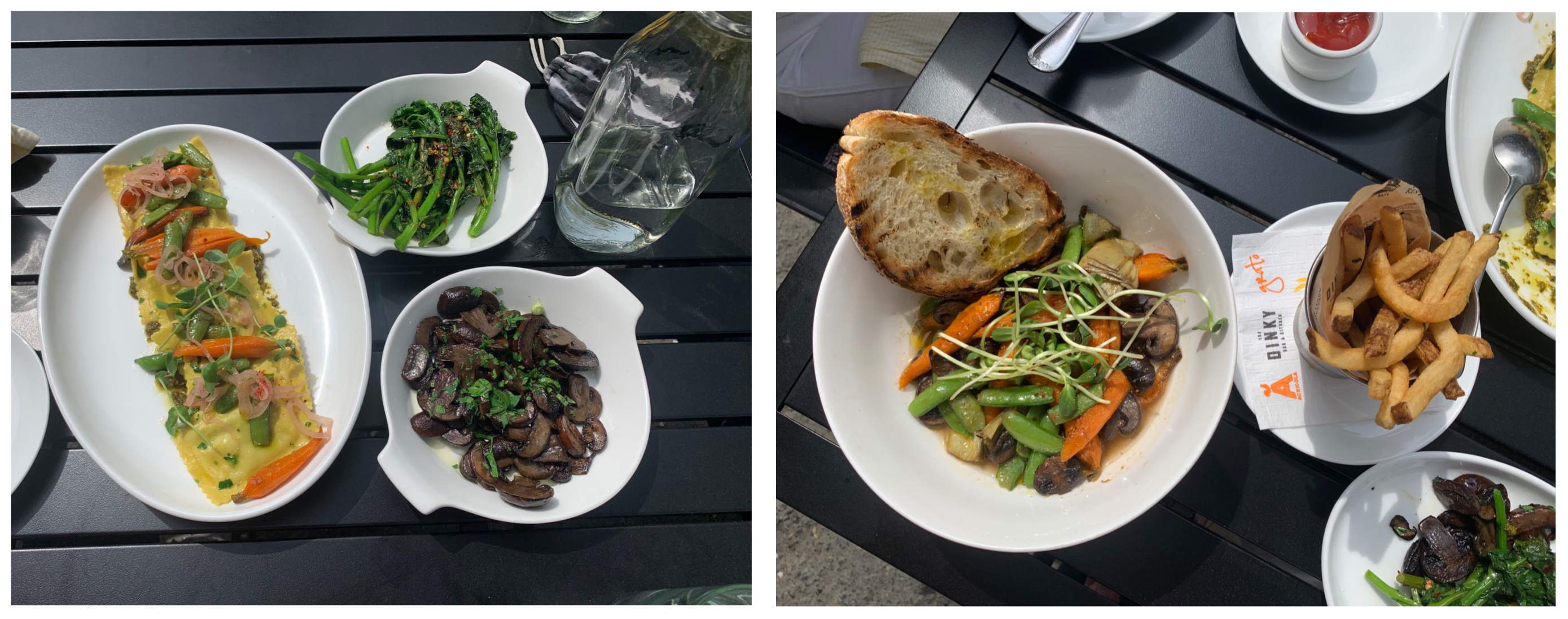
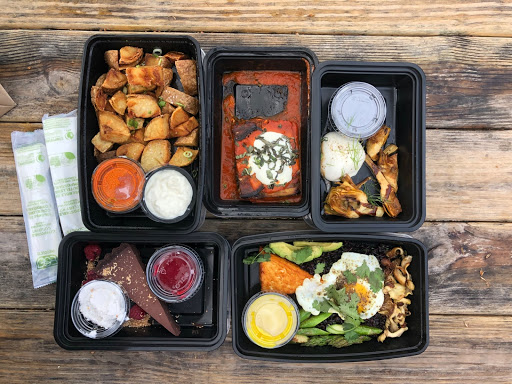
It is probably safe to say that Agricola is the most plant-forward of the high-end restaurants in Princeton. I went on a beautiful sunny day and enjoyed their outdoor seating on Witherspoon St. I tried their two entrees that they note as being “inspired by the cultural shift towards sustainable, plant-based eating.” To say that I was thoroughly impressed is an understatement. The LoRe Pea Ravioli featured several veggies such as carrots and peas, used a very creative pea filling, and was topped with an almond pesto. The Spring Vegetable Barigoule was a delicious soup with peas, carrots, mushrooms, and artichokes as well as sourdough bread. Both entrees exceed my expectations by far. They were completely plant-based, tasty, and filling.
I also tried the Roasted Local Mushrooms, Broccoli Rabe, House-made Fries, and Avocado as sides. They were all fantastic. The fries were the perfect balance of fresh and fried, the broccoli rabe had a nice kick to it, and the avocado was light and simple. The Roasted Local Mushrooms were the star of the sides, though. They were hands-down the best mushrooms I have ever tried. Overall, this meal was very tasty and, most importantly, extremely plant forward. Oftentimes, vegetarian options at restaurants are very dairy heavy. I loved how creative Agricola was with their plant-based options and loved that they were fully plant-based. Agricola is helping lead the cultural shift to healthier and more sustainable diets!
Winberies – Most Surprising Plant-Based Creativity
Price: $$
Bang for Your Buck: ★★★★
Creativity: ★★★
Plant Forward: ★★
Taste: ★★★
Ease of Access: ★★★★★
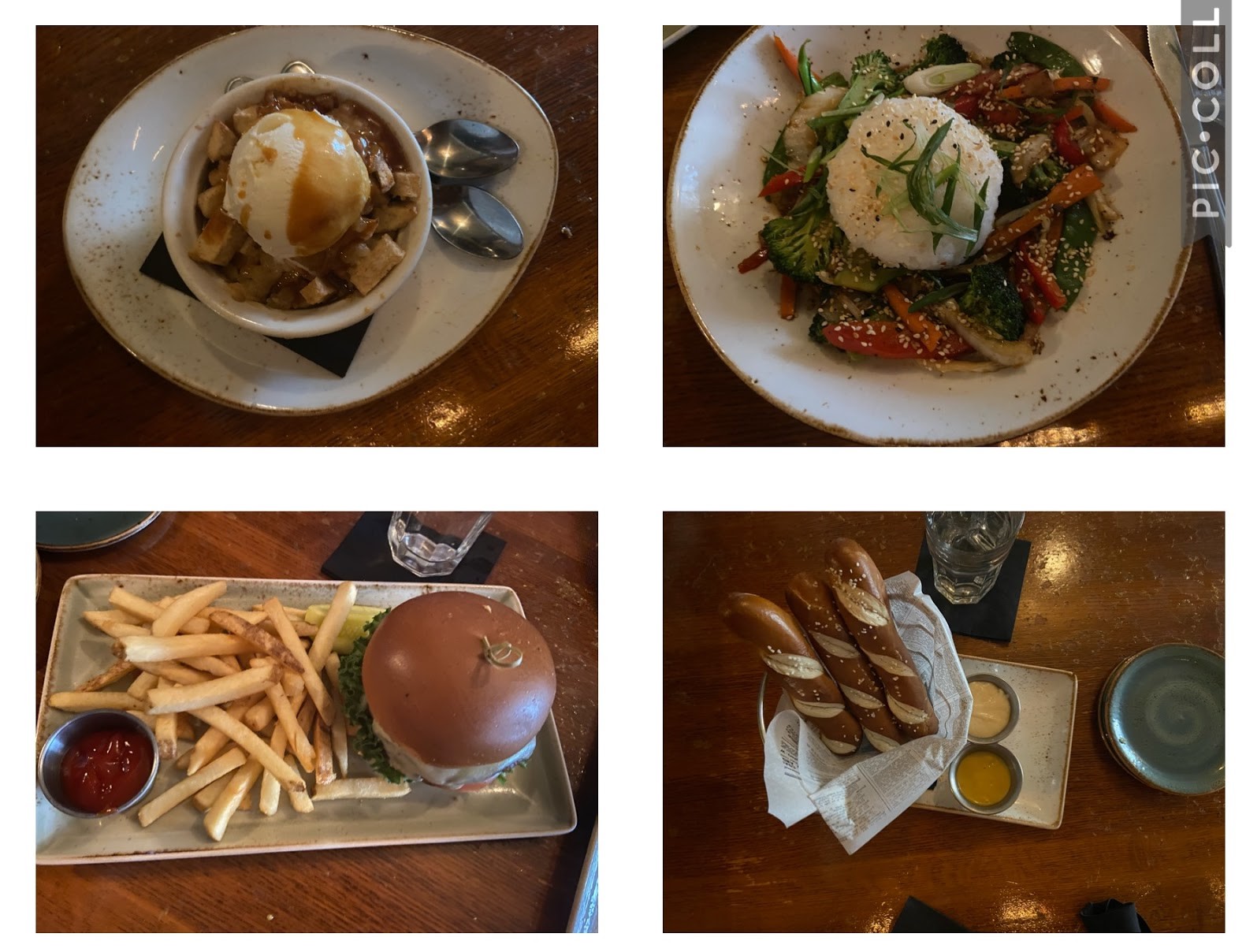
For the type of place that serves bar food, I was really surprised with the amount of plant-based options Winberies has to offer! Most places have plant-based appetizers and salads, but Winberies actually had two entrees that I could order! For an appetizer I ordered the beer baked pretzel sticks. It came with three large sticks, which I thought was decent for the $9 price, and they were super fluffy and salty. The perfect appetizer! For entrees, I ordered the veggie rice bowl and the housemade vegetarian burger. While I think the veggie rice bowl could’ve had more flavor, I was really impressed with how many vegetables were included in the bowl and how light the entree was. Typically, restaurants like this tend to make things super heavy, but the veggie rice bowl was delightful and felt good to eat! Most innovative was the housemade vegetarian burger. The burger was made out of portobello mushrooms, brown rice, oats, and beets, and had a really shocking look and consistency. It honestly looked like a real burger and gave a beyond burger vibe but with whole vegetables instead of the scientifically created beyond meat. The burger was definitely mushier than other veggie burgers I’ve had but was really exciting to try and tasted pretty good! Last, but certainly not least, was the apple crisp for dessert. The dish had diced apples warmed up with rum caramel sauce, hazelnut streusel, and vanilla ice cream. How could you go wrong?
Overall, Winberies really surprised me with their thoughtfulness for plant-based eaters and I would not hesitate to go again with some friends!
Witherspoon Grill – Fanciest Restaurant With the Best Bread
Price: $$$
Bang for Your Buck: ★★★
Creativity: ★★
Plant Forward: ★★
Taste: ★★★
Ease of Access: ★★★★
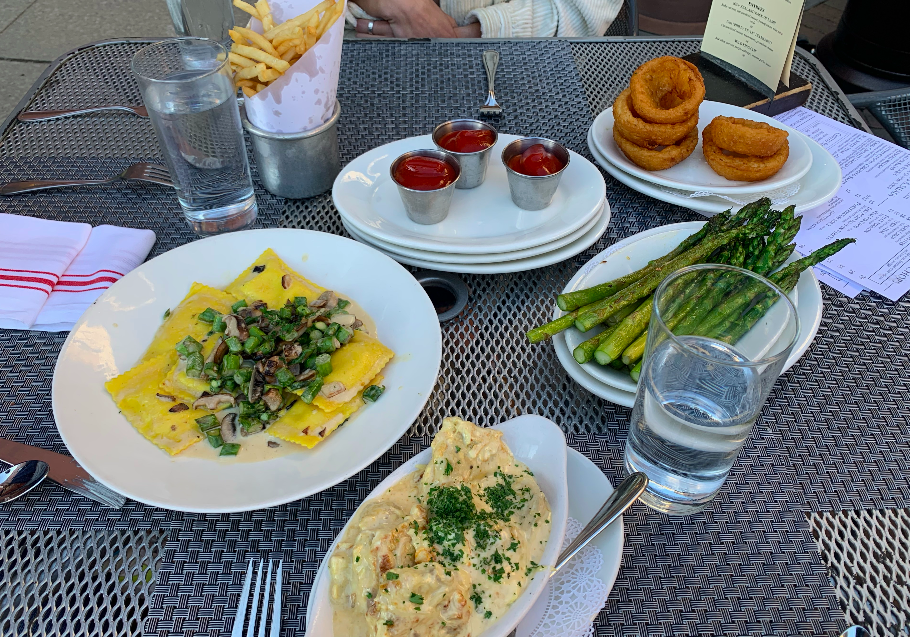
Witherspoon Grill is located in Hinds Plaza in the centre of downtown Princeton. The restaurant has a large outside eating area for the summer months, and impeccable service. Make no mistake: Witherspoon Grill is a restaurant committed to serving meat, and as such their plant-based options are thin. I ordered most of their non-meat options: Fries, Onion rings, Artichoke Francaise, Asparagus, and the Ricotta Ravioli. A veritable feast. While all of these options were really tasty, they were mainly appetizers, and the only entrée option that was in any way plant-based was the Ravioli. The star of the main meal was undoubtedly the artichoke francaise, however the sauce was a little thick and I left feeling extremely full. This was possibly contributed to by the fantastic desserts: flourless chocolate cake and peanut butter lava cake. Ultimately, I would encourage you to eat out at Witherspoon Grill, but keep in mind that you are going to be limited on creative plant-based options. Oh and one last thing: their bread is fantastic!
Mediterra – Most Fresh Ingredients
Price: $$$
Bang for Your Buck: ★★
Creativity: ★★★
Plant Forward: ★★
Taste: ★★★★
Ease of Access: ★★★★
Mediterra did not have many options that did not include meat or cheese. I tried the Pasta-less lasagna which was flavorful and featured some fresh eggplant, but the portion was very small for the $25 cost. The Market Bowl was tasty and a fun mix of different vegetables. One the side I tried the papas bravas and burrata with fried artichoke. The papas bravas was definitely the best bang for your buck item in terms of plant-forward options at Mediterra (only $8). Without it I definitely would have left hungry. The fried artichoke was fun to try, but the portion size was quite small and the flavor of the artichoke was hidden by the frying method. I was pleased with the chocolate ganache tart as dessert. The rich chocolate tart was complimented well by the coconut crema and raspberry sauce. Overall, I enjoyed the food, but it was unsatisfied with the small portions for a big price. It was clear the ingredients were fresh, which was a plus.
Local Greek – Most Comprehensive Platter
Price: $$-$$$
Bang for Your Buck: ★★★
Creativity: ★★
Plant Forward: ★★★
Taste: ★★★
Ease of Access: ★★★★
For week 5 of the Plant-Based Food Tour, I ate at Local Greek. This restaurant has its main location a 12 minute walk from Fitzrandolph Gate. It also has a location with takeout and very limited outdoor seating on Nassau Street reviewed last week. Over two trips, I tried two entrees, a side, and a salad.
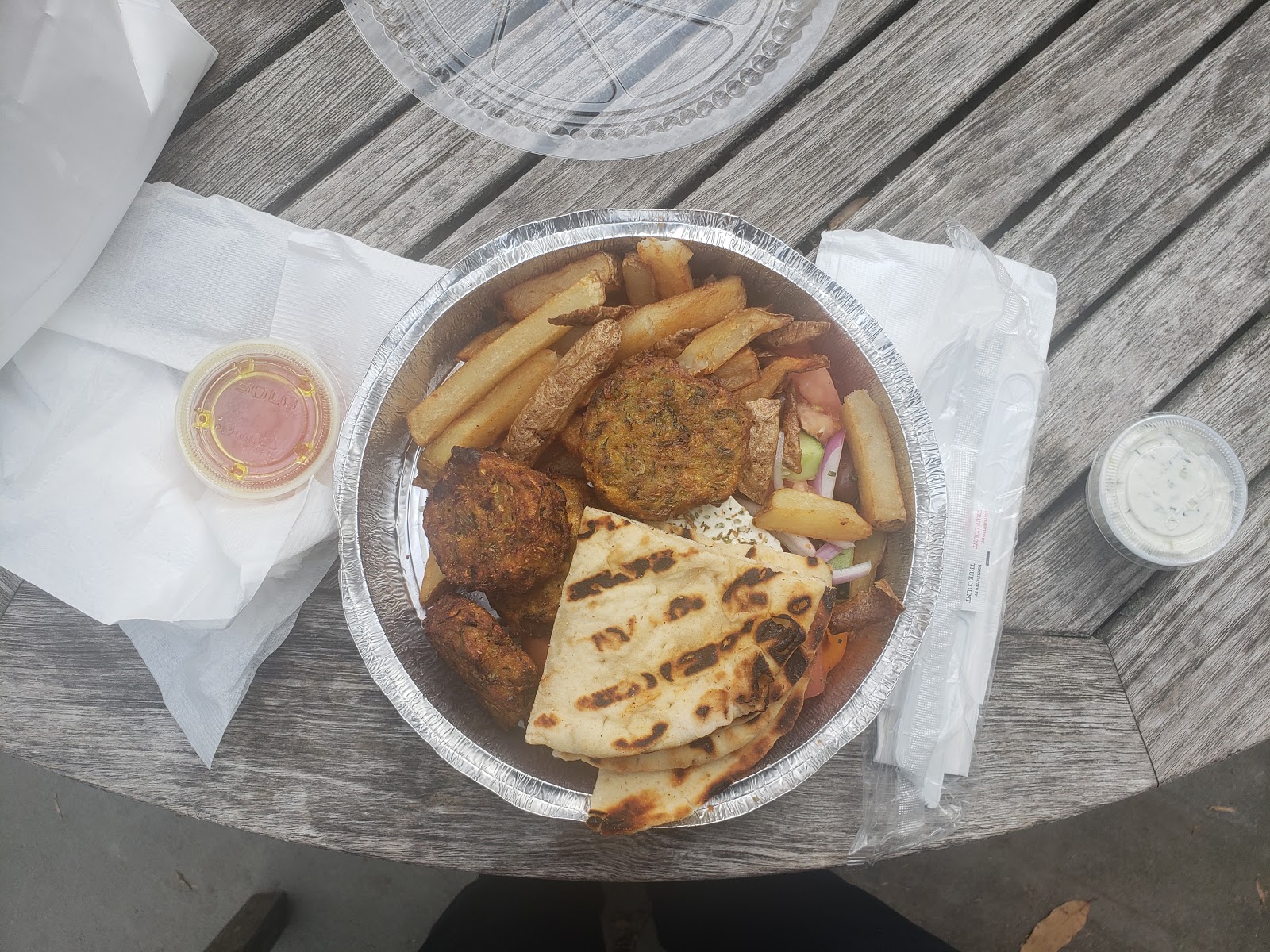
The first entree I tried is the Greek Falafel Platter, which is a vegetarian option. This falafel was good, but it didn’t set itself apart from other falafels. The accompanying tzatziki sauce improved this and made the falafel less dry. This platter also comes with a small salad, some pita bread, and a choice of rice or fries. I enjoyed the salad, but like the falafels, it didn’t impress me too much. The fries and pita were fine, if standard.
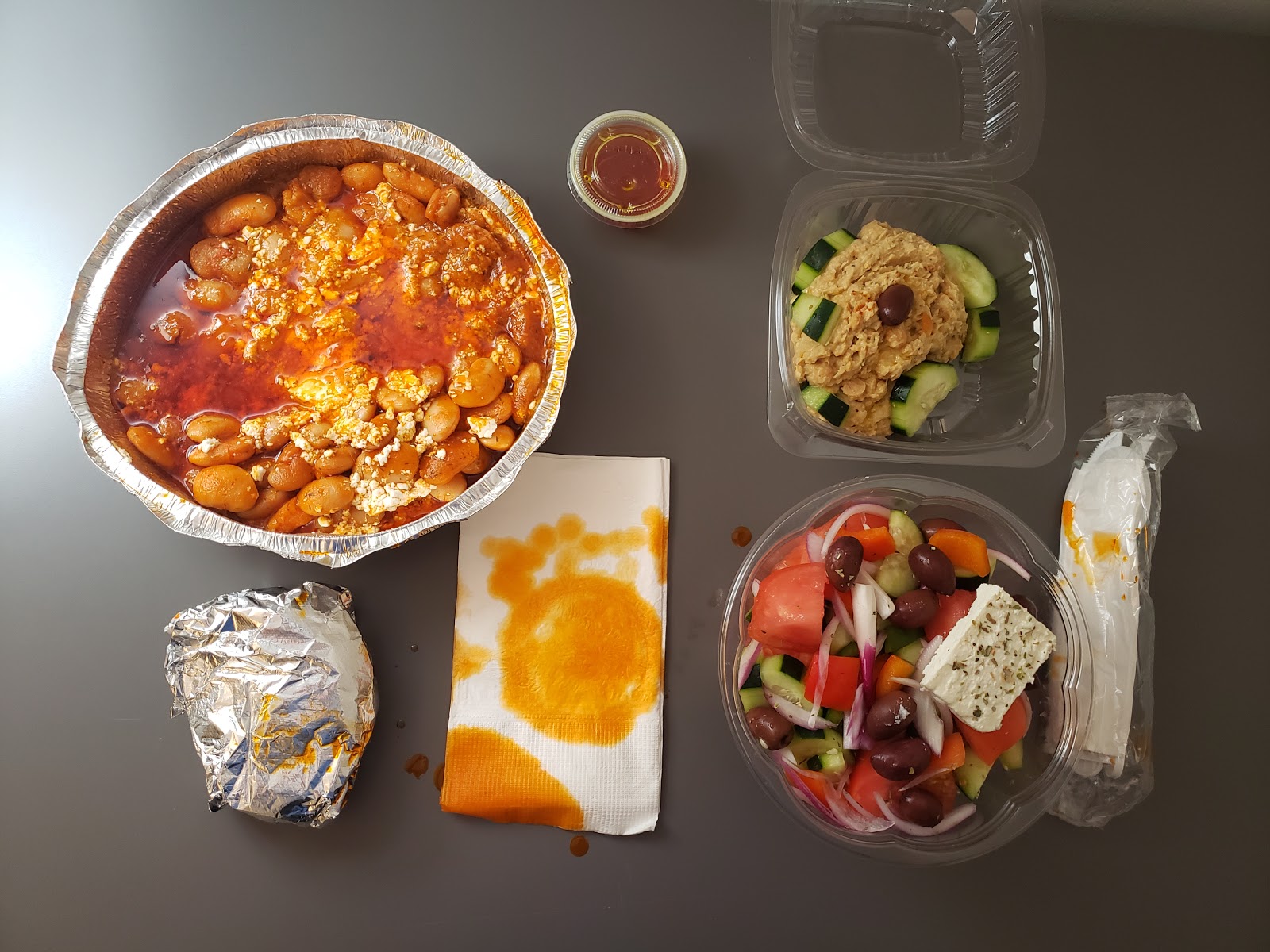
The second time I ate from Local Greek, I decided to try something new. This was the Gigantes entree, described as large lima beans in a Greek herbed tomato sauce. As seen in the picture below, this is the dish that made my desk look like a bit of a crime scene (presumably because it tipped and spilled during my walk home). I quite enjoyed the warmth of this dish and the heartiness of the lima beans however. Because I am not familiar with this dish, I don’t know if the oily quality of the sauce is typical, but know that this is how the dish was for me.
Lastly, I tried the Horiatiki salad and the hummus. The salad was fine; I appreciated the feta cheese, but the dressing didn’t add much and there was little else done to the cucumbers, tomatoes, onions, and olives besides being sliced up. The hummus tasted pretty standard as well, though I appreciated the chunkier texture of the chickpeas.
Local Greek is located at the intersection of Leigh Ave and John St with a satellite location on Nassau St. The restaurant offers limited indoor dining, takeout, and outdoor seating. There is a good amount of plant-based options on the menu and they are clearly labelled with “vg” for vegetarian and “vn” for vegan. Order the Greek falafel platter for a solid plant-based entrée with a side of fries and a small salad.
La Mezzaluna – Most Welcoming High-End Restaurant
Price: $$$
Bang for Your Buck: ★★★
Creativity: ★★
Plant Forward: ★★
Taste: ★★★★
Ease of Access: ★★★★
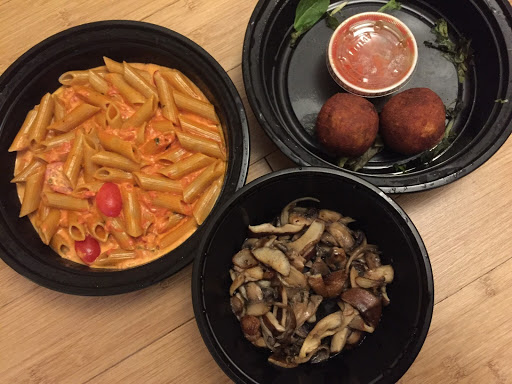
After seeing rave reviews for the rigatoni vodka at La Mezzaluna, I had to give it a try for myself. I certainly wasn’t disappointed—I especially loved the sauce, which was rich, creamy, and slightly sweet (would recommend using it as dip for the complimentary bread!). I was even able to sub whole wheat penne for the rigatoni at no additional cost, which I appreciated since most restaurants charge extra for whole wheat pasta. The portion size for the entree was generous and definitely left me feeling satisfied. I also ordered an appetizer of arancini (rice balls) and a side of wild mushrooms. While both were solid dishes, the rigatoni vodka was by far my favorite, and I do wish that the portion size for the mushrooms was a bit bigger. The overall menu at La Mezzaluna is not especially plant friendly, as it uses a lot of dairy ingredients, but there are nonetheless a number of great vegetarian options — rigatoni vodka, vegetable risotto, pumpkin ravioli, truffle gnocchi, and fried zucchini blossom, to name a few. Located down Witherspoon Street, the restaurant is relatively close to campus and seemed quite popular when I went to pick up my food. It has a classy vibe but still retains a welcoming and relaxed atmosphere, making it the perfect place to celebrate a special occasion or to simply enjoy a delicious restaurant meal.
Alchemist and Barrister – Tastiest Brussels Sprouts Appetizer
Price: $$
Bang for Your Buck: ★★★
Creativity: ★★★
Plant Forward: ★★
Taste: ★★★★★
Ease of Access: ★★★★★
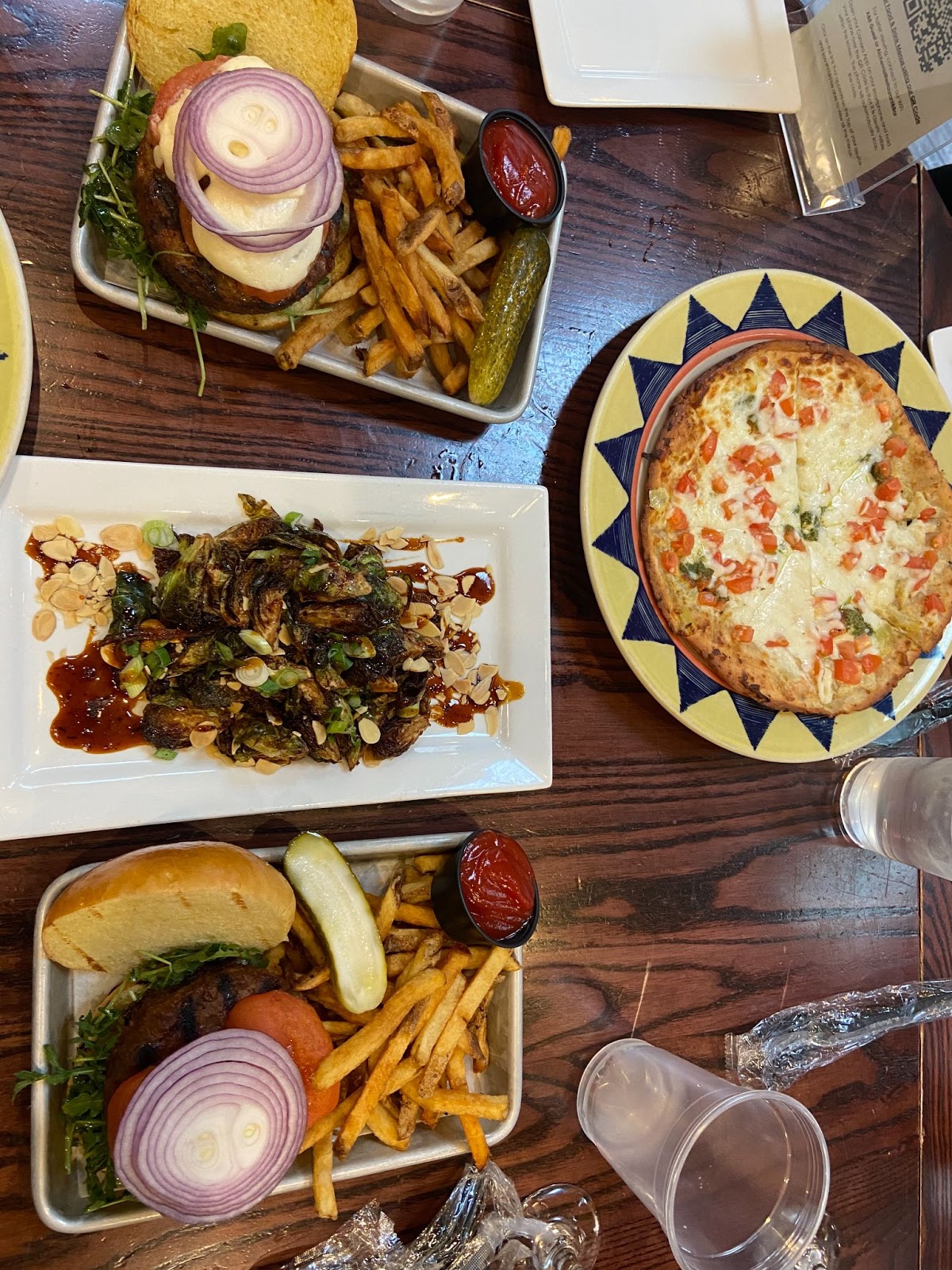
Alchemist and Barrister far exceeded my expectations to say the least. A big contributor to this was an appetizer special they had for the week which was crispy brussels sprouts with almonds and an asian sauce. I went to eat here with some friends and the brussels sprouts were immediately gone, everyone raving about the amazing flavor. If you see this menu item on the weekly specials again, you must go! An absolute 10/10 and I plan to try and make brussels sprouts at home like this! The other appetizer we ordered was the cauliflower crusted pizza which had mozzarella, pesto, and diced tomatoes. I thought this pizza made for the perfect appetizer and the cauliflower crust was a delicious, plant-forward edition. Lastly, I ordered the beyond burger which was probably the best beyond burger I’ve had at a restaurant. They made the burger really thick, which is my personal favorite type of burger, and the brioche bun, red onion, and arugula were all really awesome editions. The french fries on the side were crisp and flavorful and the pickle was beautifully salty and crunchy. I can honestly say I would return to Alchemist and Barrister and would be excited about doing so… especially if they have those brussels sprouts!!
Mistral – Most Interesting-Tasting
Price: $$$
Bang for Your Buck: ★★★
Creativity: ★★★★
Plant Forward: ★★
Taste: ★★★★★
Ease of Access: ★★★★
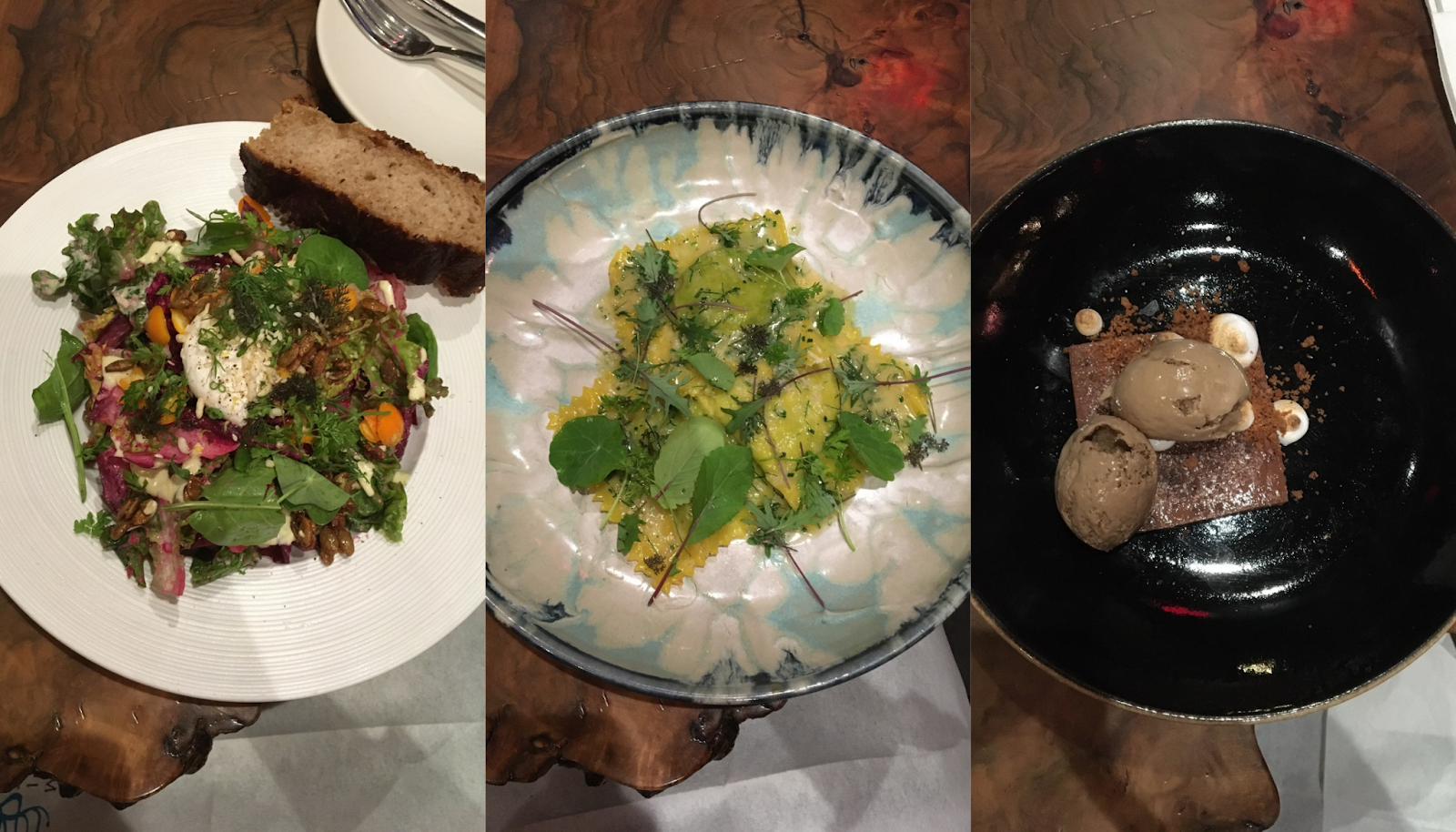
Mistral is a sophisticated restaurant and bar at the end of Witherspoon, right across from Princeton Public Library. While it has a relatively few vegetarian options (and no vegan options), their dishes are all quite tasty. The ambience is rather cozy, and the atmosphere is not too formal, despite being a high-end restaurant. This week I ordered the endive and beet salad, the herb and ricotta ravioli, and the chocolate tart. I was extremely satisfied with all three dishes, but the highlight of the meal was actually the beet salad. The mix of textures and tastes was well-composed and well-executed. Mistral was an overall positive experience, and I am glad to have visited this week.
This series is a collaboration between student group, Greening Dining and the Princeton EcoReps
*** We are not food critics, but food enthusiasts. This is in no way intended to be a formal critique or review of any restaurant in Princeton, merely a way to encourage students to try more plant-based options when dining out.
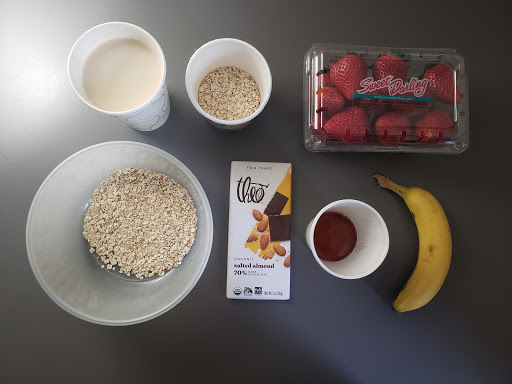
Are you in the mood for a delicious breakfast or a quick snack? This easy vanilla muesli bowl is a great way to spice up a healthy classic with fresh fruit. You can make this bowl without spending time in a kitchen cooking anything, though you will need access to a refrigerator if you’d like it very cold. There are several things about this recipe that make it sustainable. For one, few of the ingredients are heavily processed. Additionally, the milk alternatives mean there was no cow required, saving methane emissions and large water usage. Lastly, you can make the fruit more sustainable sourcing it from the most local providers. I’ve even grown strawberries at home, so you can reduce pollution and follow this recipe with fruit fresh from your garden. You can also modify this recipe to include as much or as little sugar as you’d like.
Ingredients:
1 / 2 cup old – fashioned oats
1 / 2 cup vegan milk
1 tablespoon honey
2 strawberries
1 banana
Nuts, chocolate, or any other fruits you’d like to use
Steps:
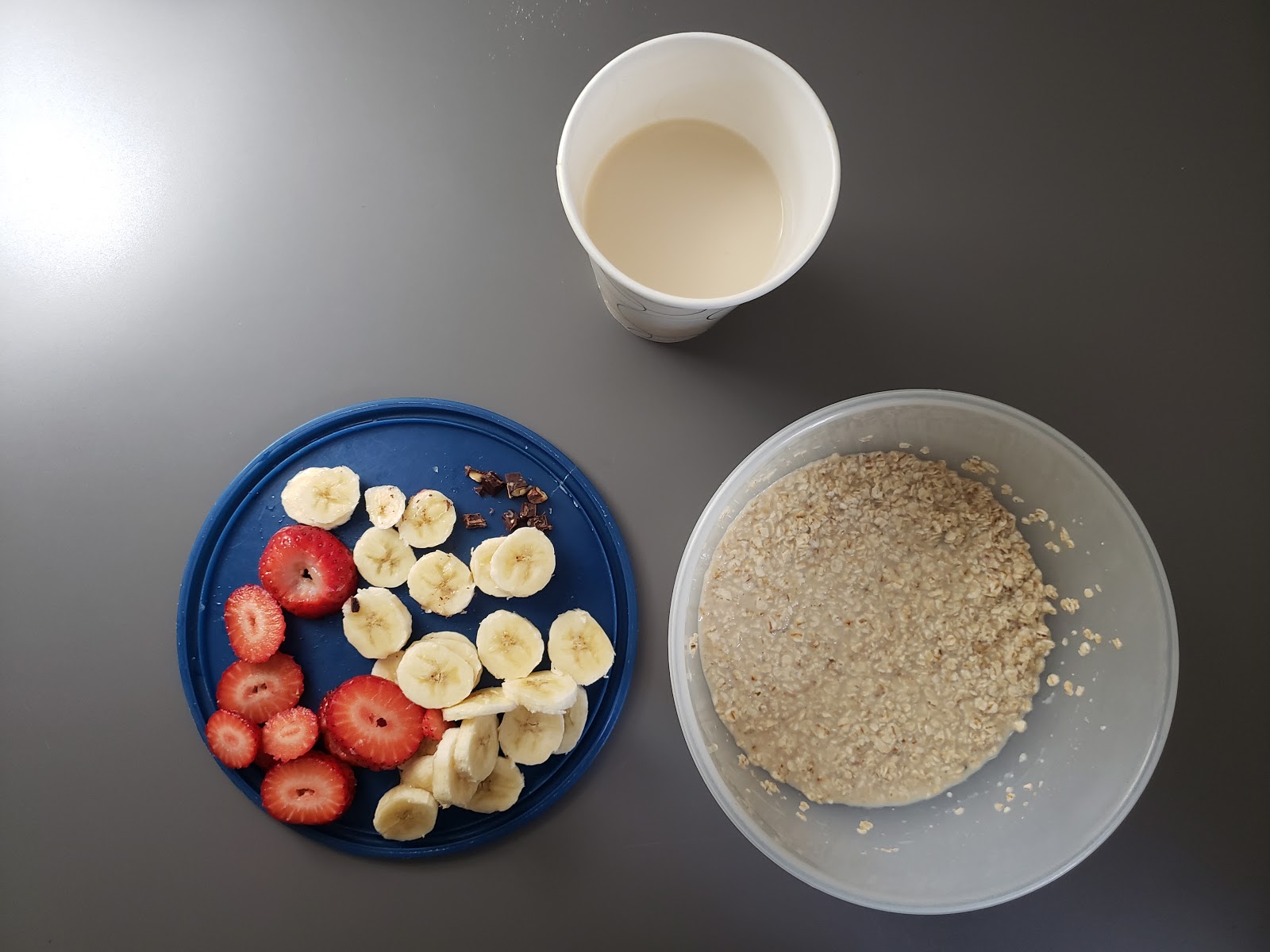
Step 1: To start, combine the oats with the milk and 3 / 4 of the honey. I didn’t have any old-fashioned oats so I substituted instant oats from the U-store. I also used soy milk from the dining hall, though I would have chosen oat milk if it was available. Oat milk is often creamier and uses less water than almond milk. Once combined in a bowl, you can put the bowl in the refrigerator for 15 minutes. If you don’t have access to one like me, it’s perfectly fine without doing so.
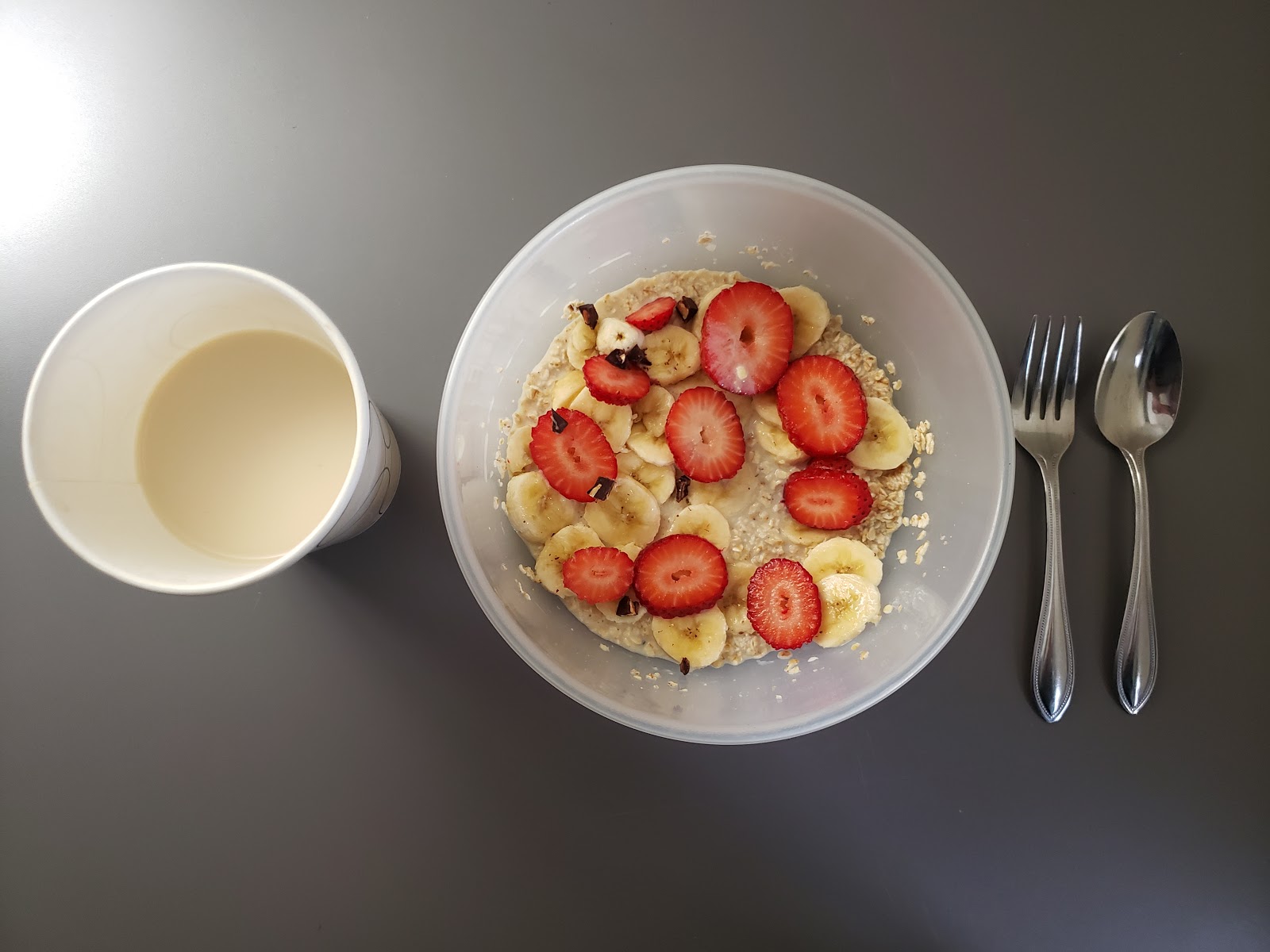
Step 2: Cut up your bananas into coins and strawberries into small pieces. Put these fruit toppings on the oat and milk mixture and add any chocolate, nuts, granola, or fruits you’d like. I had a little honey left over, so I drizzled that on top. Enjoy!
Welcome to the inaugural post of Level Up Your Leftovers, a series where I (Naomi) take your leftovers and turn them into a refreshed recipe!
First up, we have a submission from Lisa here at the Office of Sustainability. Lisa laments, “I have half a jalapeño left that I can’t figure out what to do with! We made tacos a few nights ago and didn’t use the whole thing. Would love some ideas otherwise, I can compost it :)” Well I have some good news, as I think I know a recipe that can ease your worries. It’s vegan/vegetarian friendly and is packed with hearty cauliflower!
0-3 jalapenos, diced, with or without seeds (can substitute with other peppers/hot sauce if needed)
One large onion, diced
2 heads of cauliflower, cut into florets
1 tbsp garlic, minced
2 ½ cups vegetable broth
1 ½ cups milk of choice
½ tsp each: dried sage, cumin, smoked paprika*
1 dried bay leaf
1 tbsp fresh cilantro, chopped + more for garnish (optional)
Salt and pepper to taste
Feta cheese, for garnish
*adjust seasonings as necessary
Instructions:
Heat olive oil in a large pot over medium heat. Add diced jalapenos and cook until brown and crispy, around 3-5 minutes. Transfer the cooked jalapenos to a bowl and set aside.
Add the diced onion to the pot over medium and cook until the edges begin to be translucent, about 5 minutes. Add in the cauliflower florets and saute until they turn brown.
Stir in the garlic as well as all of the dried seasonings. Saute until fragrant, stirring frequently for about 1 minute.
Add the vegetable broth and milk of choice into the pot, as well as most of the fried jalapenos (reserve some for garnish). Cover with a lid and boil until cauliflower is tender, about 15-20 minutes.
Check the soup for seasoning, and add more if needed. Remove the bay leaf. Add in most of the fresh cilantro (reserve some for garnish) and hot sauce to taste. Using a regular or immersion blender, pulse until smooth.
Plate up the soup with feta cheese sprinkled on top as well as the reserved fried jalapenos and fresh cilantro. Eat with a crusty bread on the side and salad for an impressive meal.
Enjoy!
This recipe can be customized in terms of seasonings and spice levels. It can be made completely vegan with the omission of feta cheese.
Some fun facts about jalapenos:
They were the first pepper to travel into space on the 1982 Space Shuttle Columbia
They are an excellent source of vitamin C and contain copper, magnesium, vitamins A, E, and K, folate, manganese, fiber, potassium, and iron.
Surprisingly, a typical jalapeño pepper packs more vitamin C than an orange!
Incorporating more plant-based foods into your diet is a great step towards reducing your carbon footprint. According to this Economist article, just going vegetarian could cut your food-related emissions by 30%! It’s the small steps that count, and dietary changes can make a big difference in crafting a healthier and more sustainable lifestyle.
If you try this recipe, let us know over on Instagram or Facebook. If you want to try and stump me with your own batch of leftovers, send in a submission here! Your recipe could be the next one featured on the Tigers Go Green Blog.
School district goes solar: Arkansas’ Batesville School District recently installed 1,500 solar panels, enabling the district to produce roughly half of its energy needs from solar power. Batesville schools now join the approximately 7,300 school buildings across the country relying on solar energy. The district’s decision reflects the gradually decreasing cost of solar installation and increases in solar energy capacity, providing hope that more school buildings will soon do the same.
Businesses call for emissions reductions: This week, over 300 businesses executives representing companies with a collective 6 million employees and $3 trillion in annual revenue signed an open letter to President Biden asking for tougher American carbon emissions cuts as part of the Paris Agreement. The letter requests a target of a 50% reduction in greenhouse gases compared to 2005 levels by 2030. When the United States initially joined the Paris Agreement in 2016, the emissions reduction goal set by President Obama was 26-28% below 2005 levels by 2025. If adopted, this new proposal would constitute a near-doubling of current emissions targets.
Virginia restricts plastic use: Virginia’s Governor Ralph Northam recently signed an executive order to reduce plastic waste in his state by phasing out the use of non-reusable plastics at all state institutions, including state agencies and colleges, over the next 120 days. The order also mandates that state institutions craft plans to eliminate all non-medical single-use plastics by 2025. Given that Virginia either burns or sends to the landfill 23 million tons of solid waste each year, this new rule could provide some relief to the state’s infrastructure while being significantly more sustainable.
That’s all for this week! We hope to see you again next Friday, and contact us if you have any positive environmental news to share!
Welcome to the fourth stop of the Princeton Plant-Based Food Tour! This week we are hitting it off by exploring the vegetarian and vegan on-the-go options, as always highlighting the accessibility, cost, taste, plant-based ‘friendliness’ and creativity of the different restaurants on Nassau and in the vicinity. We hope that reading this post may inspire you to venture out to get some plant-based goodness, and next week we will be bringing you a review of Princeton’s high-end restaurants!
Jammin’ Crepes – Most Locally-Sourced Food
Price: $$
Bang for Your Buck: ★★★★★
Creativity: ★★★★
Plant Forward: ★★★★
Taste: ★★★★★
Ease of Access: ★★★★
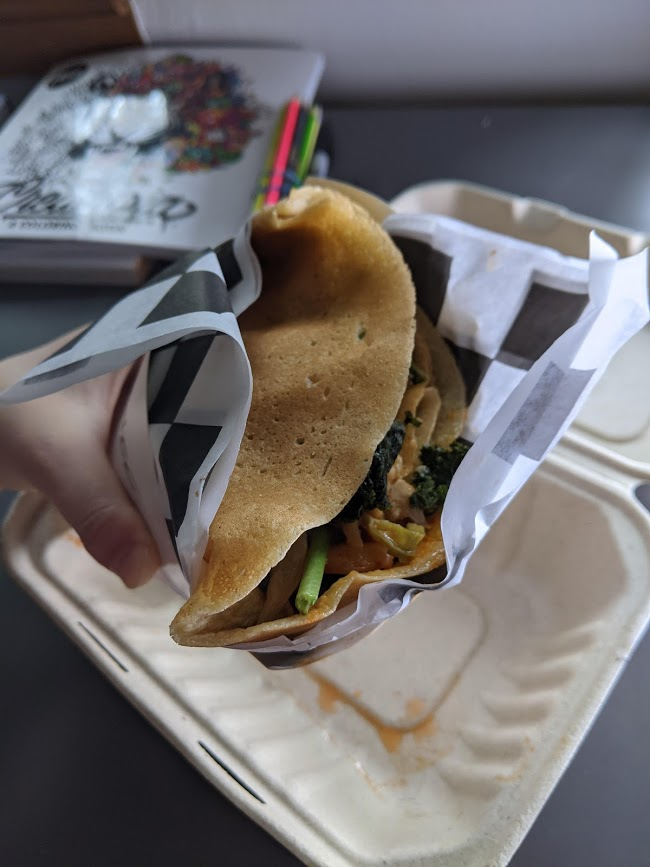
Jammin’ Crepes is, hands down, one of the best, coolest places on Nassau. For starters, they sell homemade preserves – how cool is that? Jammin’ Crepes also have a great focus on sustainability: for example, they source from local farmers and food artisans, thus reducing the carbon footprint of the food that they serve. As I stood in the restaurant waiting for my order of a vegan veggie kimchee crepe, I noticed several posters about reusing and recycling and eating locally on the walls, reflecting the overall sustainability focus of the establishment. The Jammin’ Crepes indoor space is amazing – with wooden decor, their menu displayed on wooden-framed blackboards hanging from the tall ceiling, jars of preserves lining the walls, it is like a funky countryside house in the middle of pretentious Princeton architecture.
The vegan veggie kimchee crepe that I got had roasted cauliflower, kale, kimchee and baby spinach (the cauliflower and kale being the ‘seasonal vegetables’ components of the crepe). A little skeptical about this combination at first, I was astonished at how finger-licking yummy the crepe was. While the kimchee spoke to the pickle- and preserves-making skill of Jammin’ Crepes suppliers, the other greens worked very well together to make this crepe taste more like a home-made savoury pie. Although vegan and hence not containing cheese, the filling was soft and stringy and went well with the crepe itself, which, by the way, despite being gluten-free, was absolutely delicious. The portion size was very big; the kimchee made the crepe moderately spicy and also quite messy to eat, so I was glad I was back in my dorm, able to help myself with a knife and fork. Overall, would 10/10 recommend Jammin’ Crepes as a cool sustainability-focused place on Nassau that serves fantastic crepes!
Small Bites by Local Greek – The Biggest Small Bites
Price: $
Bang for Your Buck: ★★★★★
Plant Forward: ★★★
Taste: ★★★★
Ease of Access: ★★★★
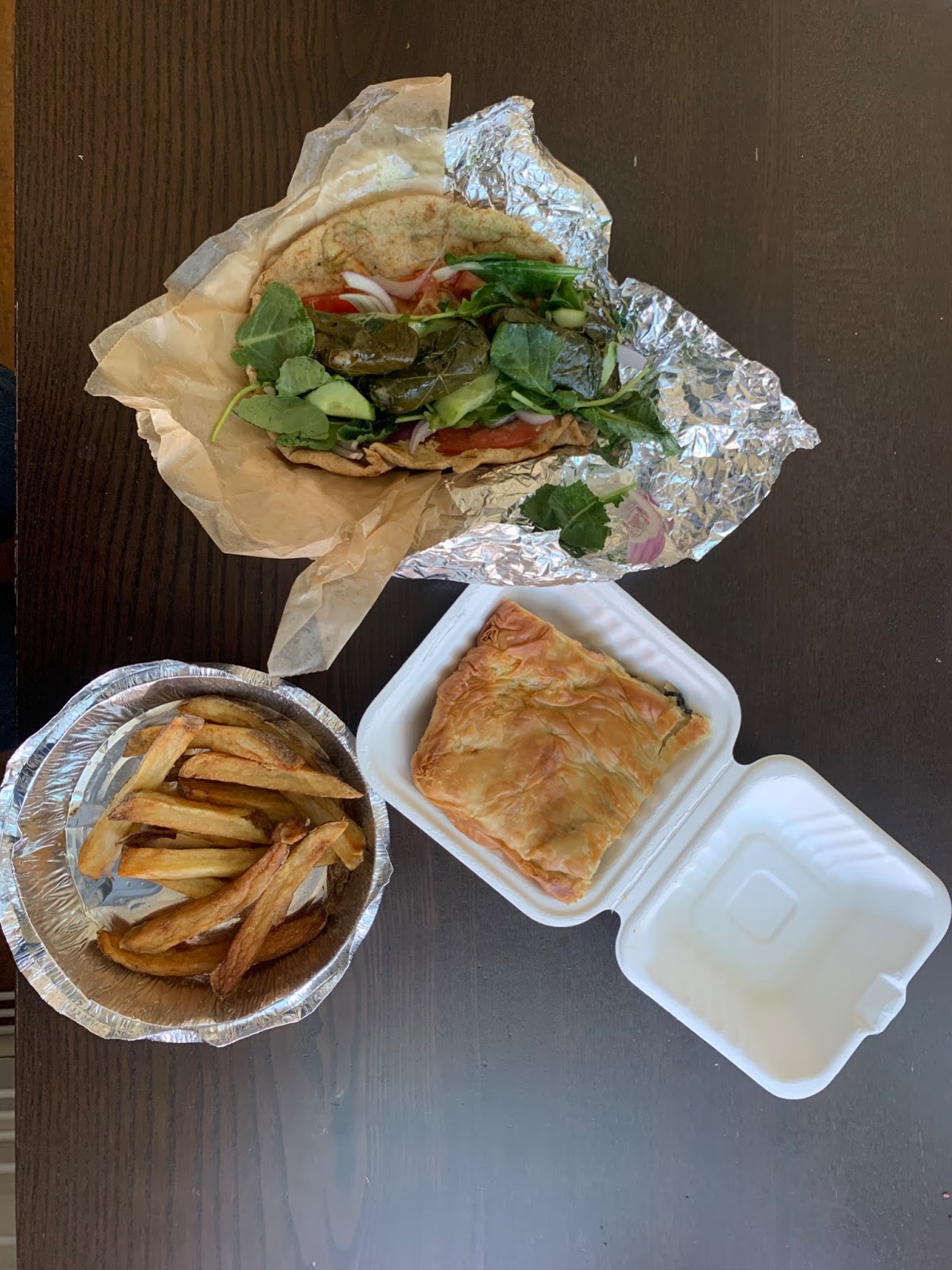
Too tired to make the trek to Local Greek? No worries, Small Bites by Local Greek can satisfy your gyro cravings right on Nassau Street. They offer a vegan gyro that will easily fill you up. It was delicious too, featuring an assortment of vegetables and hummus. It even came with a bonus side dish. I also ordered a side of Greek fries which you can never go wrong with. On top of all this, they gave me a student discount as well, bringing my total to $12 which, for the amount of food I got, was a steal. I would highly recommend checking out Small Bites, especially on a sunny day when you can sit outside while you enjoy your gyro!
Princeton Soup and Sandwich – Cutest Restaurant and Most Complete Meal
Price: $$
Bang for Your Buck: ★★★★
Plant Forward: ★★★
Taste: ★★★
Ease of Access: ★★★★
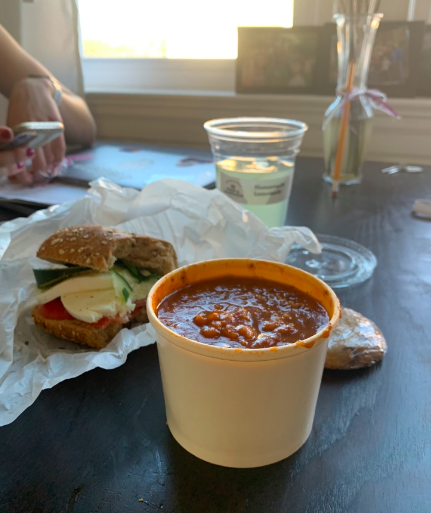
Despite being located just behind the Nassau Inn in Palmer Square, Princeton Soup and Sandwich is undoubtedly a hidden gem. I ordered my meal (their soup and half sandwich combo, with fresh made lemonade) and immediately received a text saying that it would be ready in 10. I rolled up to the restaurant, which has a really cute little outside seating area, and found my food already ready and waiting for me. My soup was tomato and basil with rice, twinned with their vegetarian gazpacho sandwich. I thoroughly enjoyed both of these items and the tomato soup was especially delicious. Their freshly made lemonade was a really nice addition to the meal, which was finished off with one of their chocolate chip cookies. Ultimately I was left feeling very satisfied with my order; I mean, what more could I have asked for? Overall the Princeton Soup and Sandwich menu doesn’t have a huge amount of vegetarian/vegan options but those that they do have are extremely good. I would definitely urge you to check it out; if not for the food, then for the vibes of the restaurant, which are honestly immaculate!
Say Cheez – Most Cheese Options
Price: $
Bang for Your Buck: ★★★★
Creativity: ★★
Plant Forward: ★★
Taste: ★★★
Ease of Access: ★★★
This week on the plant-based food tour, I went to Say Cheez Cafe. This restaurant primarily serves grilled cheese sandwiches, but offers mac and cheese, empanadas, and soups as well.
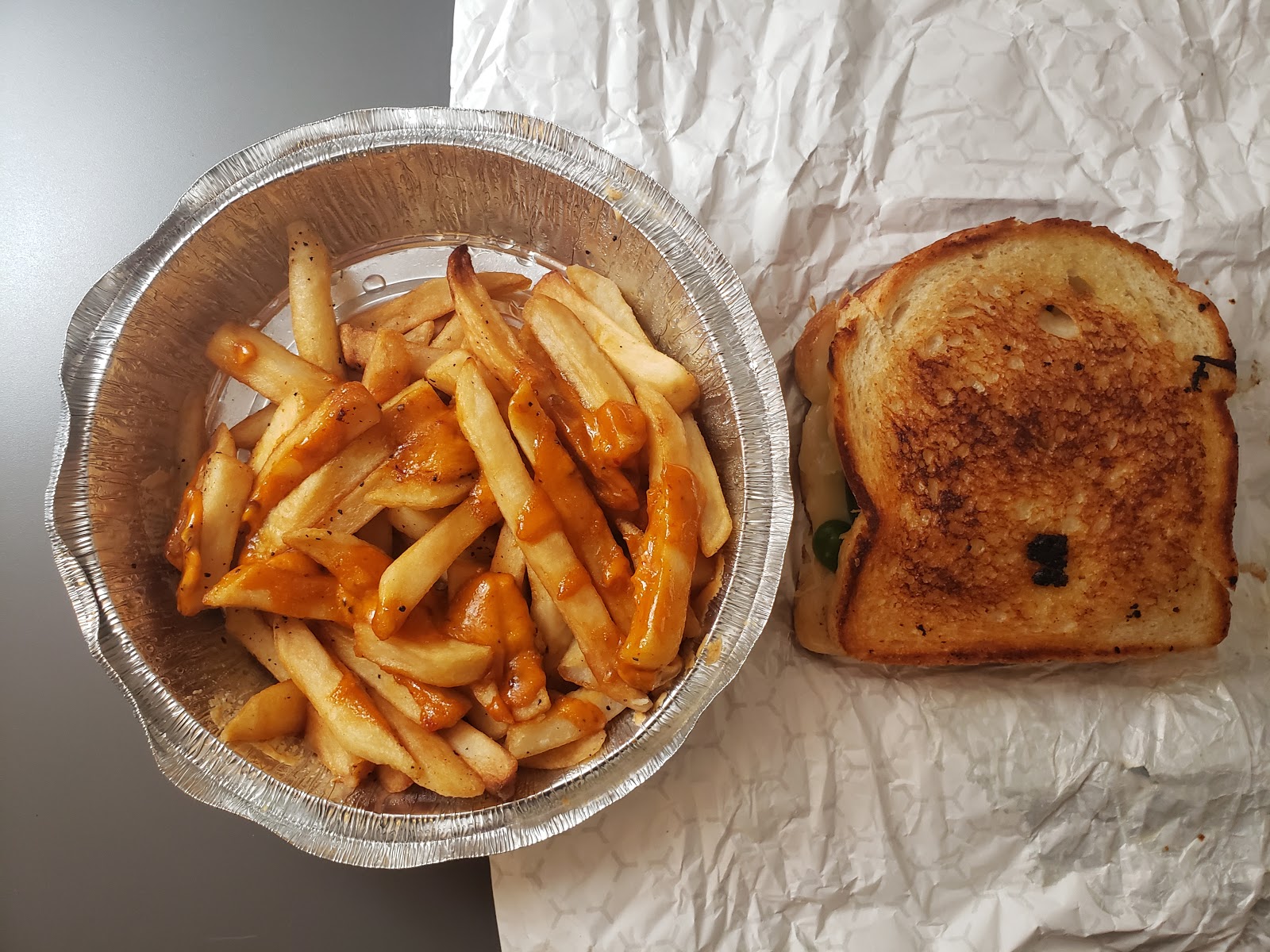
There are various grilled cheese sandwiches on the menu, but I chose to build my own. This option means selecting one bread, two cheeses, one topping, and a sauce for a total of $4.95. I chose white bread, pepper jack, mozzarella, and Daiya vegan cheddar cheeses with jalapeno toppings and oil and vinegar sauce. The jalapenos were the highlight of my sandwich. The vegan cheese fell a little short of my expectations, but it was inoffensive and I appreciate it being an option for an extra $1.65. The bread was nicely grilled, the vinegar sauce added a nice acidity, and the sandwich was nicely wrapped for eating wherever.
I also tried the Tiger fries from Say Cheez. These are the standard fries dressed with “homemade Tiger sauce.” I liked the sauce, but it didn’t blow me away. It was creamy and slightly spicy. I mixed the ketchup packets in my takeout bag with the Tiger sauce and I much preferred that combo. The fries themselves were fine, though I would have preferred them to be a little more crispy and salty.
At Say Cheez, there is an acceptable amount of vegetarian options, but the only vegan one is to build a grilled cheese with only the vegan cheese. For non-vegans, two cheeses are free with extras costing more. Moreover, there is no vegetarian or vegan protein option. I received a plastic fork in my takeout bag without asking for one, so comment if you’re able to use reusable utensils.
Say Cheez Cafe is located on the campus side of Nassau Street in the same building as Thomas Sweet. There is outdoor seating, takeout, and delivery. Try the Daiya vegan cheddar cheese to see if you can replace dairy.
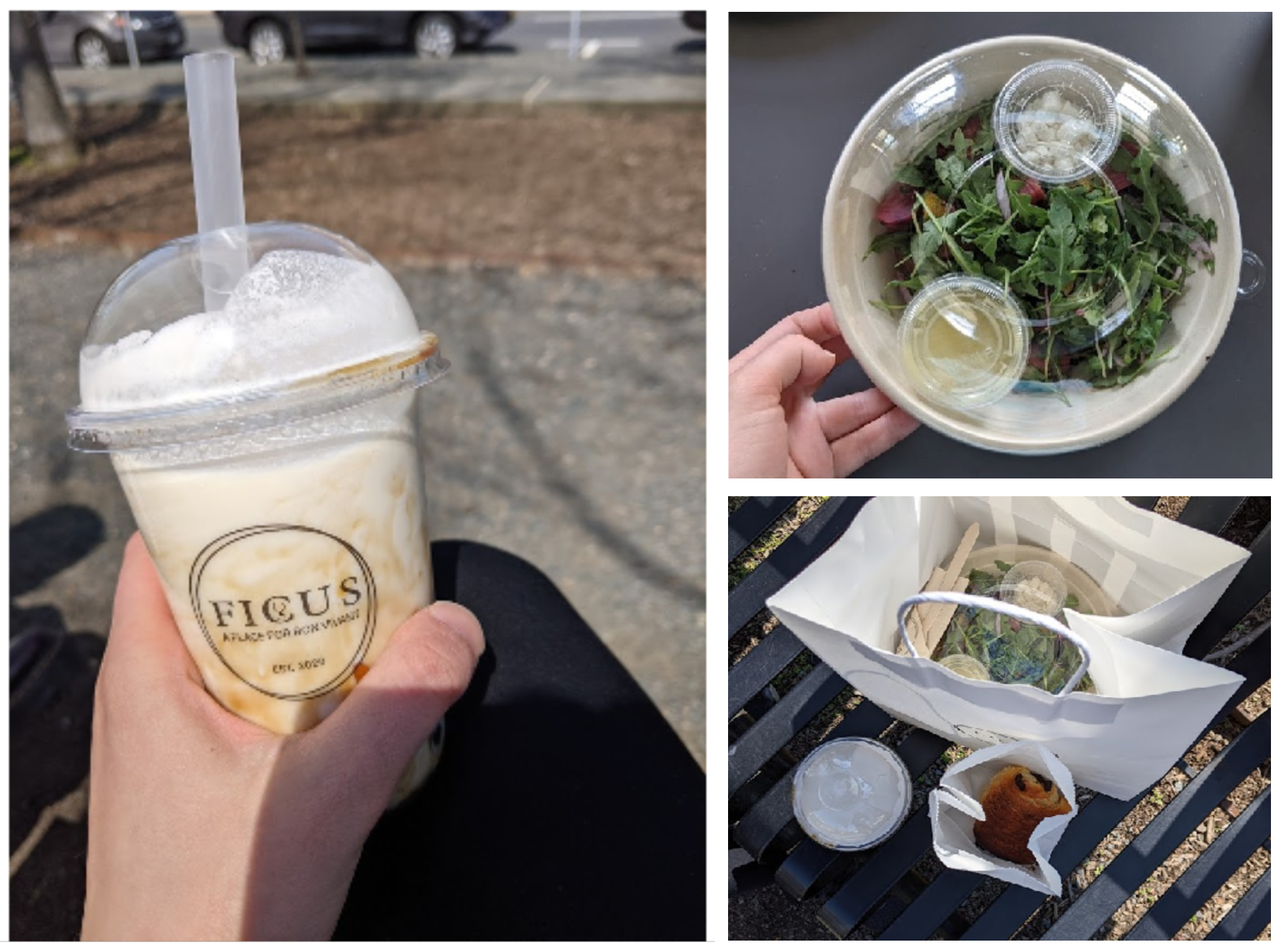
Ficus – Best Boba!
Food:
Price: $$$
Bang For Your Buck: ★★
Creativity: ★★★
Plant Forward: ★★
Taste: ★★★★
Ease of Access: ★★★
Boba:
Price: $$
Bang For Your Buck: ★★
Creativity: ★★★
Plant Forward: ★★
Taste: ★★★★
Ease of Access: ★★★
Since we came back to campus, Ficus has been my favourite location to catch up with friends over a drink. This restaurant/cafe opened in January 2021, and so it is most well-known as “the new boba place”. The menu is indeed pretty drink-focused, but they do also offer some light lunch options e.g. ‘lifestyle bowls’ and sandwiches. For instance, a vegan friend of mine whole-heartedly recommends the eggplant sandwich. Sadly, I avoid gluten, so when I went to do the review, I got a Beet and Orange Salad, a Chocolate Croissant (for a friend) and Brown Sugar Boba Milk Tea. The combination was a little strange, due to the limited vegetarian gluten-free options.
The salad came with some goat cheese to sprinkle on top and a zesty dressing that brought out the freshness of the arugula leaves. Not salty, but rather sweet and flavorful, it reminded me of the RoMa beets salad (for those who know it). It was not very filling though, so I probably would not recommend making it your lunch if you are hungry. As for the dessert, my friend said that she really enjoyed the chocolate croissant and to me the boba was, as always, supreme. I will definitely keep coming back to Ficus for the amazing bubble tea that they offer – while they have fewer options than Kung Fu Tea and slightly higher prices, I much prefer Ficus boba and I also love the friendly service and the general atmosphere at Ficus. There is a cafe/serving area on the ground floor, with a seating area for dine-in upstairs and one outside. The restaurant is a good 10 min walk past Green Hall on Nassau, but the yummy drinks more than make up for it and especially on a sunny day the walk provides even more time to chat with friends!
Diesel and Duke – Most Likely to be Cheap and Meatless on Mondays!!
Price: $
Bang for Your Buck: ★★★★★
Creativity: ★★★
Plant Forward: ★★★★
Taste: ★★★
Ease of Access: ★★★★★
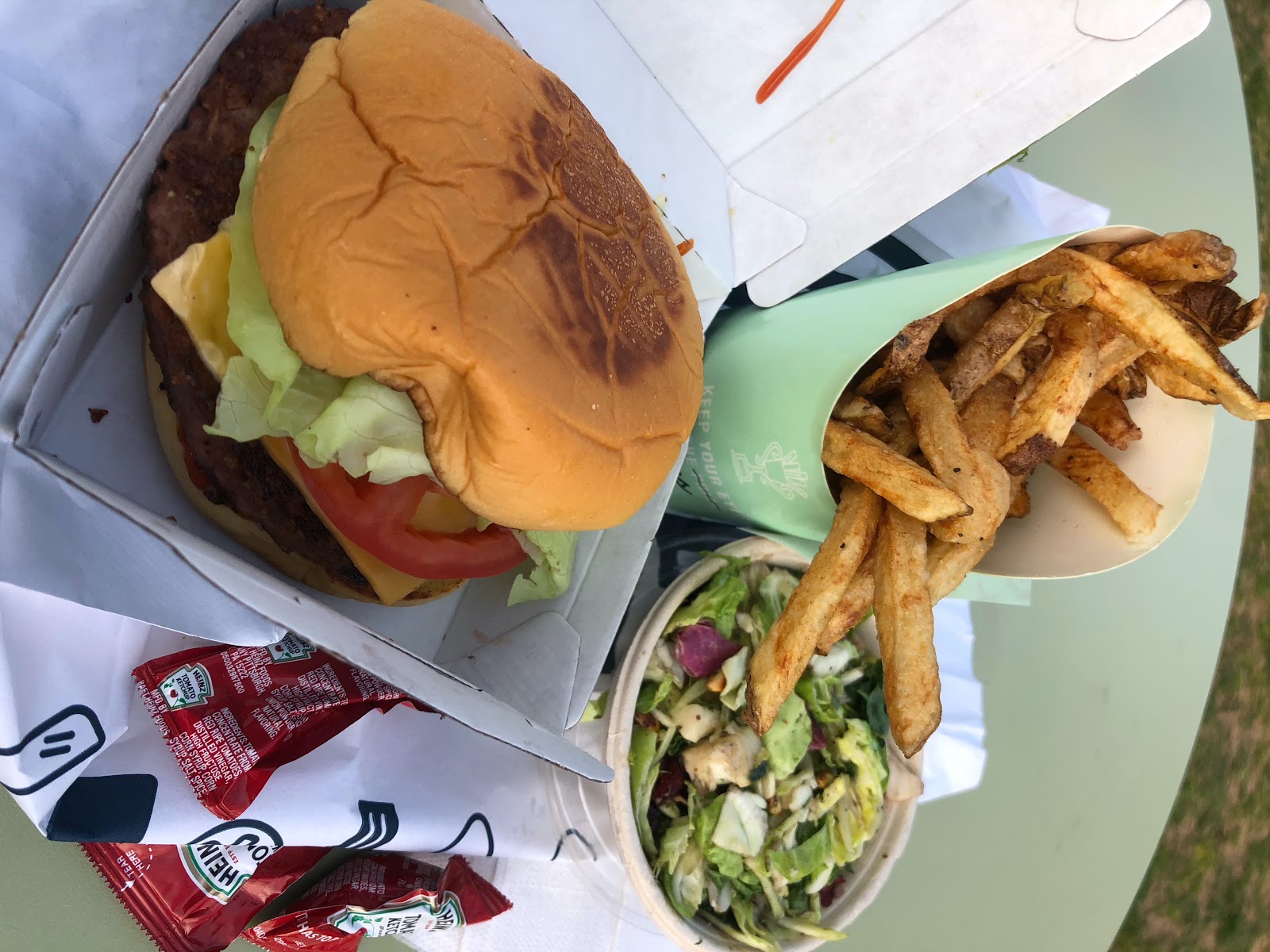
Next Monday I highly recommend checking out the Meatless Monday deal at Diesel and Duke. Ordering online I was able to get a Beyond® Burger as a part of their Meatless Monday deal for just $5, a Kale Krunch salad for $3.28, and FREE order of fries! I was satisfied with the amount of food for a low price. The Beyond® Burger didn’t completely fool me like other plant-based burgers, but with all the toppings it gave me the feeling that I was eating a hearty burger. The kale krunch salad was not the freshest, but I appreciated the healthy side option. The free fries were a nice added treat! Overall, they have a variety of plant-based options and on any day of the week their regular burgers can be replaced with a Beyond® patty for just $3. It was super easy to order online and the food was ready in no time.
Olives – Most Options & Best Tasting!
Price: $$
Bang for Your Buck: ★★★★
Creativity: ★★★★
Taste: ★★★★★
Ease of Access: ★★★★★
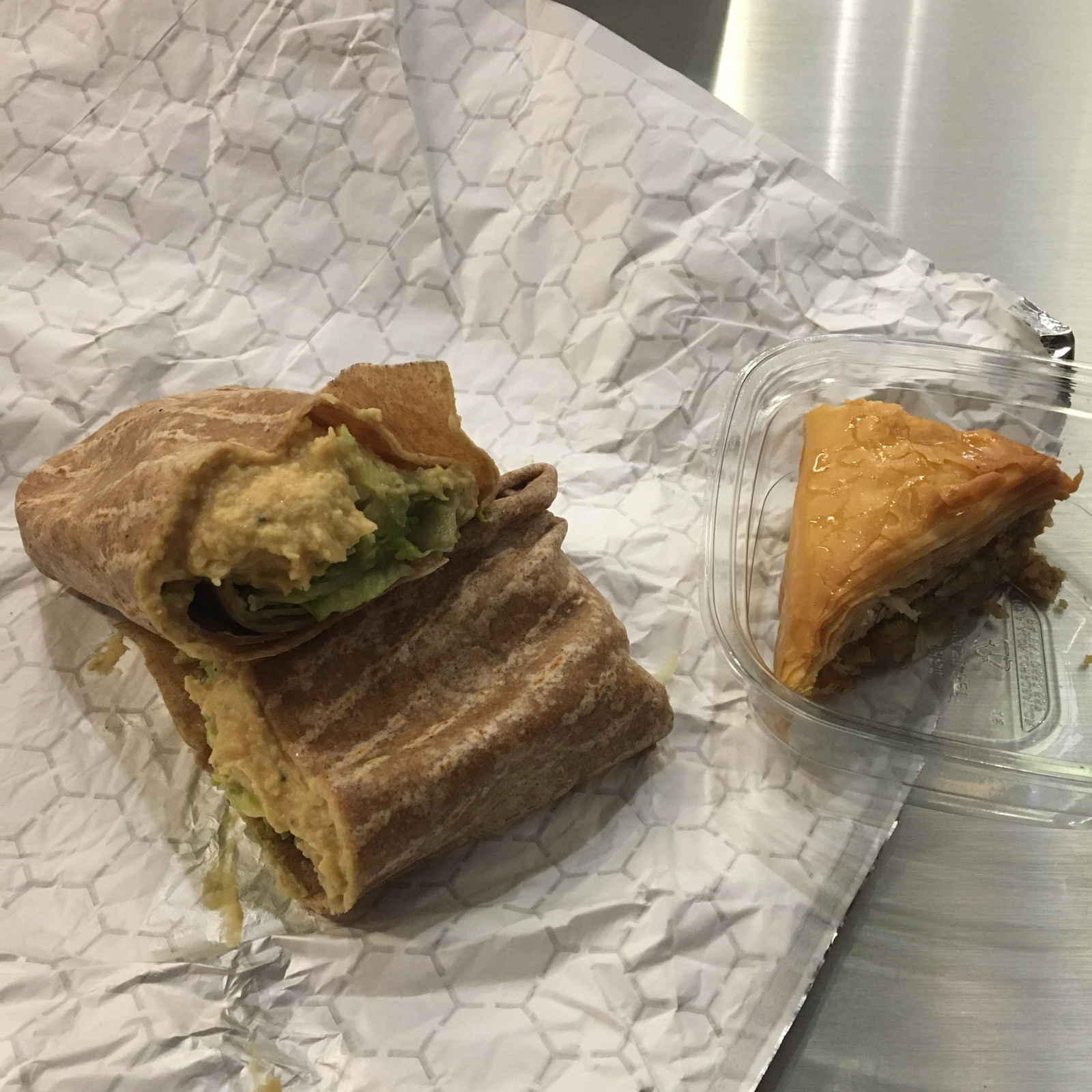
Olives is a small but reliable stop for grab-and-go, located a short walk down Witherspoon. With a rather large menu, they are sure to have something for both vegetarians and vegans. I ordered the Santa Monica wrap ($9) on the vegetarian specials menu, as well as the baklava ($3), which was described as “the best in town”. I was extremely satisfied with both items. The wrap had an ample filling of hummus and vegetables. The baklava was also surprisingly good, and was not overly sweet, which is a common flaw I find in baklava. I will definitely be coming back to try some of their other menu items, and for the baklava too. Altogether Olives is possibly a somewhat hidden gem on Witherspoon and is definitely worth giving a try despite it being a small shop.
This series is a collaboration between student group, Greening Dining and the Princeton EcoReps
*** We are not food critics, but food enthusiasts. This is in no way intended to be a formal critique or review of any restaurant in Princeton, merely a way to encourage students to try more plant-based options when dining out.